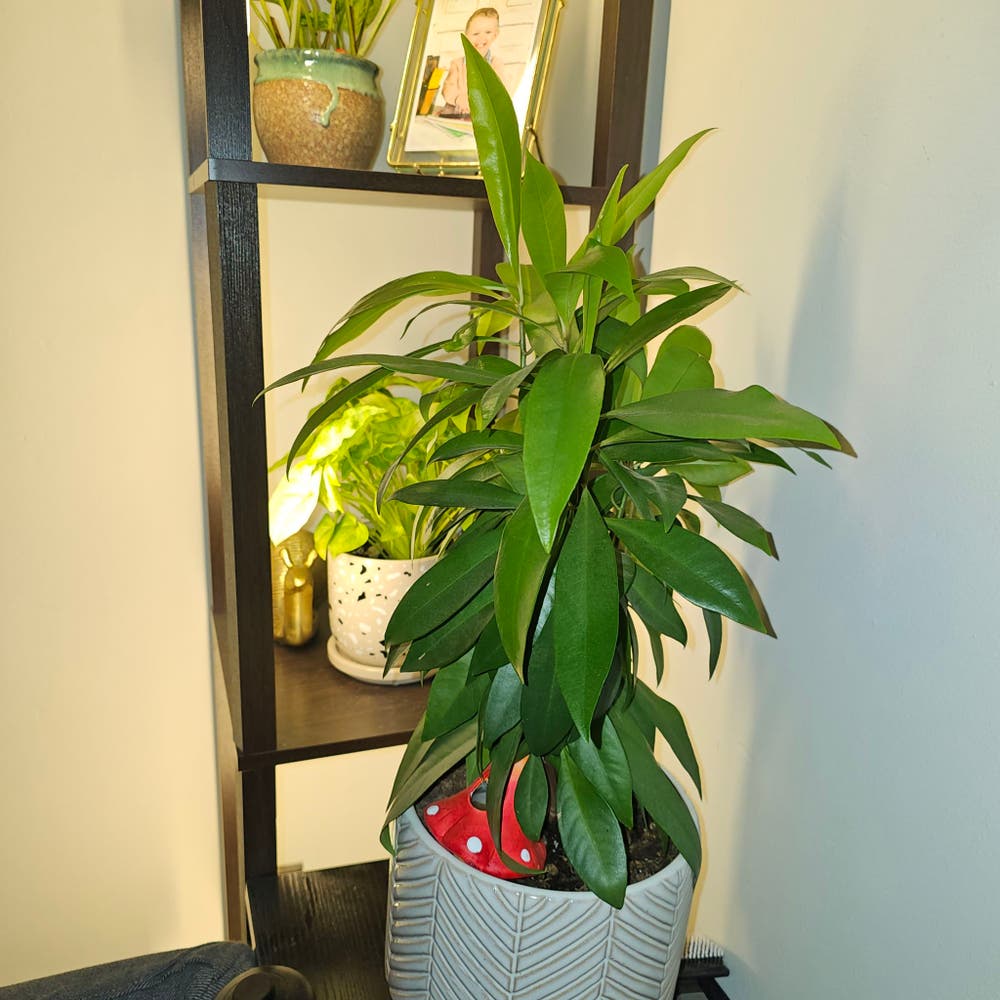
Why Are There Brown Spots on My Ardisia Plant Leaves?
Ardisia polysticta
By the Greg Editorial Team
Apr 26, 2024•4 min read
This article was created with the help of AI so we can cover more plants for you. May contain errors. See one? Report it here.
Banish brown spots 🍂 from your Ardisia and ensure its vibrant health with these expert tips!
- Fungal vs. Bacterial spots: Crusty with edges vs. water-soaked lesions.
- Isolate and prune to prevent spread and remove affected foliage.
- Environment matters: Adjust light, humidity, and air flow to prevent spots.
Spotting the Trouble: Identifying Brown Spots on Ardisia Leaves
🧐 Visual Symptoms of Fungal and Bacterial Infections
Texture is your first clue. Fungal spots are crusty interlopers, while bacterial spots are like a soggy blanket on your plant's parade. Fungal foes flaunt circular or angular spots, often edged in a tell-tale purple-red. Bacterial baddies? They're all about those water-soaked lesions with deceitfully lighter centers. Spot concentric rings or dark margins? That's a fungal party invitation.
🕵️ Beyond the Spots: Recognizing Related Symptoms
Look for the drama beyond the spots. Yellowing leaves or a droopy demeanor can signal an underlying malaise. Raised, sunken, or stinky spots are red flags, heralding a plant in distress. It's not just a cosmetic issue; it's a cry for help.
🌬️ Environmental Culprits
The air around your Ardisia can be a fungal festival or a bacterial banquet hall. High humidity is their plus-one, while arid conditions could signal a pest invasion. Spider mites and their ilk love a dry soiree. Overwatering? That's a one-way ticket to soft, dark spot city, often with a yellow halo of decay.
🕵️ The Usual Suspects: Common Causes of Brown Spots
Fungal infections are the party crashers, leaving powdery residue or a bullseye pattern. Bacterial infections are more like a stealthy heist, with water-soaked lesions that don't plan on leaving. High humidity and poor air circulation are their accomplices, so keep a watchful eye on your plant's environment.
First Aid for Your Ardisia: Immediate Actions to Take
🚑 Isolating the Affected Plant
Acting fast is non-negotiable when you spot brown spots on your Ardisia. Isolate the plant to stop the contagion from spreading like a bad cold in a kindergarten class. Think of it as the plant version of social distancing.
🌿 Removing Infected Foliage
Next up, it's time for some botanical surgery. Prune the affected leaves with sterilized shears—think of it as removing the bad apples from the bunch. After each snip, wipe your shears with alcohol; you're not just cutting leaves, you're preventing a full-blown plant epidemic. Remember, you're aiming for a clean bill of health, not a plant massacre.
The Battle Against Brown Spots: Treatment Strategies
💉 Choosing the Right Fungicide
When fungal foes attack your Ardisia, it's time to pick your potion. Potassium bicarbonate and tebuconazole with trifloxystrobin are the heavy hitters in this game. Like reading a treasure map, follow the label's instructions to the letter. Apply with the precision of a sniper—every leaf, top to bottom, gets a coat.
💊 Bactericide to the Rescue
For bacterial brown spots, think of copper-based bactericides as antibiotics for your plant. Before you start, quarantine and prune with sterilized tools, as if performing surgery. Apply bactericides with the same care you'd use when handling something fragile. They're potent, so a little goes a long way. Safety gear is non-negotiable—protect yourself as you protect your plant.
Shielding Your Ardisia: Prevention Tactics
🌱 Cultural Practices for Health
Preventing brown spots on Ardisia plants hinges on routine care. Like brushing your teeth to prevent cavities, regular maintenance is non-negotiable for plant health.
- Inspect leaves frequently, as if you're searching for Waldo in a sea of stripes. Catching issues early can save you a heap of trouble.
- Cleanliness is next to godliness; remove fallen debris and sanitize your tools post-use. Think of it as hygiene for your plant's environment.
- Pruning is not just for aesthetics. Snip off any suspicious-looking leaves with sterilized scissors to prevent the spread of disease.
- Watering practices need finesse. Water at the base to avoid wetting the leaves, and only when the soil is dry to the touch—your plant isn't a fish, it doesn't need to swim.
🌿 Tailoring the Environment
Creating the right environment is like setting the stage for a Broadway show; everything needs to be just right for a stellar performance.
- Lighting should be bright but indirect. Direct sunlight is a no-go—it's like putting your plant in the middle of a desert.
- Humidity and temperature control are crucial. Aim for consistency, as if you're trying to replicate the Goldilocks zone—just right.
- Air circulation is the invisible shield against disease. Ensure your plant isn't crammed in with others; give it the personal space it craves.
- Seasonal adjustments are key. Less water in the winter, more shade in the summer. It's all about balance, like walking a tightrope without a net.
Remember, prevention is better than cure. Keep these practices consistent to fortify your Ardisia against future brown spot breakouts.
⚠️ Safety First
This content is for general information and may contain errors, omissions, or outdated details. It is not medical, veterinary advice, or an endorsement of therapeutic claims.
Always consult a qualified healthcare professional before using any plant as food, medicine, or supplement.
Never eat any plant (or feed one to pets) without confirming its identity with at least two trusted sources.
If you suspect poisoning, call Poison Control (800) 222-1222, the Pet Poison Helpline (800) 213-6680, or your local emergency service immediately.
Spotted an error? Please report it here.
Eradicate brown spots 🍂 on your Ardisia with ease using Greg's tailored environment tips and expert community support for lush, healthy leaves.