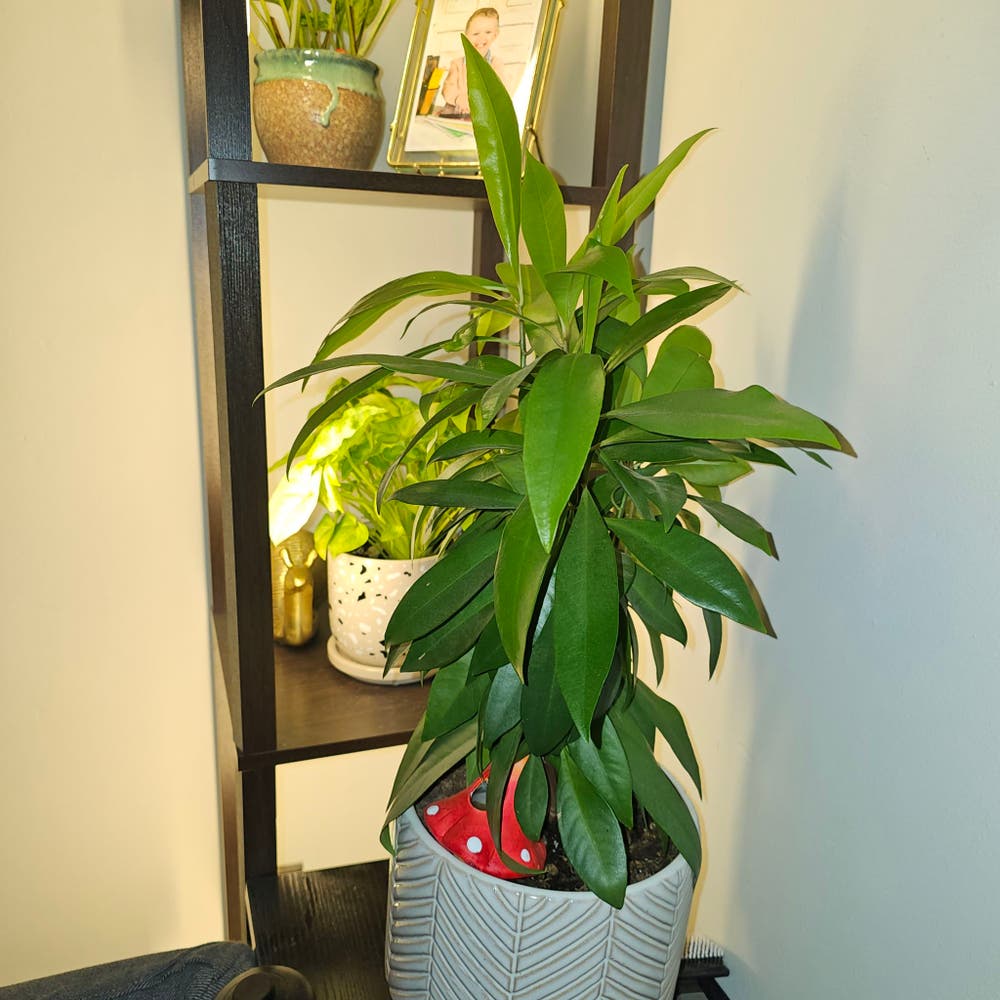
Why Does My Ardisia Plant Have Yellow Leaves?
Ardisia polysticta
By the Greg Editorial Team
Apr 26, 2024•6 min read
This article was created with the help of AI so we can cover more plants for you. May contain errors. See one? Report it here.
Solve the mystery of your Ardisia's yellow leaves 🍂 and unlock the secrets to its evergreen health!
- 🍂 Natural aging or stress? Differentiate to find the cause of yellow leaves.
- 💧🌞 Balance water and light to prevent yellowing; adjust gradually.
- 🐛🌱 Inspect for pests, adjust nutrients to maintain healthy Ardisia foliage.
When Yellow Leaves Are Just Old Age
🍂 Spotting the Signs of Natural Aging
Yellowing leaves can be the Ardisia's way of saying goodbye to its oldest foliage. If you notice the lower leaves gradually turning yellow and falling off, it's likely just the plant's natural cycle. Older leaves will typically yellow and drop to make way for fresh growth.
🚦 Distinguishing Aging from Other Issues
However, not all yellow is part of the aging process. If the upper leaves or new growth are turning yellow, it's a sign that your Ardisia might be stressed. Look for patterns: a uniform yellowing could indicate a more serious, systemic issue, while patchy yellowing often points to a localized problem. Keep an eye out for rapid changes, as a slow transition to yellow is more characteristic of natural aging.
Too Much or Too Little: Watering Woes
💧 Identifying Symptoms of Overwatering and Underwatering
Yellowing leaves can be the silent scream of your Ardisia plant either drowning in excess water or gasping for a drop. Overwatering often leads to leaves that feel as uncomfortably soft as a squished marshmallow, while underwatering results in leaves as crispy as autumn leaves. Check the soil before you reach for the watering can; if it clings to your fingers like a needy pet, it's too wet. If it's as dry as a stand-up comedian's wit, it's time to water.
🚰 The Goldilocks Zone: Finding the Right Watering Balance
Finding the perfect watering balance for your Ardisia is like crafting the perfect cup of coffee—everyone's taste is different. Start with a weekly schedule and adjust based on your plant's reaction. If it perks up after watering, you've hit the jackpot. Remember, the soil should feel like a well-wrung sponge—moist but not drenched. If you're constantly battling soggy soil, consider repotting with a well-draining mix and ensure your pots have drainage holes to avoid creating a mini swamp. Keep an eye on the weather; plants are thirstier during hot spells and less so when it's cooler. Stay responsive, and your Ardisia will thank you with vibrant, healthy leaves.
Let There Be Light (But Not Too Much!)
Recognizing light-related yellowing in Ardisia leaves is crucial. If they're looking more sun-kissed than healthy, you've probably gone too far.
🕶️ Spotting the Symptoms
Yellow leaves can mean too much sun. Think of them as the plant's way of crying out for sunglasses.
🎯 Finding the Sweet Spot
Ardisia plants prefer the bright, indirect light zone. Direct sunlight is their nemesis, leading to the dreaded yellow leaf.
🌄 The Gradual Shift
When changing spots, don't rush. Move your plant slowly to avoid the botanical equivalent of a sunburn.
🍂 Seasonal Adjustments
As seasons change, so does the light. Rotate your plant to keep it basking in that perfect glow all year round.
💡 No Natural Light? No Problem.
If your place is more dungeon than sunroom, artificial grow lights can be a game-changer. Just don't get carried away; think of them as a vitamin supplement, not a meal replacement.
📏 Light Meters: The Secret Weapon
Unsure about your lighting conditions? A light meter can help you nail down the perfect amount of lumens for your Ardisia.
Remember, when it comes to light, it's all about hitting that Goldilocks sweet spot. Too little, and your Ardisia will sulk; too much, and it'll throw a yellow fit. Keep it in the right light, and you'll have a happy, healthy plant that's just right.
Feeding Your Ardisia: A Nutrient Balancing Act
🌿 Pinpointing Nutrient Deficiencies by Leaf Appearance
Yellow leaves on your Ardisia might be screaming for nutrients. It's detective work: look for pale leaves with green veins, a classic sign of iron deficiency. Or if the yellowing is between the leaf veins, your plant might be lacking magnesium.
🌱 Tailoring Your Fertilization Routine to Combat Yellow Leaves
Balance is your mantra when feeding Ardisia. Start with a balanced fertilizer, think 10-10-10 or similar ratios. But don't just throw it on and hope for the best. Observe your plant's reaction. New growth and greener leaves mean you're on the right track. No change or more yellowing? Time to adjust.
Remember, overfeeding is as bad as underfeeding. If your Ardisia's leaves start looking like they've had too much to drink, ease up on the fertilizer. It's a dance, and you're learning the steps together. Keep the soil test kit handy to avoid guessing games.
Moderation wins the race. Apply fertilizer according to the package, usually every couple of months during the growing season. And always water your plant before feeding to prevent root burn—it's like stretching before a workout.
Lastly, don't forget the micronutrients. A little iron and manganese can go a long way. If you're not sure, a slow-release fertilizer can be your safety net, providing a steady nutrient supply without the risk of overdoing it.
Bug Off: Dealing with Pests
🐛 Uncovering Pest Infestations Through Leaf Changes
Yellow leaves on your Ardisia might be waving a red flag for pests. Inspect the undersides of leaves; if you spot bugs or unusual marks, it's time for action. Regular leaf check-ups are your defense strategy, akin to a security system for your plant's well-being.
🛡️ Effective Pest Control Strategies to Reclaim Healthy Foliage
Isolate the affected plant to prevent the pests from throwing a party at your plant's expense. Manual removal of bugs can be an immediate solution—think of it as hand-to-hand combat with invaders. For a more strategic approach, introduce beneficial insects like ladybugs, which act like nature's hitmen against pests.
🌿 Natural Remedies
Neem oil and insecticidal soap are your organic arsenals against the creepy crawlers. They're effective and non-toxic, making them ideal for keeping your Ardisia safe. Spray affected areas thoroughly, but remember, it's a targeted strike, not a blanket bomb.
⚠️ Chemical Interventions
When the situation escalates, chemical pesticides may be necessary. Use them as a last resort and follow the instructions to the letter. Safety comes first—for you, your plant, and the environment.
🛡️ Prevention: The Best Defense
Keep the area around your Ardisia clean; dead leaves and debris are like a welcome mat for pests. Regular inspections are non-negotiable; they're like routine patrols in your garden. Catching an infestation early can mean the difference between a quick fix and a full-blown battle.
⚠️ Safety First
This content is for general information and may contain errors, omissions, or outdated details. It is not medical, veterinary advice, or an endorsement of therapeutic claims.
Always consult a qualified healthcare professional before using any plant as food, medicine, or supplement.
Never eat any plant (or feed one to pets) without confirming its identity with at least two trusted sources.
If you suspect poisoning, call Poison Control (800) 222-1222, the Pet Poison Helpline (800) 213-6680, or your local emergency service immediately.
Spotted an error? Please report it here.
Banish yellow leaves 🍂 from your Ardisia by relying on Greg's tailored care reminders for the right water, light, and nutrients, ensuring your plant always stays in the green!