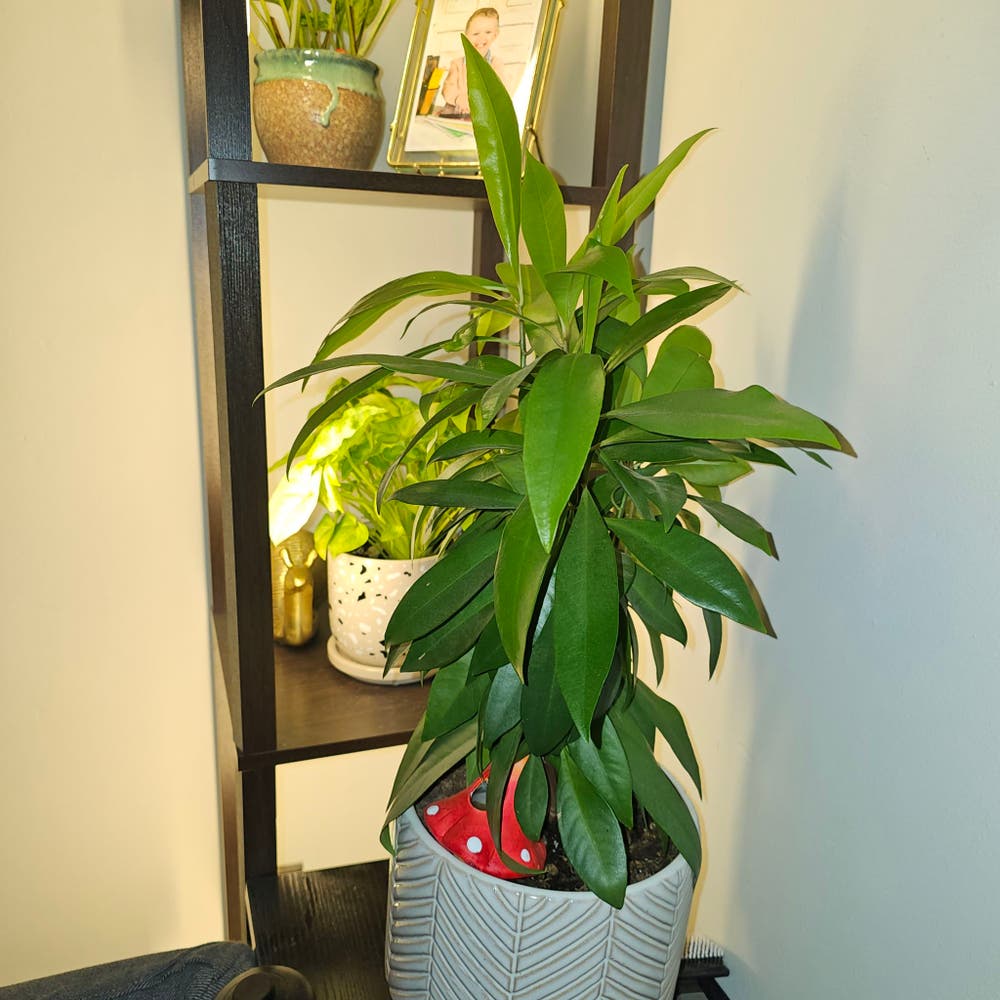
How Much Humidity Does My Ardisia Plant Need?
Ardisia polysticta
By the Greg Editorial Team
Apr 26, 2024•3 min read
This article was created with the help of AI so we can cover more plants for you. May contain errors. See one? Report it here.
Discover the secret to a lush Ardisia by balancing humidity for its ultimate health and beauty. 🌿⚖️
- 🌿 Ardisia thrives at 40-60% humidity, monitor with a hygrometer.
- Brown tips mean low humidity; yellow leaves suggest too much.
- Use humidifiers or pebble trays to adjust moisture; clean or ventilate as needed.
Spotting Humidity Happiness or Distress in Your Ardisia
🌿 Signs of Low Humidity
Crisp, brown leaf tips on your Ardisia? That's a distress call for more moisture. When leaves go from lush to potato chip-like, it's time to up the humidity ante.
🌧️ Signs of High Humidity
Conversely, yellowing leaves can signal a moisture overdose. If your Ardisia's leaves droop or develop a swampy demeanor, it's likely swimming in too much humidity. Watch for these signs to prevent the onset of fungal issues or root rot.
Nailing the Perfect Humidity for Your Ardisia
🌿 What Ardisia Plants Love
Ardisia plants flourish in a specific humidity range. To keep your green buddy thriving, aim for a relative humidity of 40-60%. This is the sweet spot where the plant's leaves remain supple and blooms are encouraged. To avoid playing a guessing game with your plant's health, keep a hygrometer close. This tool is your best friend in monitoring moisture levels, ensuring your Ardisia's environment is just right.
🌍 Local Humidity and Your Ardisia
Understanding your local humidity is crucial for Ardisia care. It's not just about setting up a humidifier and calling it a day. You need to be a detective in your own home, scouting out the spots where air moisture hits the jackpot. Use a hygrometer to take readings throughout the day and compare. If your living room turns into the Sahara by noon, it's time to rethink your plant's location. Remember, your Ardisia's health mirrors the care you put into understanding its needs.
Boosting Humidity for Ardisia Bliss
💦 Humidifier Hacks
Humidifiers are a godsend for Ardisia plants craving moisture. They provide a steady stream of humidity that can be tailored to your plant's needs. To avoid turning your space into a tropical storm, select a humidifier with adjustable settings. This allows for a gentle mist that mimics a refreshing drizzle, perfect for the Ardisia's delicate balance.
Remember, cleanliness is paramount. A dirty humidifier doesn't just fail to function properly; it can spread germs. Regular cleaning ensures your plant reaps all the benefits without any of the drawbacks.
🌿 Natural Boosters
If you're not keen on adding another gadget to your home, there are natural ways to up the humidity. Grouping plants together is like throwing a party where everyone brings moisture to the table. It creates a microclimate that benefits all attendees.
For a solo act, the humble pebble tray is your go-to. Just fill a tray with pebbles, pour in some water, and let your Ardisia sit on top. The water evaporates, giving your plant a subtle humidity hug. Plus, it's a low-tech solution that adds a touch of green decor to your space.
When There's Too Much Moisture in the Air
💨 Ventilation and Airflow
Proper ventilation is crucial when your Ardisia is swimming in humidity. Crack a window or let a fan dance around the room to keep the air from going stale. This isn't just about preventing plant sweat; it's about stopping mold from throwing a party.
🌬️ Dehumidifying for Ardisia Health
When your Ardisia's leaves are more dew-kissed than a morning meadow, it's time for a dehumidifier. Think of it as the humidity bouncer, working the room to keep the moisture levels in check. Remember, size matters; match the dehumidifier's power to your room's volume. Run it during humidity's peak hours, but watch it—your goal is comfort, not a cactus's dream home.
⚠️ Safety First
This content is for general information and may contain errors, omissions, or outdated details. It is not medical, veterinary advice, or an endorsement of therapeutic claims.
Always consult a qualified healthcare professional before using any plant as food, medicine, or supplement.
Never eat any plant (or feed one to pets) without confirming its identity with at least two trusted sources.
If you suspect poisoning, call Poison Control (800) 222-1222, the Pet Poison Helpline (800) 213-6680, or your local emergency service immediately.
Spotted an error? Please report it here.
Keep your Ardisia's leaves crisp and healthy 🌱 by leveraging Greg's insights to maintain that sweet spot of 40-60% humidity without the fuss.