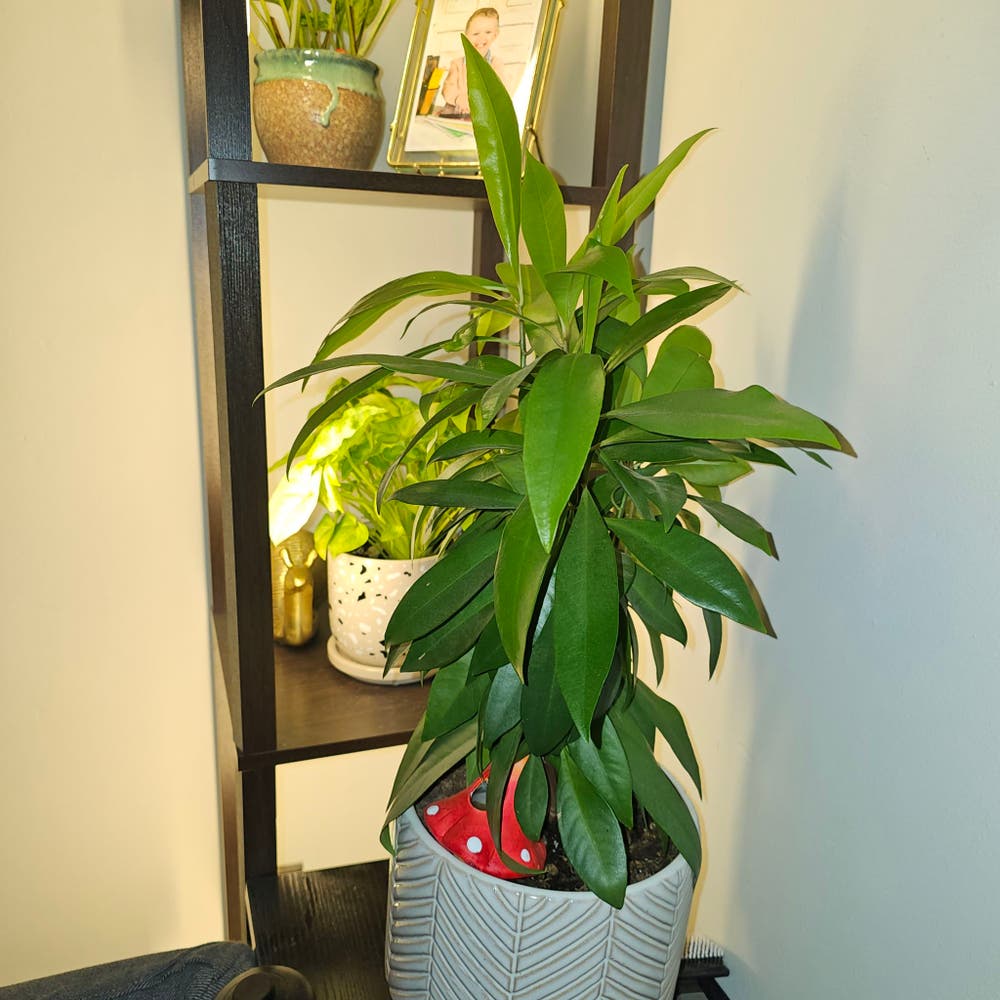
Why Are My Ardisia Plant Leaves Curling?
Ardisia polysticta
By the Greg Editorial Team
Apr 26, 2024•6 min read
This article was created with the help of AI so we can cover more plants for you. May contain errors. See one? Report it here.
Unravel the mystery behind your Ardisia's curling leaves 🍃 and learn to keep it thriving with ease!
- 🌡️ Stable 65-75°F and moderate humidity keep Ardisia leaves uncurled.
- 💧 Balance watering and use well-draining soil to prevent root issues.
- 🐛 Inspect for pests and diseases regularly, treat with natural or chemical controls.
Spotting the Signs: When Your Ardisia's Leaves Start to Curl
🍃 Identifying Leaf Curl
Curling leaves in Ardisia plants are not a new interior design trend; they're a distress signal. Look for leaves folding inward or outward, a stark contrast to their usual lush flatness. Texture changes are a giveaway—leaves should be firm, not resembling overcooked spinach. Spotting these signs early is crucial; it's the difference between a quick fix and a long-term plant therapy session.
🕵️ Common Causes
The reasons behind the curl could fill a plant's rap sheet. Overwatering and underwatering are the usual suspects, leaving your Ardisia's roots either drowning or parched. Temperature tantrums can also cause leaves to curl, as Ardisia plants are not fans of extreme weather. Too much sun can give your plant a sunburn, leading to a curl quicker than a cat in a sunbeam. And let's not overlook pests; these tiny critters can turn leaves into their personal snack bar. Keep a vigilant eye out for these troublemakers, and you'll be decoding your plant's cryptic messages in no time.
The Environmental Effect: Keeping Your Ardisia Comfy
🌡️ Temperature and Humidity
Ardisia plants are not fans of the dramatic. They prefer a stable environment where temperature and humidity levels don't swing like a pendulum. Aim to keep the thermostat set between 65-75°F (18-24°C), which is the sweet spot for these tropical beauties.
Keeping Humidity on Point
Too dry and your Ardisia will start to sulk, leaves curling in despair. Too moist, and you're in a jungle of potential problems. Moderate-to-high humidity, around 50-60%, mimics their natural habitat. Use a humidifier or a pebble tray to maintain these levels, especially during the arid winter months.
💡 Light and Location
Finding the Light Balance
Your Ardisia craves bright, indirect light—think of it as their version of a morning coffee, essential but not overdone. Direct sunlight is a no-go; it's the equivalent of a scorching sunburn waiting to happen.
Location, Location, Location
Keep your Ardisia away from drafty windows or hot radiators; these spots are notorious for causing leaf curl. Instead, find a location that offers consistent light and temperature, and watch your plant thrive. Rotate the pot occasionally to ensure even growth and prevent your Ardisia from reaching for the light like a sun-starved zombie.
Water Woes: Striking the Right Balance
🌊 The Perils of Over and Underwatering
Ardisia plants whisper their needs through their leaves, and water distress is no exception. Overwatering turns the soil into a swampy mess, suffocating roots and causing leaves to drop like flies. Yellow leaves? Your Ardisia is waving a yellow flag. If the soil feels like a wet sponge, you've gone overboard. On the flip side, underwatering leaves the soil dry and the leaves crispy. If the soil crumbles at your touch, it's time to up your watering game. Remember, your Ardisia prefers a drink, not a swim.
🏞️ Soil and Drainage
The right soil mix is like a good mattress for your Ardisia—supportive but not suffocating. If you're battling chronic overwatering, switch to a well-draining mix to give your plant's roots room to breathe. For the underwatering crowd, a consistent watering schedule is key. Check the soil's top layer; if it's dry, it's time for a drink. But don't just wet the surface—water deeply to encourage strong root growth. Keep the soil consistently moist, like a perfectly baked cake, and your Ardisia will thank you with perky, uncurled leaves.
Feeding Finesse: Nutrients Your Ardisia Craves
💡 Spotting Nutrient Shortfalls
Yellowing leaves or stunted growth are tell-tale signs your Ardisia might be nutrient-starved. It's like your plant is holding up a sign that says, "Feed me!" If new leaves resemble abstract art rather than their usual form, it's time to consider a nutrient boost. Calcium and magnesium deficiencies often manifest as misshapen growth or curling leaves, while a lack of nitrogen might leave your Ardisia looking more yellow than green.
💡 Fertilizing Fixes
When it comes to fertilizing, think of it as a precision task—too much and you risk nutrient burn, too little and your plant's growth could stall. A balanced, water-soluble fertilizer, applied every few weeks during the growing season, should do the trick. Remember, moderation is key; you're aiming for a steady diet, not a feast. If you repot your Ardisia annually, fresh soil might eliminate the need for additional fertilizers, as it comes packed with nutrients. Always water your plant before and after fertilizing to prevent root burn and ensure even distribution of nutrients. Keep an eye on your plant's response post-feeding; it's the best indicator of whether your fertilizing regimen is hitting the mark.
Bug Battles and Disease Defenses
🐛 Common Culprits
Pests and diseases can turn your Ardisia crenata into a leaf-curling mess. Mealybugs are notorious for cozying up to your plant, and they're not the only ones. Spider mites spin their fine webs, while fungi throw a party in moist conditions.
🛡️ Prevention and Treatment
Vigilance is your first line of defense. Regularly inspect your plant, especially under leaves and in nooks. If you spot pests, isolate the plant immediately. For a hands-on approach, physically remove pests or use a cotton swab dipped in rubbing alcohol.
🌿 Integrated Pest Management
Adopting an integrated pest management (IPM) strategy can keep your Ardisia in fighting form. Ensure proper airflow and avoid overwatering to deter pests. Introduce beneficial insects like ladybugs to handle infestations naturally.
💣 When Chemicals are Necessary
Sometimes, you've got to bring in the big guns. If infestations persist, consider watering with systemic insecticides like Imidacloprid. But remember, the goal is to use the least toxic option available to manage pests effectively.
🍄 Fungal Foes
For fungal issues like leaf spot, improve air circulation—think of it as giving your plant a little breathing room. If cultural practices fail, a targeted fungicide may be necessary. Remember, dry leaves are happy leaves when it comes to preventing fungal diseases.
🧼 Keeping Tools Clean
Cleanliness is next to pestlessness. Keep your gardening tools spick and span to prevent the spread of viral diseases. It's like washing your hands; simple but effective.
🌦️ Seasonal Adjustments
Adjust care with the seasons—less water in winter, more shade in summer. It's about giving your Ardisia what it needs, when it needs it, to prevent stress and the pests that follow.
💪 The Power of Prevention
Ultimately, prevention is your best bet. A robust Ardisia is less appealing to pests, so maintain a regimen of proper watering, feeding, and grooming. It's like keeping your immune system strong to fend off the flu.
⚠️ Safety First
This content is for general information and may contain errors, omissions, or outdated details. It is not medical, veterinary advice, or an endorsement of therapeutic claims.
Always consult a qualified healthcare professional before using any plant as food, medicine, or supplement.
Never eat any plant (or feed one to pets) without confirming its identity with at least two trusted sources.
If you suspect poisoning, call Poison Control (800) 222-1222, the Pet Poison Helpline (800) 213-6680, or your local emergency service immediately.
Spotted an error? Please report it here.
Banish the curl from your Ardisia's leaves and ensure flourishing growth 🌿 with Greg's precise watering schedules and PlantVision diagnostics tailored to your home's unique conditions.