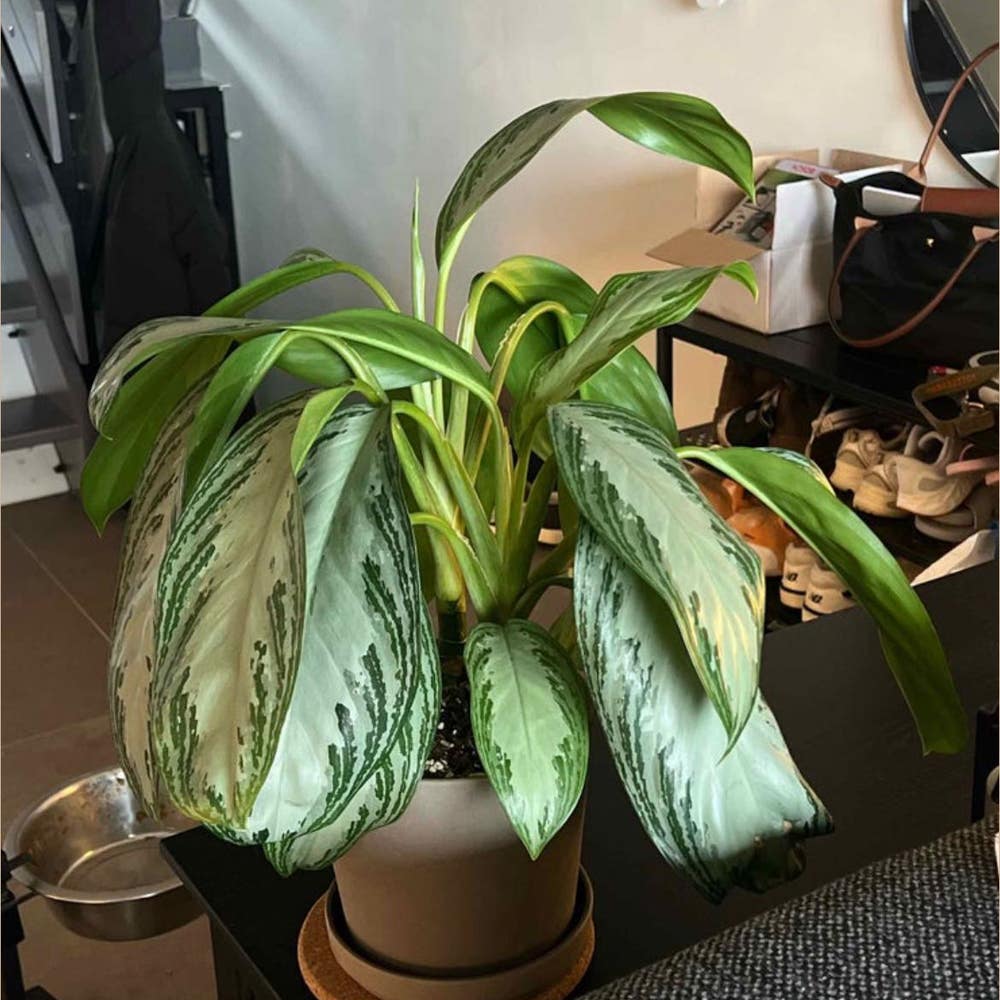
Black Spots on My Aglaonema 'Silver Bay' Leaves
Aglaonema 'Silver Bay'
By the Greg Editorial Team
Jun 18, 2024•5 min read
This article was created with the help of AI so we can cover more plants for you. May contain errors. See one? Report it here.
Shield your Aglaonema 'Silver Bay' 🌿 from black spots with must-know prevention and care tips! 🛡️
- Fungal issues cause black spots; act quickly if they spread or show other symptoms.
- 🌬️ Good air circulation prevents black spots; ensure well-ventilated space or use a fan.
- Regular inspections and cleanliness help prevent; seek professional help if spots persist.
Spotting Trouble: Recognizing Black Spots on Your Plant
🕵️♂️ Visual Guide to Black Spot Appearance
Black spots on your Aglaonema 'Silver Bay' leaves are a red flag. These blemishes often manifest as dark lesions, sometimes surrounded by yellow halos, which hint at a fungal issue. Be on the lookout for tiny black dots within the spots, which could be fungal fruiting bodies. Crispy leaf tips accompanying the spots might suggest sunburn, so consider whether your plant is getting too much direct light.
📉 Assessing the Severity: When to Worry
The severity of black spots can range from a minor cosmetic issue to a sign of a serious health problem. Early detection is crucial. If the spots are few and your plant seems otherwise healthy, you might just need to adjust your care routine. However, if the spots spread rapidly or are accompanied by other symptoms like leaf drop or wilting, it's time to take swift action. Consulting a plant pathologist or a trusted nursery can provide a more definitive diagnosis and treatment options. Remember, prevention is easier than cure, so regular inspections are your best defense.

Unveiling the Culprits: What's Causing the Black Spots?
🌧️ Too Much Love: The Overwatering Problem
Overwatering is like giving your Aglaonema 'Silver Bay' an all-access pass to a fungal gala. Root rot sets in when roots drown and decay, and black spots are the distress flares. On the flip side, underwatering leaves your plant gasping, equally prone to the dark spot plight.
🌬️ Stale Air Blues: The Role of Air Circulation
Air circulation is the unsung hero in the plant world. Without it, you're inviting a bacterial house party with no end time. Stagnant air lets moisture cling to leaves, creating a playground for pathogens. Think of good airflow as your plant's personal bouncer, keeping troublemakers out.
🦠 Unwanted Guests: Identifying Bacterial and Fungal Villains
Unseen to the naked eye, bacteria and fungi are the ninjas and pirates of the plant world, respectively. They sneak in through wounds or thrive in damp conditions, leaving a trail of black spots. Bactericides and fungicides are your go-to weapons, but only if you've correctly pinpointed the enemy. Remember, treating your plant with the wrong remedy is like bringing a water gun to a boss fight – utterly ineffective.

Turning the Tide: Combating Black Spots
💧 Fine-Tuning Your Watering Routine
Watering your Aglaonema 'Silver Bay' is a delicate dance. Overwatering is the equivalent of giving your plant an unwanted bath. Ensure the soil is dry to the touch before giving it another drink. Early morning watering allows the plant to dry throughout the day, minimizing the risk of fungal parties.
🌬 Clearing the Air: Boosting Ventilation Around Your Aglaonema
Stale air is to black spots what a closed door is to fresh ideas—nothing good comes of it. Boost air circulation by placing your plant in a well-ventilated area or using a gentle fan. This isn't just about giving your plant room to breathe; it's about disrupting the still, spore-laden air that fungi thrive in.
🛡 Choosing Your Shield: Selecting the Right Fungicide
When the going gets tough, the tough get fungicidal. But don't just grab any bottle labeled "anti-fungal." Look for products containing chlorothalonil or mancozeb, and apply as directed—this isn't a seasoning, it's a precise treatment. Remember, the goal is to cure your plant, not to douse it in chemicals like a salad in too much dressing.

Keeping the Spots at Bay: Prevention is Key
💧 The Balancing Act: Watering and Humidity Control
Watering your Aglaonema 'Silver Bay' is less about sticking to a strict schedule and more about observing the plant's needs. Check the soil moisture by sticking your finger an inch deep. If it's dry, it's time to water; if not, hold off. Overwatering is a surefire way to invite black spots, so aim for moist, not soggy, soil.
Humidity is another piece of the puzzle. Use a hygrometer to monitor levels, and adjust with a humidifier or dehumidifier as needed. Your plant doesn't want to live in a rainforest or a desert. It craves that just-right Goldilocks zone.
👀 Vigilance and Care: Regular Plant Inspections
Make regular inspections of your Aglaonema as routine as checking your phone. Look for early signs of distress, like yellowing leaves or a lackluster appearance. Catching issues early means you can nip them in the bud before they escalate into full-blown black spot drama.
When you water, channel your inner ninja—water at the base to avoid getting the leaves wet, which can be a welcome mat for fungal issues. And remember, cleanliness is next to godliness; keep the area around your plant tidy to deter pests.
🚨 When to Call for Backup: Seeking Professional Help
Sometimes, despite your best efforts, black spots might persist. That's when it's time to call in the pros. Don't be shy about seeking advice from your local nursery or a plant pathology expert. They can offer targeted advice and help you adjust your care routine to get your Aglaonema back to its former glory.
⚠️ Safety First
This content is for general information and may contain errors, omissions, or outdated details. It is not medical, veterinary advice, or an endorsement of therapeutic claims.
Always consult a qualified healthcare professional before using any plant as food, medicine, or supplement.
Never eat any plant (or feed one to pets) without confirming its identity with at least two trusted sources.
If you suspect poisoning, call Poison Control (800) 222-1222, the Pet Poison Helpline (800) 213-6680, or your local emergency service immediately.
Spotted an error? Please report it here.
Keep your Aglaonema 'Silver Bay' spot-free and thriving 🌿 with Greg's personalized watering schedules and proactive care reminders, ensuring you tackle black spots before they spread.