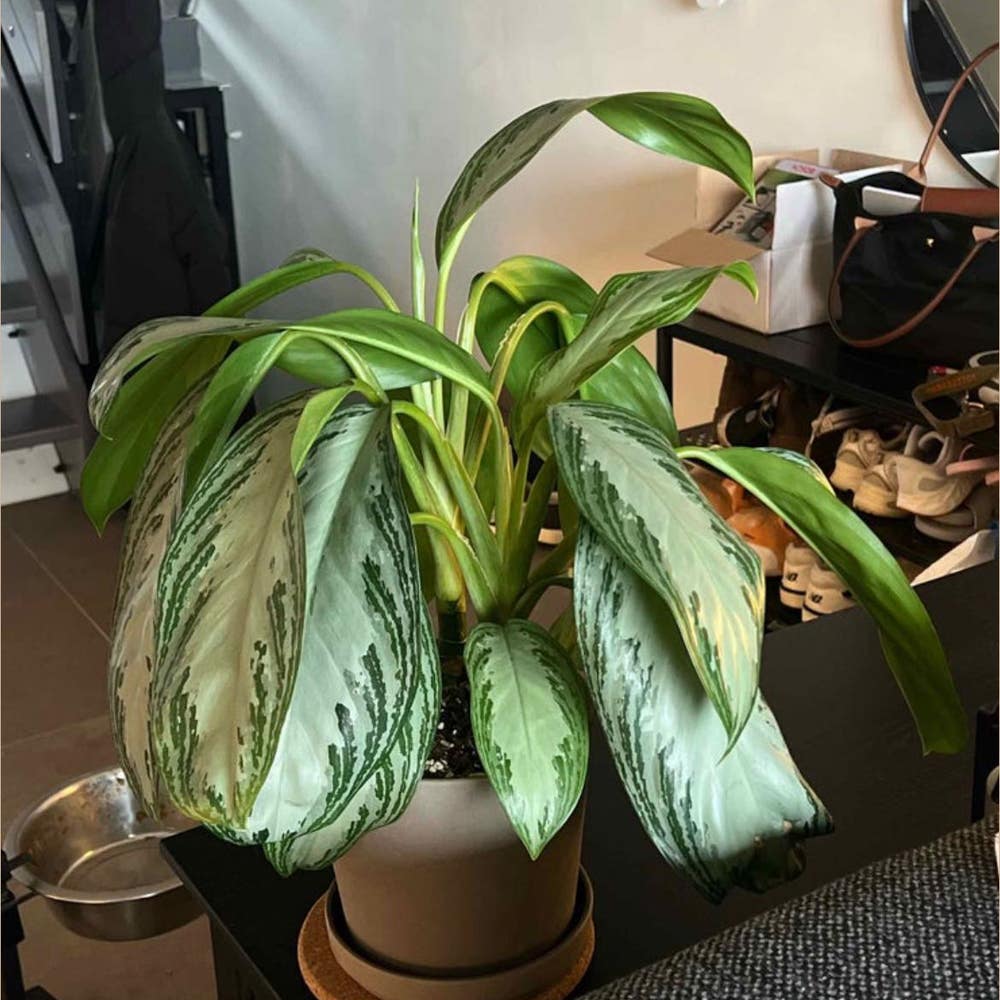
Why Are My Aglaonema 'Silver Bay' Leaves Falling Over?
Aglaonema 'Silver Bay'
By the Greg Editorial Team
Jun 18, 2024•3 min read
This article was created with the help of AI so we can cover more plants for you. May contain errors. See one? Report it here.
Prevent your Aglaonema 'Silver Bay' from wilting 🍂 with our fail-proof plant care secrets!
- Yellow leaves and soft stems signal overwatering; let soil dry to fix.
- Crispy leaves mean underwatering; water thoroughly and adjust soil mix.
- Stable temperature and no drafts keep Aglaonema 'Silver Bay' leaves upright.
When Water Works Against You: Overwatering Woes
💧 Spotting the Signs of Too Much H2O
Yellowing leaves and stems with the consistency of overcooked noodles are your Aglaonema's way of waving a white flag. If the soil smells like a swamp, that's your cue to rethink your watering game plan.
🚑 The Rescue Routine
First, stop watering on autopilot and let the soil dry out to the consistency of stale cake. If the pot feels heavier than your last breakup, it's waterlogged. Improve drainage by mixing in some gritty friends like perlite or sand. When it comes to roots, think of a haircut; trim away the mushy parts to let the healthy ones breathe. Remember, moderation is not just for monks; it's also for plant parents.

Thirsty Plant Problems: The Underwatering Equation
🏜️ Crispy Leaves and Wilted Dreams
Aglaonema 'Silver Bay' leaves don't just flop over for no reason; dry distress is often the culprit. When the soil feels as barren as a desert, it's a clear signal your plant is screaming for hydration.
Hydration Help
To revive your parched plant, start with a thorough watering, ensuring water reaches the entire root system. Then, adjust your routine to prevent future droughts. Consider a moisture-retentive soil mix with peat moss or coco coir to keep the thirst at bay.

It's Not You, It's the Climate: Environmental Stress Factors
🥶 Droop Triggers: Temperature and Drafts
Aglaonema 'Silver Bay' is no fan of the rollercoaster—temperature rollercoasters, that is. Drafts and temperature fluctuations are like kryptonite to these tropical beauties. If your plant's leaves are drooping, it might be throwing a fit over the less-than-ideal conditions. Think of drafts as the uninvited plus-ones at your plant's chill soiree, causing leaves to slump in dismay.
🌡️ Climate Control: Keeping Your Aglaonema Comfy
To keep your Aglaonema 'Silver Bay' from throwing a temper tantrum, stabilize its microclimate. Shield it from the shock of sudden temperature changes—like avoiding giving your plant an unexpected ice bath or a desert trek. Consistency is your new mantra; find a spot where the temperature is as steady as a seasoned yogi's pose. Keep it away from the drama of drafty windows, doors, and the fierce breath of heating or cooling vents. Your plant will thank you with perky leaves and a drama-free existence.

Falling Leaves Prevention: Best Practices
💧 Water Wisdom: Finding the Balance
Crafting the perfect watering schedule is crucial for Aglaonema 'Silver Bay'. It's like a dance, knowing when to step forward with hydration and when to pause. Use a moisture meter or the finger test to gauge soil moisture; aim for a consistent level that's neither Sahara-dry nor Amazon-wet.
🌡️ Draft-Proofing and Temperature Tips
Stable conditions are your Aglaonema's best friend. Avoid placing it near drafty windows or doors where sudden temperature changes are more Broadway drama than botanical bliss. Keep the room temperature steady, ideally between 65-85 degrees Fahrenheit. If you're cranking up the heat in winter, consider a humidifier to counteract the dry air.
Remember, your plant's comfort zone is a microclimate, not a rollercoaster.
⚠️ Safety First
This content is for general information and may contain errors, omissions, or outdated details. It is not medical, veterinary advice, or an endorsement of therapeutic claims.
Always consult a qualified healthcare professional before using any plant as food, medicine, or supplement.
Never eat any plant (or feed one to pets) without confirming its identity with at least two trusted sources.
If you suspect poisoning, call Poison Control (800) 222-1222, the Pet Poison Helpline (800) 213-6680, or your local emergency service immediately.
Spotted an error? Please report it here.
Ensure your Aglaonema 'Silver Bay' thrives with consistent care 🌿 by leveraging Greg's custom reminders for the perfect watering rhythm and stable home environment tips.