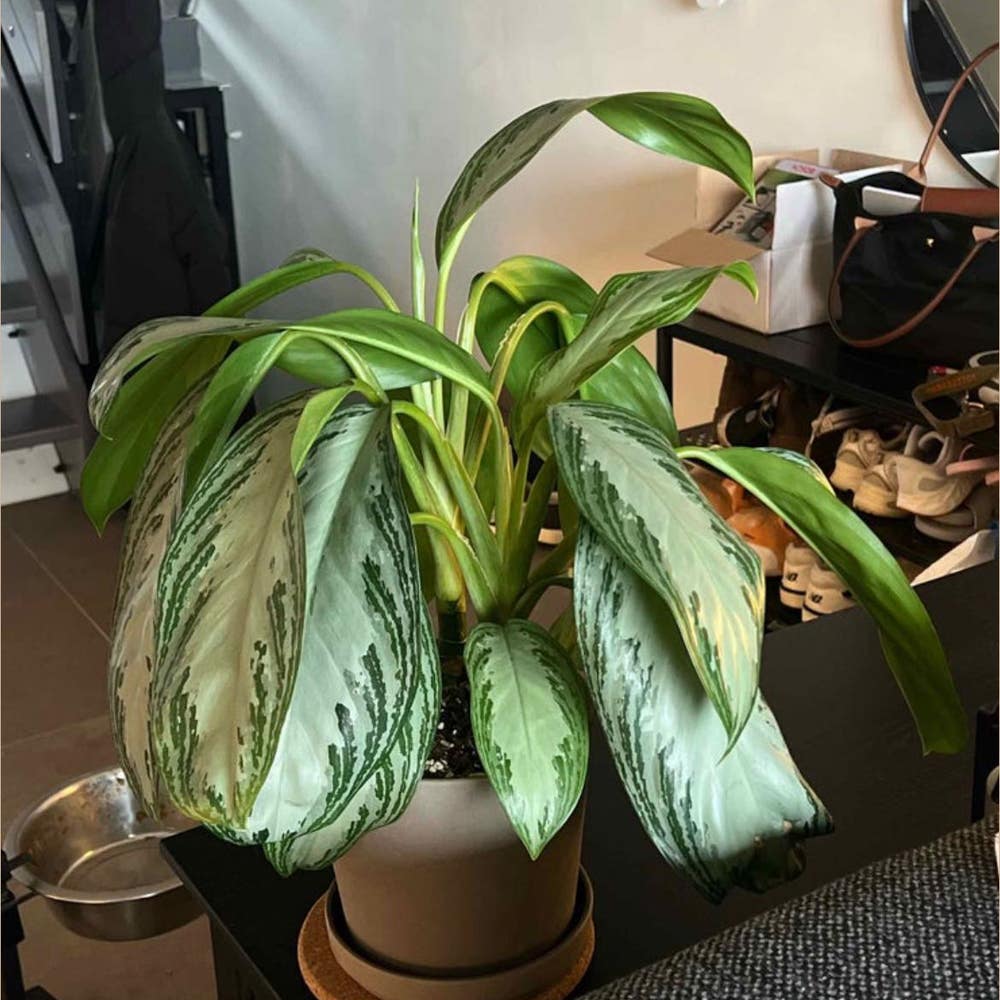
💧 Why Are My Aglaonema 'Silver Bay' Leaves Mushy?
Aglaonema 'Silver Bay'
By the Greg Editorial Team
Jun 18, 2024•3 min read
This article was created with the help of AI so we can cover more plants for you. May contain errors. See one? Report it here.
Prevent mushy Aglaonema leaves 🍂 with top watering and drainage hacks for plant health!
- Yellow leaves and mushy stems signal overwatering in Aglaonema 'Silver Bay'.
- Stop watering and address drainage if you detect mushiness or foul odor.
- Repot with well-draining mix and adjust watering to soil moisture levels.
Spotting the Trouble: Signs Your Aglaonema 'Silver Bay' Has Mushy Leaves
💦 Overwatering Symptoms
Yellowing leaves and mushy stems are the tell-tale signs of overwatering your Aglaonema 'Silver Bay'. If the soil feels like a wet sponge, it's time to intervene. Overwatering can quickly escalate to a mushy mess, so pay attention to the moisture level of the soil before it's too late.
🚨 Root Rot Red Flags
Beneath the surface, root rot lurks like a silent assassin, waiting to take down your plant. If you notice a foul odor emanating from the soil or if the roots have turned from a healthy white to a sickly brown, it's a clear indication of root rot. This is often the result of overzealous watering or poor drainage.
🌊 Drainage Dilemmas
The right pot and soil are crucial for preventing water retention. If your Aglaonema 'Silver Bay' is sitting in a pot without adequate drainage or soil that clings to moisture like a lifeline, you're setting the stage for waterlogged woes. A quick fix? More holes in the pot and a well-draining soil mix could save your plant's life.

First Aid for Mushy Leaves
🚑 Immediate Steps to Take
If your Aglaonema 'Silver Bay' has mushy leaves, it's time for some plant triage. Stop watering immediately—your plant isn't throwing a pool party. Gently remove it from its pot and shake off any soggy soil. If the roots look like they've been binge-watching sad movies (think dark and mushy), it's time to snip the rot away. Let the roots air out; they need a breather, not a bath.
🚰 Adjusting Your Watering Ways
Once you've addressed the immediate crisis, it's time to reassess your watering routine. Let the soil's top inch dry out completely before even thinking about watering again. Your goal is to create a desert downpour scenario—infrequent but thorough. This isn't about playing hard to get; it's about teaching your plant to appreciate the water it gets.
🌱 The Repotting Rescue
If the roots are still throwing a pity party after your initial intervention, consider a repotting session. Choose a pot with enough drainage holes to make Swiss cheese jealous, and fill it with a well-draining potting mix. Think of it as upgrading your plant to a penthouse with a view. After the repot, keep a close eye on your plant. It's not out of the woods yet, but with careful monitoring and a bit of luck, it'll be back to its glossy self in no time.

Keeping Your Aglaonema 'Silver Bay' Happy and Healthy
💧 Watering Wisdom
Consistency is key when it comes to watering your Aglaonema 'Silver Bay'. The goal is to keep the soil evenly moist without making it soggy. Check the top two inches of soil; if it's dry, it's time to water. In brighter light, your plant will drink more, so water more frequently. Conversely, in lower light, reduce the watering. A moisture meter isn't a must-have, but it's a handy tool to prevent guesswork.
🌱 The Perfect Pot and Soil Combo
Choosing the right pot and soil for your Aglaonema 'Silver Bay' is like setting the stage for a stellar performance. Well-draining soil is the foundation—think a mix of coco coir, perlite, and compost. This trio offers the ideal balance of drainage and moisture retention. As for the pot, drainage holes are non-negotiable. If you're stuck with a pot sans holes, a layer of lava rocks at the bottom can be your plant's lifeline, creating a reservoir for excess water to keep those roots from drowning.

⚠️ Safety First
This content is for general information and may contain errors, omissions, or outdated details. It is not medical, veterinary advice, or an endorsement of therapeutic claims.
Always consult a qualified healthcare professional before using any plant as food, medicine, or supplement.
Never eat any plant (or feed one to pets) without confirming its identity with at least two trusted sources.
If you suspect poisoning, call Poison Control (800) 222-1222, the Pet Poison Helpline (800) 213-6680, or your local emergency service immediately.
Spotted an error? Please report it here.
Say goodbye to mushy leaves by letting Greg's tailored reminders 🚿 keep your Aglaonema 'Silver Bay' perfectly hydrated without the guesswork!