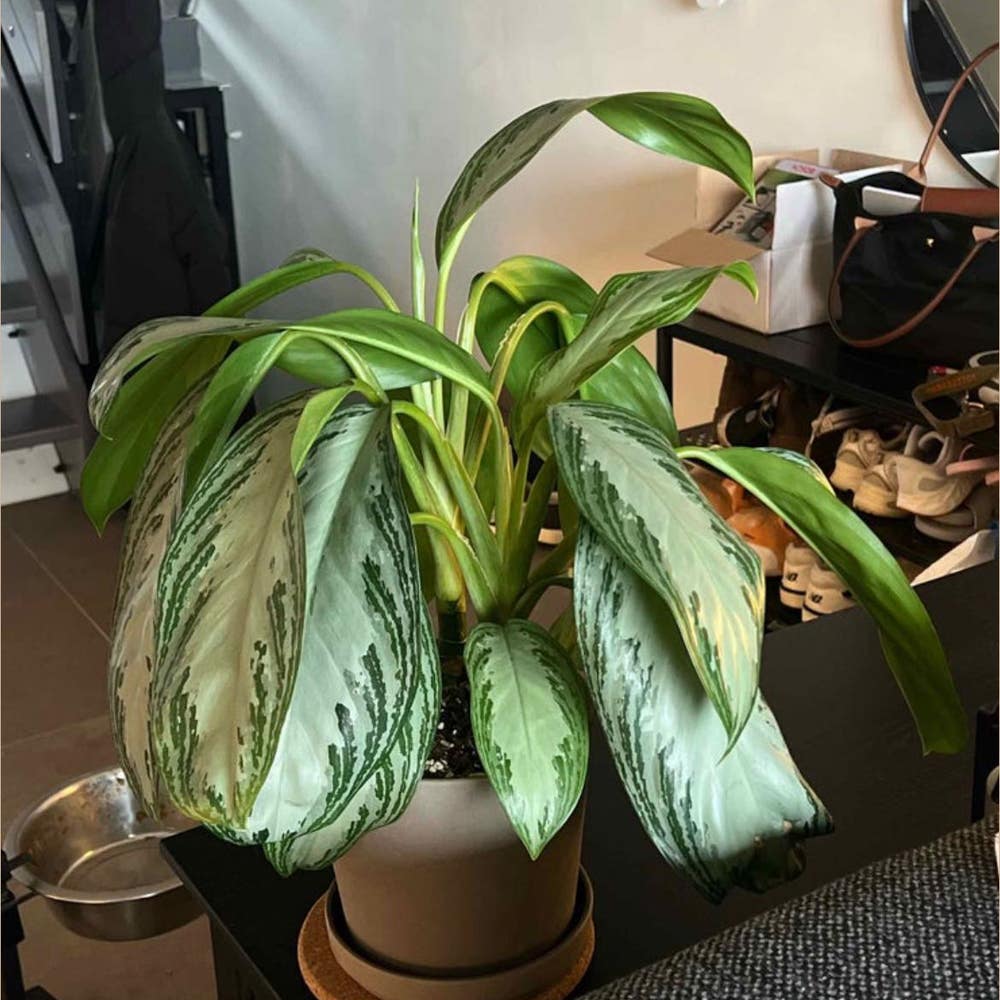
Light Requirements For Your Aglaonema 'Silver Bay' by Season
Aglaonema 'Silver Bay'
By the Greg Editorial Team
Jun 18, 2024•3 min read
This article was created with the help of AI so we can cover more plants for you. May contain errors. See one? Report it here.
Discover how to keep your Aglaonema 'Silver Bay' flourishing 🌿 through the seasons with smart lighting strategies!
- 🌱 Gradually increase light in spring to encourage new growth.
- 🌞 Filter summer light to prevent leaf burn; use sheer curtains.
- 💡 Use grow lights in winter for the brightest spot and happy plants.
Seasonal Light Smarts for Aglaonema 'Silver Bay'
🌱 Spring into Light
As winter thaws, gradually introduce your Aglaonema 'Silver Bay' to spring's brighter days. Start by placing it in an area with indirect light and watch for signs of new growth—a testament to your light management prowess.
🌞 Summer Shade Shuffle
Shield your 'Silver Bay' from the summer's solar smackdown. It's a delicate dance of light and shade, aiming to prevent the leaves from getting a sunburnt look. Find a spot where the light is bright but filtered, like behind a sheer curtain.
🍂 Autumn Adjustments
When daylight savings snatches an hour of sunlight, it's time to adapt. Move your plant to catch those precious rays, but when the sun starts clocking out early, supplement with artificial light to keep your 'Silver Bay' from slacking off.
❄️ Winter Light Maximization
Winter's gloom can't be an excuse for your 'Silver Bay' to hibernate. Find the brightest spot in your home, where natural light is still on the guest list, and consider a grow light to fill in the winter light deficit—think of it as a vitamin D supplement for your plant.

Indoor Light Perfection
⛅️ Finding the Best Spot
Bright, indirect light is the sweet spot for your Aglaonema 'Silver Bay'. To achieve this indoors, place it near an east or west-facing window. This ensures a soft, diffused light without the harsh midday sun. Avoid south-facing windows unless you're armed with sheer curtains to soften the blow.
Remember, proximity matters. Keep your plant within a few feet of the window, but out of the direct sun's path. It's a delicate dance of light and shadow, ensuring your 'Silver Bay' isn't left in the dark or scorched in the spotlight.
🌳 Outdoor Considerations
Thinking of taking your 'Silver Bay' outside? Morning light is your ally, but the afternoon sun is the villain in this story. A spot with partial shade will shield your plant from the harshest rays.
Outdoor placement is a game of observation. Watch how the light plays throughout the day, and adjust accordingly. Your 'Silver Bay' might thrive on a shaded patio or beneath a tree that filters the sunlight. Just like a pale-skinned beachgoer, it needs protection from the midday sun.

Grow Lights: A Silver Lining
💡 When to Consider Grow Lights
If your Aglaonema 'Silver Bay' has leggy stems or the leaves are reaching upwards, it's a cry for more light. Grow lights can be a game-changer, especially during the short days of winter. They're not just for show; they can boost flowering and overall plant vigor.
💡 Choosing the Right Grow Light
LEDs are the MVPs here—they're energy-efficient and offer a full light spectrum, akin to the sun's embrace. For the 'Silver Bay', which doesn't need a suntan, a simple fluorescent bulb can work if you're watching your wallet.
Light Spectrum and Plant Growth
Remember, blue light is like a green thumb for foliage, and red light is your flower power. Tailor the spectrum to your plant's needs, and you'll see it thrive.
💡 Setting Up Your Grow Lights
Place the lights a few inches above your plant—close, but not too close. You don't want to give your 'Silver Bay' a sunburn. Monitor its reaction; if it's still stretching, crank up the light a bit. If it's looking crispy, dial it back. It's all about finding that sweet spot.

⚠️ Safety First
This content is for general information and may contain errors, omissions, or outdated details. It is not medical, veterinary advice, or an endorsement of therapeutic claims.
Always consult a qualified healthcare professional before using any plant as food, medicine, or supplement.
Never eat any plant (or feed one to pets) without confirming its identity with at least two trusted sources.
If you suspect poisoning, call Poison Control (800) 222-1222, the Pet Poison Helpline (800) 213-6680, or your local emergency service immediately.
Spotted an error? Please report it here.
Navigate your Aglaonema 'Silver Bay's light needs with ease through every season, as Greg 🌞 sends tailored reminders to keep your plant perfectly poised for growth.