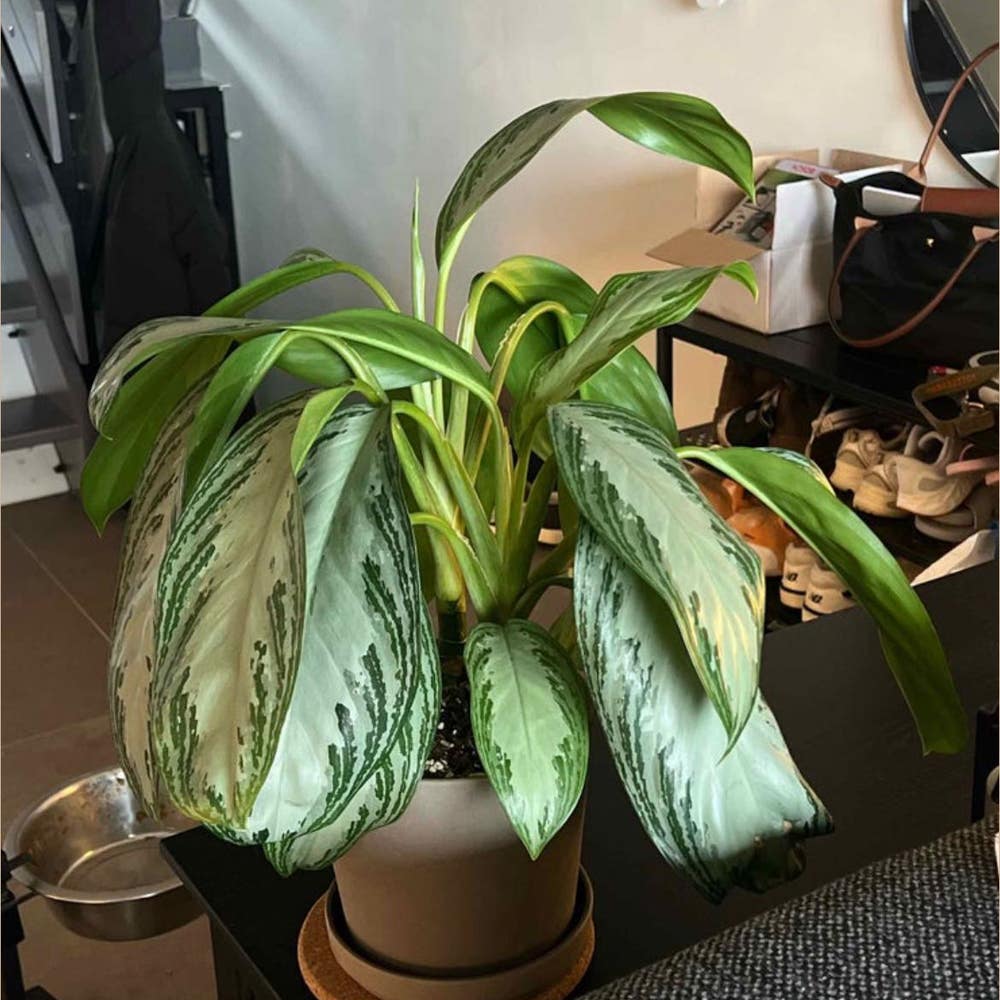
Aglaonema 'Silver Bay' - Ultimate Guide to Fertilizing
Aglaonema 'Silver Bay'
By the Greg Editorial Team
Jun 18, 2024•4 min read
This article was created with the help of AI so we can cover more plants for you. May contain errors. See one? Report it here.
Nurture a lush Aglaonema 'Silver Bay' 🌿 to blooming brilliance with this essential fertilizing guide.
- Balanced N-P-K ratio (10-10-10) essential for 'Silver Bay' health and blooms.
- 🌱 Monthly fertilizing in growth season, less in dormant season.
- Prevent over-fertilization; watch for yellow leaves, salt buildup, damaged roots.
Picking the Right Food for Your 'Silver Bay'
💡 Balanced Diet: Understanding N-P-K Ratios
Nitrogen, Phosphorus, and Potassium (N-P-K) are the trinity of plant nutrition, each playing a pivotal role in the health of your Aglaonema 'Silver Bay'. Nitrogen is the leafy green's best friend, phosphorus roots for robust roots and blooms, and potassium is the all-rounder, ensuring the plant's systems run without a hitch. For 'Silver Bay', aim for a balanced N-P-K ratio, like 10-10-10, to cover all the bases. But don't let micronutrients be the wallflowers at this nutrient party—they're essential too.
💡 Liquid vs. Granular: What's Best for 'Silver Bay'?
Liquid fertilizers are the quick fix, providing a rapid nutrient hit to your 'Silver Bay', while granular types are the tortoises of the fertilizer world, releasing nutrients slowly but steadily. Pros of liquid: immediate satisfaction; cons: fleeting effects. Pros of granular: long-lasting; cons: slow to kick in. Your lifestyle dictates your choice—if you're a set-it-and-forget-it person, granular might be your jam. If you're more hands-on, you might prefer the control that liquid offers. Remember, whether you're a weekly waterer or a forgetful feeder, there's a fertilizer that fits your 'Silver Bay' care routine.

Timing is Everything: When to Fertilize 'Silver Bay'
🌱 Growth Spurts: Fertilizing in the Growing Season
Spring and summer are prime time for your Aglaonema 'Silver Bay'. During these seasons, it's all systems go for growth. Fertilize monthly to support this active period. But remember, it's not a buffet—adjust the strength of your fertilizer to half or three-quarters, especially if you're an eager beaver with the watering can.
❄️ Winter Slumber: Fertilizing in the Dormant Season
As the days get shorter and your 'Silver Bay' starts to yawn, it's time to ease up on the feeding. Reduce fertilization to every other month or even pause completely during fall and winter. Keep an eye out for signs of a slowdown—less frequent new leaves are your cue that your plant is ready to hibernate.

Fertilizer Application: Doing it Right
💧 Mixing it Up: Preparing Liquid Fertilizer
Dilution is your 'Silver Bay's' best friend when it comes to liquid fertilizers. To prevent the dreaded fertilizer burn, start with a quarter to half of the recommended strength. This is like giving your plant a gentle boost rather than an overwhelming surge.
When applying, ensure the soil is moist. Water with plain water first, then follow with the diluted fertilizer solution. This method reduces salt buildup and protects your plant's roots.
🌾 Going Granular: Working with Slow-Release Fertilizers
Granular fertilizers are a set-it-and-forget-it solution, providing long-term nutrition. Apply these according to package instructions, typically sprinkling around the base of the plant and lightly mixing into the soil.
The benefits of slow-release fertilizers are their low maintenance and steady nutrient supply, which supports consistent growth. Remember, less is often more; overdoing it can lead to nutrient overload and harm your 'Silver Bay'.

Blooms and Fertilizer: Making the Connection
💐 Encouraging Blooms with Fertilizer
Phosphorus is your 'Silver Bay's' best friend when it comes to blooms. As the plant winds down for winter, switch to a higher phosphorus fertilizer to set the stage for flowering.
Micronutrients like iron and manganese are the unsung heroes of bloom vitality. Ensure your fertilizer includes these, but remember: more isn't always better. Overdoing it can be just as harmful as a deficiency.
🌼 The Role of Micronutrients in Blooming
Micronutrients are like the plant's version of a multivitamin. They're crucial for the overall health and development of blooms. A well-rounded fertilizer will include these tiny but mighty elements.
For the organic aficionados, compost or manure can be a game-changer. They offer a slow-release buffet of nutrients, including those all-important micronutrients, without the harshness of chemicals. Plus, you get to feel like an eco-warrior. Win-win.
Saving Your 'Silver Bay' from Overindulgence
🚨 Spotting Trouble: Signs of Over-Fertilization
Over-fertilization can turn your 'Silver Bay' into a nutrient-zapped zombie. Yellowing leaves or a white, crusty salt buildup on the soil are your first red flags. Roots looking like they've been through a rough night—browned or blackened—are a cry for help. If the leaves are dropping like flies at a swatter convention, you've probably overdone it with the plant chow.
🛠️ The Recovery Plan: Remedying Over-Fertilization
Caught your 'Silver Bay' with its leaves in the fertilizer jar? Flush the soil with water to wash away excess salts—think of it as a detox. Repeat this a few times, like hitting the reset button on your plant's health. If the soil is holding onto water like a greedy sponge, consider a soil change or a pot with better drainage. Let the plant go on a bit of a dry spell before you even think about fertilizing again. It's a plant, not a teenager; it doesn't need constant feeding.
⚠️ Safety First
This content is for general information and may contain errors, omissions, or outdated details. It is not medical, veterinary advice, or an endorsement of therapeutic claims.
Always consult a qualified healthcare professional before using any plant as food, medicine, or supplement.
Never eat any plant (or feed one to pets) without confirming its identity with at least two trusted sources.
If you suspect poisoning, call Poison Control (800) 222-1222, the Pet Poison Helpline (800) 213-6680, or your local emergency service immediately.
Spotted an error? Please report it here.
Nurture your Aglaonema 'Silver Bay' with balanced nutrition 🌱 and let Greg remind you when it's time to fertilize for a thriving, happy plant.