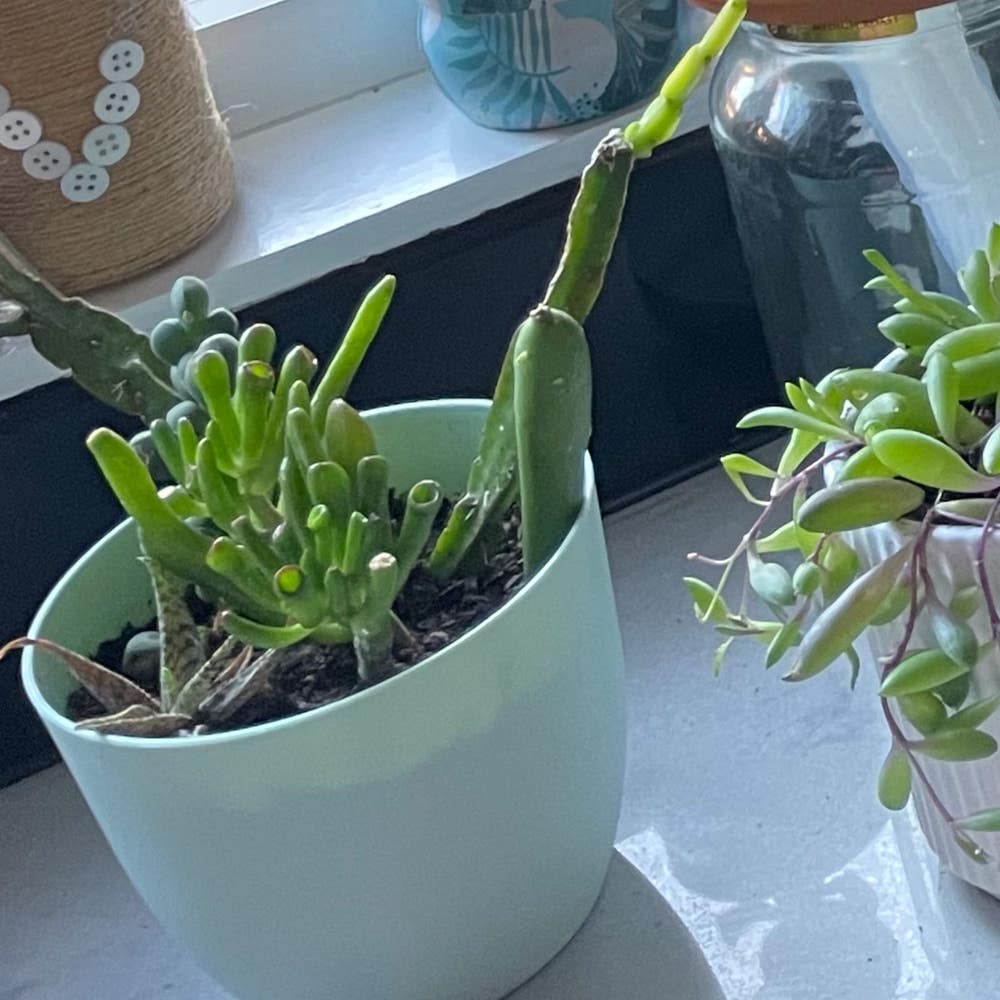
How Do I Cure Variegated Candle Plant Root Rot?
Baculellum articulatum f. variegatus
By the Greg Editorial Team
Apr 03, 2024•4 min read
This article was created with the help of AI so we can cover more plants for you. May contain errors. See one? Report it here.
- Yellow leaves and wilting signal early root rot in Variegated Candle Plants.
- Prune and repot using well-draining soil and pots to combat root rot.
- Adjust watering seasonally and inspect roots regularly to prevent rot.
Spotting the Red Flags: Early Signs of Root Rot in Your Variegated Candle Plant
🚩 Visual Symptoms on Leaves and Stems
Yellowing leaves are the first red flag; they're not just changing colors for fun. Wilting is your plant's way of saying, "I'm struggling here."
🕵️ Below the Soil: What to Look For
Root inspection is key. Healthy roots are firm and white, not soft and brown. A foul odor? That's the smell of trouble, not just bad soil.
Taking Action: Effective Treatment Steps
✂️ Pruning: The First Line of Defense
Pruning is not just a cosmetic fix—it's a vital step in saving your Variegated Candle Plant from root rot. Begin by sterilizing your pruning tools with rubbing alcohol or a bleach solution to prevent spreading any disease. Carefully remove the plant from its pot and shake off loose soil to expose the roots. Snip away the soft, brown roots, cutting back to the firm, white, healthy ones. It's like excising the bad to preserve the good. Dispose of the diseased roots immediately—think of it as ejecting the troublemakers out of your plant's life.
🌱 The Right Environment: Repotting Essentials
After the pruning purge, it's time to give your plant a fresh start. Choose a well-draining soil mix—a blend with perlite or sand can prevent waterlogging. Select a new pot with adequate drainage holes; this isn't a luxury, it's a necessity. When repotting, handle the roots as if they're fine china—delicate and priceless. Position the plant at the same depth it was previously, and give it a gentle watering to settle it into its new home. Remember, the right environment can make or break your plant's comeback story.
Water Wisdom: Balancing Moisture to Avoid Root Rot
💧 Fine-Tuning Your Watering Schedule
Understanding your Variegated Candle Plant's thirst is key to preventing root rot. It's not just about sticking to a schedule; it's about responding to the plant's needs. Water deeply, but only when the soil starts to dry. This mimics natural rainfall, giving roots the moisture they crave without drowning them.
Tips for monitoring soil moisture are straightforward. Use a moisture meter for precision or trust the old finger test—dry soil an inch down means it's time to water. Remember, overwatering is a one-way ticket to root rot city.
🌞 The Role of Environmental Factors
Seasons and indoor conditions should dictate your watering habits, not the other way around. In summer, your plant might be parched due to increased evaporation. Conversely, in winter, it's in chill mode, requiring less frequent watering.
Adjust for humidity and temperature. These factors can turn your plant's soil from a comfy bed into a swamp or desert. Keep an eye on the moisture level and let your plant guide you. It knows what it wants—just listen.
Building a Strong Foundation: Prevention Practices
🌱 Soil and Pot Selection: Creating a Healthy Home
Well-draining soil is the unsung hero in the fight against root rot. It's the equivalent of breathable sneakers for a marathon runner—essential. For the Variegated Candle Plant, a mix that's light and airy, perhaps with a dash of perlite or coarse sand, can make all the difference.
Pot size matters too. Not too big, not too small, but just right. It's like choosing an apartment—space is good, but too much and you're just rattling around. And those drainage holes? They're your plant's lifeline, the emergency exits for excess water.
🕵️ Ongoing Vigilance: Routine Checks and Maintenance
Routine checks are your plant's personal bodyguard service, keeping threats at bay. Inspect roots regularly for signs of distress, and adjust your care routine in response to what you find. It's like tuning an instrument—constant small adjustments for perfect harmony.
Adjusting care based on plant feedback is like being a plant whisperer. You've got to listen to what your green buddy is telling you. If it's wilting or the leaves are yellowing, it's time to change tactics. It's a dialogue, not a monologue—communication is key.
⚠️ Safety First
This content is for general information and may contain errors, omissions, or outdated details. It is not medical, veterinary advice, or an endorsement of therapeutic claims.
Always consult a qualified healthcare professional before using any plant as food, medicine, or supplement.
Never eat any plant (or feed one to pets) without confirming its identity with at least two trusted sources.
If you suspect poisoning, call Poison Control (800) 222-1222, the Pet Poison Helpline (800) 213-6680, or your local emergency service immediately.
Spotted an error? Please report it here.
Eradicate root rot and keep your Variegated Candle Plant thriving 🌿 with Greg's custom watering plans and timely reminders tailored to your home's unique conditions.