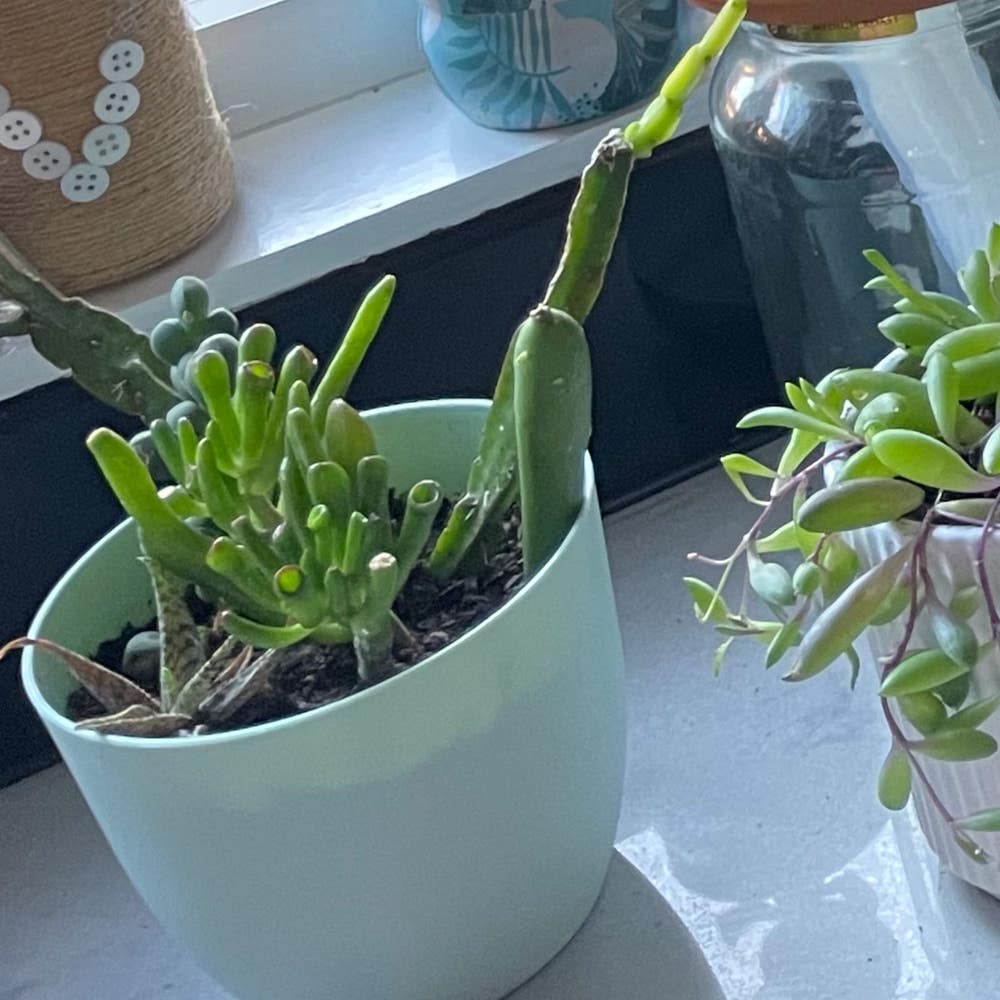
🌞 How Much Sunlight Does My Variegated Candle Plant Need?
Baculellum articulatum f. variegatus
By the Greg Editorial Team
Apr 03, 2024•4 min read
This article was created with the help of AI so we can cover more plants for you. May contain errors. See one? Report it here.
- Bright, indirect light is best for the Variegated Candle Plant.
- 🌤️ Morning sun, afternoon shade outdoors; 12 hours of light indoors.
- 🌱 Rotate for even growth, use full-spectrum LEDs as grow lights.
Sunlight: The Variegated Candle Plant's Best Friend
🌞 Indoor Sunshine Strategy
Best spots in your home for a happy plant are key. Your Variegated Candle Plant isn't a full-time sun worshipper—it prefers the bright, indirect light of a well-placed window. Think of it as the plant's favorite coffee shop corner: enough light to thrive but no direct rays causing a sunburn.
Tricks to diffuse too-strong rays can be as simple as using what you've got. Sheer curtains or blinds are the plant's sunglasses, softening the intense glare. It's about creating a gentle, filtered light environment where your plant can bask without the risk of turning into a crispy critter.
🌅 Outdoor Sunbathing Tips
Where to plant for the perfect light mix is a strategic decision. Morning sun followed by afternoon shade is the real estate jackpot for your Variegated Candle Plant. It's like getting a tan without the burn, allowing for optimal photosynthesis without the damage.
How to shield your plant from the sun's harsher moments involves some creativity. A location shuffle to dappled sunlight or partial shade provides a summer sanctuary. And don't forget, a strategic placement under trees or behind taller plants can be just as effective as any man-made sun shield.
Timing is Everything: How Long Should Your Plant Soak Up the Sun?
🌞 Indoor Light Schedule
Ideal daily light exposure for a Variegated Candle Plant is a balancing act. Aim for about 12 hours of light to mimic a natural day. Too much light and your plant's leaves may start to yellow, signaling distress. Too little, and you'll notice a spindly, stretched-out appearance as it reaches for more.
🚦 Signs Your Plant is Getting Too Much or Too Little Light
Keep an eye out for leaf burn or a plant that looks like it's been through a drought—that's your cue to dial back the sun worship. Conversely, if your green friend is leaning like a sunflower in a game of Twister, it's craving more rays. Use timers to maintain a consistent light schedule, especially during those darker months.
🌅 Outdoor Light Schedule
When planting outdoors, consider the seasonal adjustments. Spring's soft sun is a green light for more direct exposure, while the summer's scorching rays call for strategic shade. It's a dance with Mother Nature—know when to step in and when to step back.
🌄 Understanding Your Plant's Sunbathing Limits
Your plant's not auditioning for a sun-tan commercial; it needs its beauty sleep too. 6-8 hours of bright, indirect light is the sweet spot. Watch for signs like pale leaves or a lack of growth and adjust accordingly. Remember, your plant is a living thing, not a piece of furniture—it thrives on change and adjustment.
Let There Be Light: Flower Power and Sunlight
🌞 The Sun's Role in Flowering
Sunlight is the maestro of the Variegated Candle Plant's blooming orchestra. It's not just about quantity but also the quality of light that cues the symphony of flowers.
To ensure a floriferous display, aim for a spot that offers bright, indirect sunlight. Direct rays can be harsh, like an overzealous spotlight that fades the blooms. Think of the dappled light of a forest clearing – that's the sweet spot.
💡 Tips for Maximizing Flowering Potential with Sunlight
Rotate your plant regularly to give it an even tan – no one likes a lopsided bloom. If your indoor lighting is more cave-like, consider a full-spectrum grow light. It's like giving your plant a bit of the sun, no matter the weather outside.
Remember, your plant's need for light changes with the seasons. When winter dims the stage lights, play musical chairs with your plant's position to chase those precious rays.
And don't forget, plants need their beauty sleep too. Ensure they get darkness at night; it's non-negotiable for a healthy bloom cycle.
Lastly, patience is key. Blooms take their time, even under ideal conditions. So, keep calm and grow on.
Artificial Rays: Grow Lights as a Sun Substitute
💡 Choosing the Right Grow Light
Full-spectrum LEDs are the MVPs for the Variegated Candle Plant, closely mimicking the sun's comprehensive light range. Fluorescent bulbs are the budget pick, but mix 'cool' and 'warm' types to hit all the right wavelengths.
Position your grow lights about 12-18 inches above the plant. Closer and you risk leaf burn; farther and the light becomes a tease, too weak to be effective.
💡 Managing Artificial Light
Set up a grow light schedule that provides 12 to 14 hours of light, mirroring the sun's daily journey. Use timers to automate the process—your plant isn't craving a midnight snack of photons.
Balance grow lights with natural light, especially during those gloomy months. If your plant starts stretching or wilting, it's feedback time—adjust the light intensity or duration. Remember, it's not a tanning bed; keep the light indirect and the intensity sane.
⚠️ Safety First
This content is for general information and may contain errors, omissions, or outdated details. It is not medical, veterinary advice, or an endorsement of therapeutic claims.
Always consult a qualified healthcare professional before using any plant as food, medicine, or supplement.
Never eat any plant (or feed one to pets) without confirming its identity with at least two trusted sources.
If you suspect poisoning, call Poison Control (800) 222-1222, the Pet Poison Helpline (800) 213-6680, or your local emergency service immediately.
Spotted an error? Please report it here.
Ensure your Variegated Candle Plant thrives with the perfect glow by letting Greg track 🌞 its light exposure for optimal health and beauty!