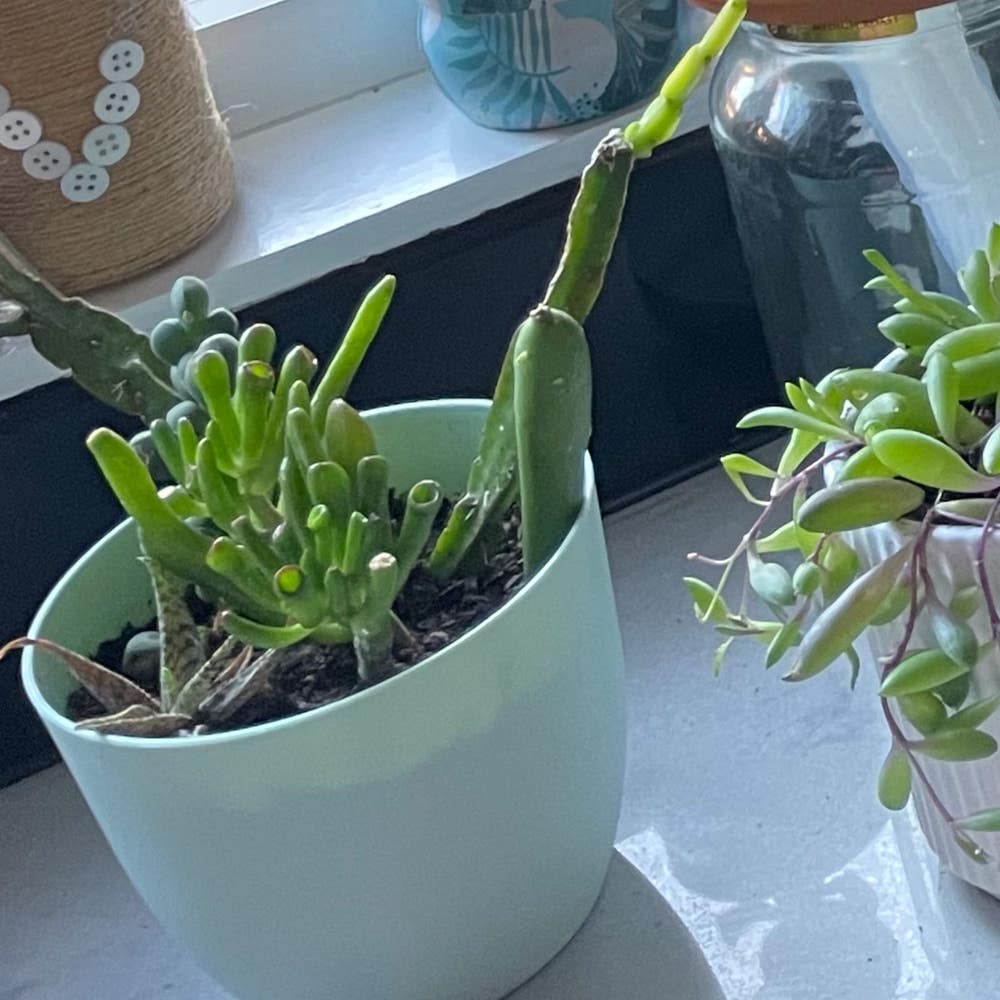
Why Are My Variegated Candle Plant Leaves Dropping?
Baculellum articulatum f. variegatus
By the Greg Editorial Team
Apr 03, 2024•5 min read
This article was created with the help of AI so we can cover more plants for you. May contain errors. See one? Report it here.
- Under/overwatering? Yellow, soggy, or crispy leaves signal trouble.
- Pests and diseases cause sticky residue and leaf spots—use water, soap, or fungicides.
- Proactive care wins: Monitor health, adjust routines, and provide balanced nutrition.
Spotting the Signs of Trouble
🍂 Identifying Early Symptoms of Leaf Drop
When your Variegated Candle Plant starts dropping leaves, it's not trying to redecorate your floor. Yellowing leaves are the plant's version of a distress signal. If they're more limp than a forgotten salad, you're likely underwatering. On the flip side, leaves that feel like a soggy sponge might mean you're loving it to death with water.
🍁 Recognizing the Difference Between Natural and Problematic Leaf Loss
A leaf or two hitting the dirt now and then is as normal as forgetting where you put your keys. But when your plant's shedding leaves like it's trying to go incognito, that's problematic. Seasonal leaf drop? Chill, it's just the plant's way of keeping things fresh. However, if your green buddy is dropping leaves like a hot potato, it's time to play detective.
Water Woes: Striking the Right Balance
💧 The Thirsty Plant: Underwatering and Leaf Drop
Spotting the Signs
When your Variegated Candle Plant's leaves hang limper than a deflated balloon, take note. Crispy, brown-tipped foliage is your plant's version of a distress signal. If the soil feels like a forgotten, dusty trail, it's time to act.
How to Hydrate Properly
Water deeply and wait for the excess to escape through drainage holes. This mimics a natural downpour, quenching roots without oversaturating. Let the topsoil dry out a bit before the next watering session, as roots need to breathe too.
💦 Drowning in Excess: Overwatering and Root Rot
Recognizing Overwatering Symptoms
Leaves that droop more than a bored teenager and stems that feel mushier than overcooked noodles are classic overwatering giveaways. If the soil clings to your fingers with a desperate plea, you've gone too far.
Adjusting Your Watering Routine
Ease up on the H2O. Allow the top inch of soil to dry out before giving your plant another drink. Use your finger or a moisture meter as a no-nonsense guide. Adjust frequency with the seasons, and always be ready to pivot your approach based on your plant's feedback.
Battling Biotic Stressors
🐛 Pests: Unwanted Guests and Their Telltale Damage
Identifying common culprits is like playing detective in your own garden. Aphids, spider mites, and mealybugs are the usual suspects. They leave behind distorted foliage, sticky residue, or tiny webs. Check the undersides of leaves; that's their favorite hideout.
Effective pest control strategies start with a blast of water to dislodge these freeloaders. Insecticidal soap or neem oil are your next best friends for stubborn cases. For a full-blown infestation, you might need the heavy artillery: miticides like Dicofol. But remember, it's a garden, not war. Use chemicals as a last resort.
🍄 Fungal Foes: Spotting and Stopping Diseases
Recognizing signs of fungal issues is crucial. Look out for leaf spots, wilts, or blights. These symptoms scream "fungal invasion" and demand immediate action.
Treatment and prevention tips include spot-treating with fungicides such as potassium bicarbonate or tebuconazole with trifloxystrobin. Always follow the label's instructions. Keep your garden clean; debris is a fungal playground. For organic aficionados, biological controls like Ampelomyces quisqualis can be a game-changer. They're like the good bacteria in yogurt, but for plants.
The Root of the Problem: Soil and Nutrition
🌱 Ensuring Root Health with the Right Pot and Soil
Root-bound stress is like a tight pair of shoes; it cramps style and growth. Look for roots peeking out of drainage holes or circling the soil surface. To give roots the freedom they crave, choose a pot that allows for growth, typically one size larger than the current one.
Potting mix is your plant's bed: it needs to be just right. A well-draining mix prevents water from throwing a pool party around the roots. If your plant's roots are gasping for air, it's time to repot with a mix that's fluffy and light, with ingredients like peat, perlite, or coconut coir.
🌿 Feeding Your Plant: Avoiding Nutrient Deficiencies
Plants need a balanced diet to flex those green muscles. Yellow leaves may scream for nitrogen, while weak stems whisper for phosphorus. Potassium is the silent guardian, keeping overall health in check. Spot the signs and respond with a nutrient boost.
Fertilizing is less about quantity, more about rhythm. Stick to a schedule that's like a regular check-up, not a feast. Overfeeding is the fast track to nutrient overload, which can lead to sad, burnt leaves. Remember, the goal is foliage fortitude, not a nutrient-induced coma.
Proactive Plant Parenting: Prevention Tips
💡 Crafting the Ideal Environment
Light: Your Variegated Candle Plant is no sun worshipper; it craves bright, indirect light. Too much direct sunlight can cause the leaves to throw in the towel, while too little light leaves them reaching for more. Find that Goldilocks zone, and you're golden.
Temperature: Keep it cozy but not hot. Your plant doesn't need to feel like it's vacationing in the tropics, but it doesn't want to shiver through winter either. Aim for a steady temperature—sudden changes are the enemy.
Humidity: This plant likes a bit of moisture in the air. Not to the point of a steam room, but think of a morning dew. A room humidifier or a pebble tray can be your best friend here.
🛡️ Regular Health Check-ups and Timely Interventions
Monitoring: Make it a habit to eyeball your plant like it's a piece of art. Notice a leaf looking off? That's your cue to act. Regular check-ups can spot trouble before it escalates into a leaf-dropping crisis.
Adjusting Care Routines: As seasons change, so should your care. Watering needs dial back in winter, and your plant might want to move a few inches to catch the optimal light. Stay attentive and tweak your routines like a plant DJ mixing the perfect track.
Hygiene: Keep it clean. Dead leaves are not a decor statement; they're an invitation for trouble. Clear out the clutter and let your plant breathe easy.
Remember, proactive care is about being a step ahead, not just reacting when the leaves hit the fan. Keep these tips in your plant care playbook, and you'll be more of a plant whisperer than a plant worrier.
⚠️ Safety First
This content is for general information and may contain errors, omissions, or outdated details. It is not medical, veterinary advice, or an endorsement of therapeutic claims.
Always consult a qualified healthcare professional before using any plant as food, medicine, or supplement.
Never eat any plant (or feed one to pets) without confirming its identity with at least two trusted sources.
If you suspect poisoning, call Poison Control (800) 222-1222, the Pet Poison Helpline (800) 213-6680, or your local emergency service immediately.
Spotted an error? Please report it here.
Prevent leaf drop and maintain your variegated candle plant's vibrancy 🍃 with Greg's tailored watering schedule and pest management tips!