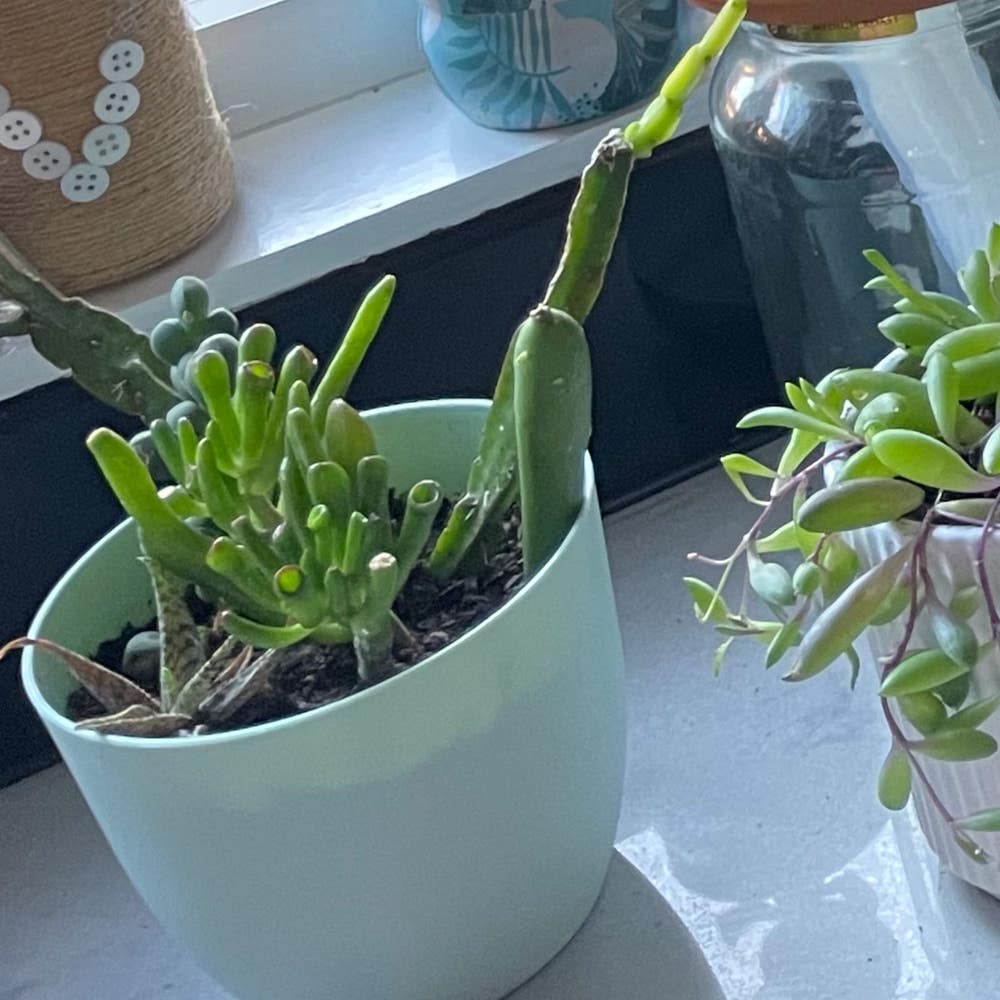
Why Are My Variegated Candle Plant Leaves Falling Over?
Baculellum articulatum f. variegatus
By the Greg Editorial Team
Apr 03, 2024•3 min read
This article was created with the help of AI so we can cover more plants for you. May contain errors. See one? Report it here.
- Over/underwatering and light levels affect leaf stability.
- Root health is crucial; repot if root-bound.
- Consistency and regular checks keep leaves upright.
Spotting the Telltale Signs
🚩 Visual Clues of Distress
Wilting leaves that once reached skyward are now a plant's white flag. Discoloration, spots, or curling edges are not just aesthetic issues; they're distress signals. If the leaves have lost their luster, turning pale or developing spots, it's time to take action.
📐 Assessing Plant Stability
Check for weak stems; they're the plant's support system. If they're bending like overcooked spaghetti, there's trouble. Gently unearth the roots and look for firmness and a healthy color. Mushy, brown roots spell disaster. Don't overlook the underside of leaves either; pests love to lurk there.
Common Culprits Behind the Droop
💧 Water Woes: Too Much or Too Little
Variegated Candle Plants are like Goldilocks when it comes to watering: they want it just right. Overwatering leads to root rot, a silent killer that turns roots into mush. On the flip side, underwatering leaves the soil dry and roots thirsty. To strike the right balance, feel the soil—a few inches dry to the touch, and it's time to water.
☀️ Light Levels: Finding the Sweet Spot
Light is a plant's best friend, but too much or too little can send your plant into a droopy despair. Bright, indirect light keeps the Variegated Candle Plant's leaves perky. Direct sunlight? Think crispy, scorched leaves. Not enough light? Expect weak, reaching foliage. Rotate your plant to ensure even light distribution and prevent the dreaded droop.
🌱 Root Health: Cramped Quarters Can Cause Collapse
Root-bound conditions are the equivalent of wearing shoes two sizes too small—uncomfortable and unsustainable. If your plant's roots are cramped, they can't support healthy leaf growth, leading to that sad, fallen look. Check if roots are circling the pot's bottom; it might be time for a bigger home.
First Aid for Fallen Leaves
💧 Adjusting Your Watering Routine
Feel the soil before you water; if it's dry an inch down, it's time to quench your plant's thirst. If it's damp, hold off. Your plant's roots need to breathe, not swim.
☀️ Let There Be Light (But Not Too Much)
Shift your plant to a spot with bright, indirect light. It's the equivalent of a morning coffee for your plant's stems. If your home is a cave, consider grow lights. Rotate your plant to avoid lopsided growth.
🌱 Repotting for Relief
When roots are cramped, leaves droop. It's time to repot. Choose a pot that's one size larger with drainage holes. Use fresh, well-draining soil to give your plant a new lease on life.
Keeping Leaves Upright: Prevention Tactics
💧 Consistency is Key: Watering and Light
Consistency in care is the backbone of a Variegated Candle Plant's health. Establish a routine that caters to your plant's needs, adjusting for the whims of the seasons. Like a well-oiled machine, your plant thrives on predictability. Water when the topsoil feels like a dry handshake—not too moist, not bone-dry. Light is just as crucial; think of it as the plant's daily bread. Too little and it starves, too much and it's overwhelmed. Find that sweet spot and stick to it.
👩⚕️ Regular Health Checks
Regular check-ups are not just for pets and people; plants need them too. Inspect the soil's moisture with the dedication of a detective. Keep an eye out for uninvited pests like they're gatecrashers at a party. Prune with the precision of a bonsai master, encouraging your plant to grow up, not just out. And remember, airflow is like good conversation—it should flow freely around your plant, keeping it fresh and invigorated.
⚠️ Safety First
This content is for general information and may contain errors, omissions, or outdated details. It is not medical, veterinary advice, or an endorsement of therapeutic claims.
Always consult a qualified healthcare professional before using any plant as food, medicine, or supplement.
Never eat any plant (or feed one to pets) without confirming its identity with at least two trusted sources.
If you suspect poisoning, call Poison Control (800) 222-1222, the Pet Poison Helpline (800) 213-6680, or your local emergency service immediately.
Spotted an error? Please report it here.
Prevent your variegated candle plant leaves from drooping by using Greg's tailored reminders 🌿 to adjust watering and lighting for optimal health.