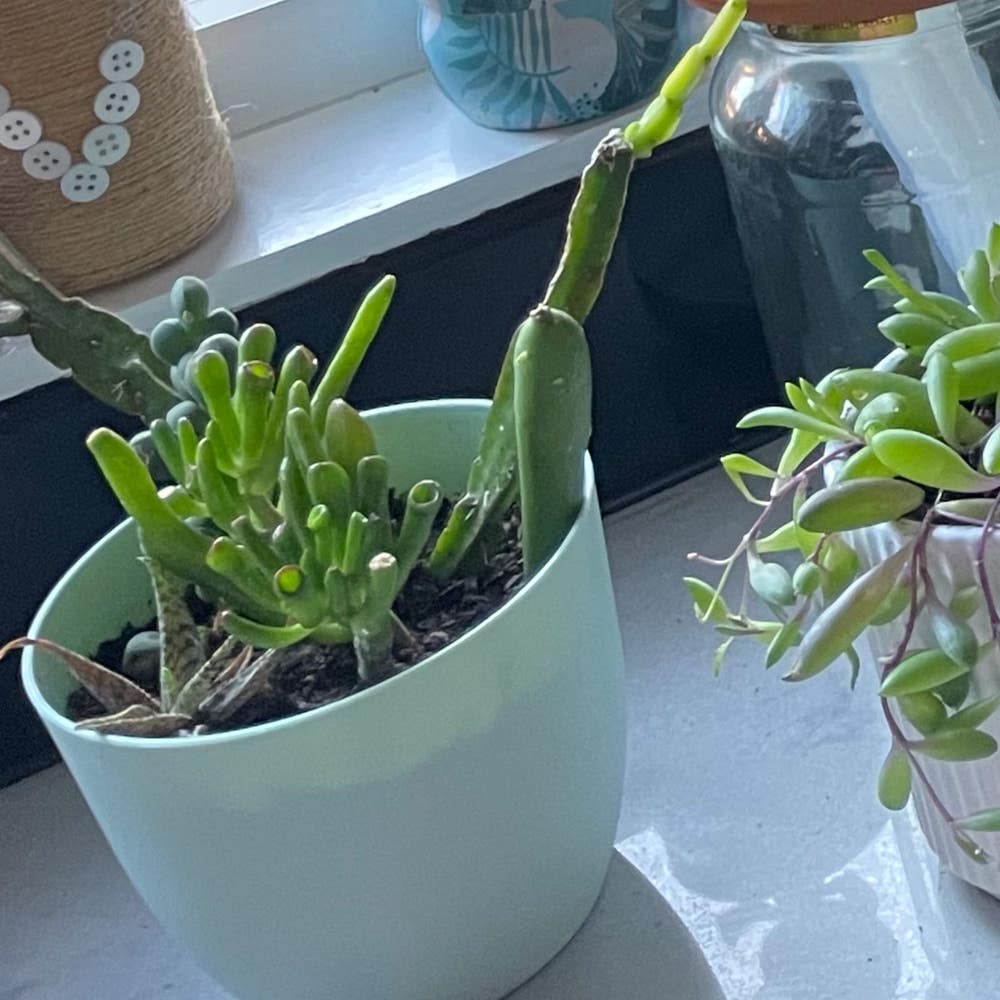
Why Are My Variegated Candle Plant Leaves Curling?
Baculellum articulatum f. variegatus
By the Greg Editorial Team
Apr 03, 2024•5 min read
This article was created with the help of AI so we can cover more plants for you. May contain errors. See one? Report it here.
- 💧 Goldilocks watering schedule prevents overwatering and leaf curl.
- 🌡️ Keep temperatures stable between 65°F and 75°F, with 40-60% humidity.
- 🌞 Bright, indirect light and nutrient-rich soil promote healthy leaves.
Pinpointing the Water Woes
💧 Signs of Overwatering
Yellow leaves and a swollen texture can signal your Variegated Candle Plant is getting too much H2O. If the soil feels like a wet sponge, it's time to ease up on the watering can. Overwatering symptoms also include soft, dark spots—like the plant's silent cry for help.
The Right Watering Rhythm
To prevent your plant from experiencing the watering rollercoaster, adopt a Goldilocks watering schedule: not too much, not too little, but just right. Perform the finger test—the soil should be moist, not soggy. Adjust your watering based on the plant's feedback, not a fixed calendar date. A lightweight pot indicates it's time for a drink, but don't overdo it.
Keeping the Climate in Check
🌡️ Temperature Tantrums
Stable temperatures are non-negotiable for the Variegated Candle Plant. It prefers a consistent climate, much like a mild spring day. Too hot or too cold, and you'll witness a leaf curling crisis. Aim for a range between 65°F and 75°F, where your plant can bask in comfort without breaking a sweat or shivering in the cold.
💦 Humidity Harmony
Humidity is like your plant's invisible companion, and getting it right is crucial. Too dry, and the leaves will crisp up like autumn foliage. Too moist, and you're rolling out the red carpet for unwanted fungal guests. Strive for a humidity level that's just right—think 40-60%. Use a hygrometer to monitor the air moisture, and consider a humidifier or pebble tray to keep things on an even keel. Keep your plant away from drafts and radiators to maintain that sweet spot of humidity bliss.
Let There Be (The Right Amount of) Light
🌞 Too Much Sun, Too Little Shine
Variegated Candle Plants are like the introverts of the plant world; they love bright spaces but shy away from the spotlight. Bright, indirect light is their comfort zone. If your plant's leaves are curling, it might be a sign that it's getting too much direct sunlight. The leaves are basically throwing up little green flags, signaling distress. To fix this, you might need to play musical chairs with your plant until you find a spot that's not too hot, not too dark, but just right.
🔄 Adjusting Light to Unfurl the Curls
If your plant's leaves are curling like a fist, it's time to assess your lighting situation. Rotate your plant regularly to promote even growth and prevent it from leaning towards the light like a sunflower. If the sun is too intense, especially during those peak summer months, diffuse it with sheer curtains or move the plant a few feet away from the window. And don't forget, as seasons change, so does the light in your home. Keep an eye out and tweak your plant's position as needed. It's not about coddling; it's about giving your plant the right tools to thrive. If you're tech-inclined, a light meter app can be a game-changer, helping you measure light levels without resorting to guesswork.
Feeding Your Plant: Nutrients and Soil
💡 Spotting Nutrient Starvation
Your Variegated Candle Plant's leaves curling could be a silent SOS for nutrients. Discoloration, weak stems, and stunted growth often accompany the curl. It's time for a soil test—think of it as a wellness check for your plant's diet.
🏜️ Soil and Root Health
Root health is paramount for flat, vibrant leaves. Choose well-draining soil that's not too clingy with moisture. Overfeeding is a no-no; it's like dumping sauce on your meal instead of seasoning it. Fertilize thoughtfully—your plant's not on a competitive eating show.
🚰 The Right Soil Mix
Go for soil that's the Goldilocks of dirt—not too dry, not too wet. It should cradle the roots like a hammock, not suffocate them like a wet blanket.
🍽️ Fertilizing: Less is More
When you do fertilize, think of it as a gentle nudge rather than a shove. Your plant prefers a steady diet over a feast-and-famine routine.
🌱 Organic Matter: The Secret Ingredient
Mix in some organic matter to keep the soil nutrient-rich. It's like upgrading your plant's diet from fast food to gourmet—compost or worm castings work wonders.
🚰 Water After Feeding
Always water after feeding to help nutrients circulate. It's like chasing a pill with water—necessary for proper absorption. Keep it balanced, and watch those leaves unfurl.
Battling Bugs and Blights
🐛 Common Culprits: Pests and Diseases
Variegated Candle Plants can fall victim to pests and diseases, leading to the dreaded leaf curl. Aphids, spider mites, and mealybugs are the usual suspects, launching covert operations on the undersides of leaves. Fungal foes like powdery mildew thrive in stagnant air, turning your plant's habitat into a moldy mess.
💥 Fight Back: Treatment and Prevention
Prevention is the first line of defense. Keep your plant's environment clean and check regularly for uninvited guests. If pests are spotted, a blast of water or application of insecticidal soap can often evict these freeloaders. For fungal issues, improve airflow with a fan or open window to disrupt the still, moist conditions they love.
For more stubborn infestations, neem oil serves as a gentler alternative to harsher chemicals. It's like sending in a polite but firm bouncer to clear out the riff-raff. In extreme cases, systemic insecticides can be the necessary evil to rescue your plant, but they're the last resort—like calling in a SWAT team when diplomacy fails.
Regularly introducing beneficial insects like ladybugs can be an effective and natural way to keep the pest population in check. They're like the unsung heroes, quietly keeping the peace in your plant's ecosystem. And remember, always target the underbelly of the leaves, where pests plot their next move.
In the end, consistent care and vigilance are your best weapons against the onslaught of pests and diseases. Treat your plant care routine like a daily health check-up—proactive and thorough, because catching problems early is always easier than dealing with a full-blown infestation.
⚠️ Safety First
This content is for general information and may contain errors, omissions, or outdated details. It is not medical, veterinary advice, or an endorsement of therapeutic claims.
Always consult a qualified healthcare professional before using any plant as food, medicine, or supplement.
Never eat any plant (or feed one to pets) without confirming its identity with at least two trusted sources.
If you suspect poisoning, call Poison Control (800) 222-1222, the Pet Poison Helpline (800) 213-6680, or your local emergency service immediately.
Spotted an error? Please report it here.
Ensure your Variegated Candle Plant's leaves stay flat and fabulous 📏 with Greg's personalized reminders for watering and rotating, keeping your green friend in top shape without the fuss!