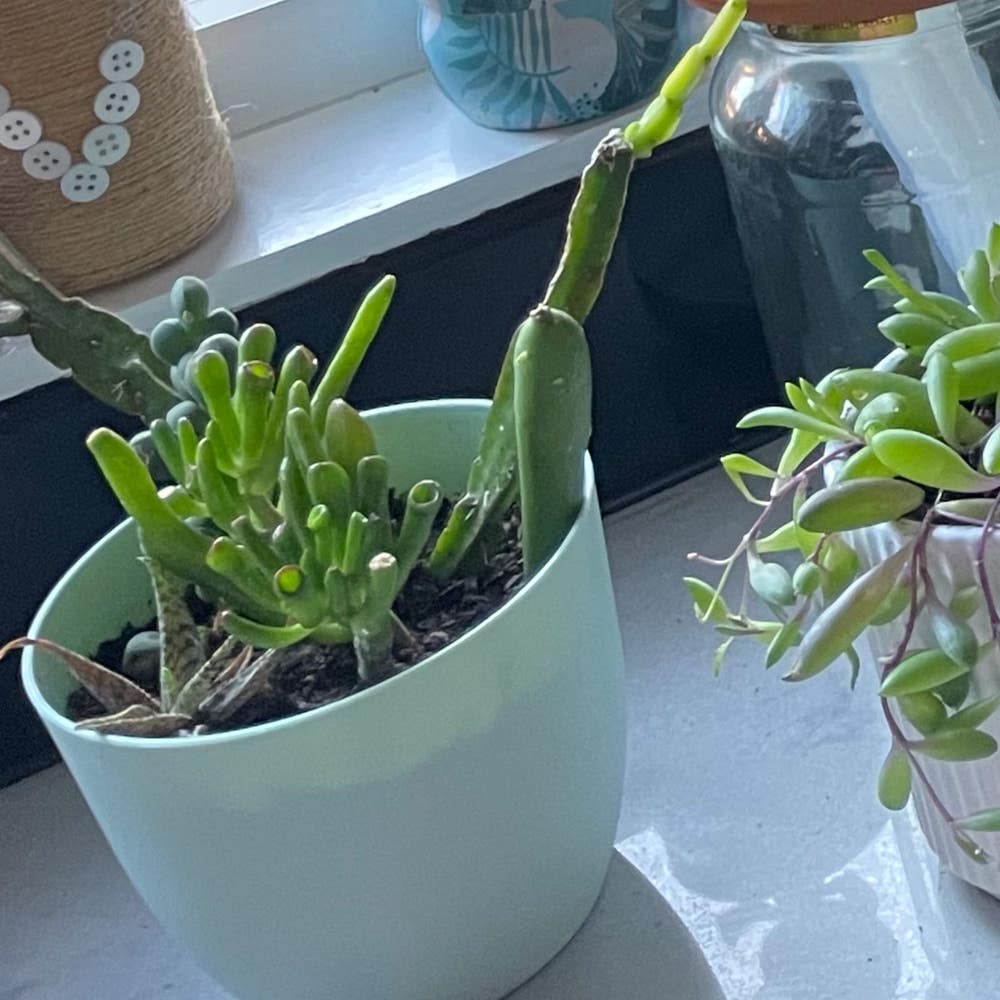
Why Are There Brown Spots on My Variegated Candle Plant?
Baculellum articulatum f. variegatus
By the Greg Editorial Team
Apr 03, 2024•4 min read
This article was created with the help of AI so we can cover more plants for you. May contain errors. See one? Report it here.
- Over/underwatering and sunburn can cause brown spots on leaves.
- Fungal infections manifest as spots with yellow halos.
- Consistent care and monitoring prevent and address brown spots.
Spotting the Trouble: Identifying Brown Spots
🍄 What Brown Spots Look Like
Brown spots on Variegated Candle Plant leaves are unpredictable invaders. Unlike the plant's natural patterns, these spots are randomly scattered, with no respect for symmetry. They can be small speckles or large, unsightly blotches, sometimes with crispy edges or a slimy feel. Look for irregular shapes, varying shades of brown, and sometimes alarming yellow or black halos.
🚩 When to Worry
Vigilance is your best defense. A few spots here and there might not spell disaster, but an increase in number or size is a red flag. If the spots spread like wildfire or have a distinct pattern, such as concentric rings, it's time to take action. Pay attention to their location—tips, edges, or across the entire leaf surface can indicate different issues. Dry and brittle spots often mean sunburn, while water-soaked spots with a yellow halo could point to a fungal or bacterial invasion.
The Usual Suspects: Common Causes of Brown Spots
💧 Too Much Love: Overwatering Woes
Overwatering is the silent killer in the plant world. It's a classic case of too much love. Your plant's roots need air as much as they need water; without it, they're prone to root rot. Brown spots often emerge as a distress signal from suffocating roots. Check for a waterlogged soil feel and a pot with poor drainage—these are red flags.
🏜️ Thirsty Roots: The Underwatering Connection
Conversely, underwatering can leave your plant's roots desperate for hydration. This stress can manifest as brown spots, which are essentially the plant's cry for help. Look for dry, brittle soil and leaves that may appear wilted or crispy. Consistent watering is key to avoiding these drought-induced blemishes.
🌞 Sun Kissed or Sunburned?
Just like humans, plants can get sunburned too. The variegated candle plant enjoys light, but too much direct sunlight can cause sunburn, leading to brown spots. These spots are typically dry and may have a bleached appearance. If your plant's leaves are showing these signs, it might be time to find a shadier spot.
🍄 Fungus Among Us
Fungal infections are sneaky; they start small but can quickly take over if not addressed. Brown spots from fungus may have a yellow halo and can spread rapidly across the leaf surface. Early detection is crucial, so keep an eye out for any unusual spotting and act fast to prevent a full-blown fungal fiesta.
Fixing the Spots: Remedies and Care Adjustments
💧 Watering Wisdom
Check the soil before watering—aim for a consistency that's moist but not waterlogged. Use a pot with drainage holes to prevent standing water, which can invite root rot. Adjust your watering schedule with the seasons, less in winter, more when your plant is actively growing.
✂️ Pruning with Precision
Remove brown-spotted leaves with sterilized scissors to prevent the spread of potential disease. Prune carefully, ensuring you only take the damaged parts to avoid stressing the plant further.
🌞 Light Right
Monitor sunlight exposure to ensure your Variegated Candle Plant isn't getting too much or too little. Gradually acclimate it to brighter spots to prevent sunburn. If necessary, use sheer curtains to filter harsh sunlight and protect your plant's delicate leaves.
Keeping Spots at Bay: Preventative Measures
🛡️ Consistent Care is Key
Consistency in care is the cornerstone of preventing brown spots on your Variegated Candle Plant. Establish a routine that includes regular watering when the top inch of soil feels dry, but not desert-like. Rotate your plant periodically to ensure even light exposure, and transition it slowly to new environments to avoid shocking its system.
⛅️ Environment Watch
Your plant's comfort zone lies in a stable environment. Temperature and humidity fluctuations are the enemies of plant health. Aim for that sweet spot of 40-60% humidity and avoid placing your plant in drafty areas or near heating and cooling vents. When it comes to light, bright but indirect is the mantra. Direct sunlight is a no-go; it's like throwing your plant into a tanning bed with no escape.
Airflow is another critical factor—space out your plants to prevent moisture buildup and disease. Think of it as social distancing for plants. Regular inspections will help you catch any brown spots early, and remember, water at the base to keep those leaves high and dry.
⚠️ Safety First
This content is for general information and may contain errors, omissions, or outdated details. It is not medical, veterinary advice, or an endorsement of therapeutic claims.
Always consult a qualified healthcare professional before using any plant as food, medicine, or supplement.
Never eat any plant (or feed one to pets) without confirming its identity with at least two trusted sources.
If you suspect poisoning, call Poison Control (800) 222-1222, the Pet Poison Helpline (800) 213-6680, or your local emergency service immediately.
Spotted an error? Please report it here.
Banish brown spots and cultivate a flourishing Variegated Candle Plant 🌿 with Greg's precise watering schedules and sun exposure monitoring for peak plant health!