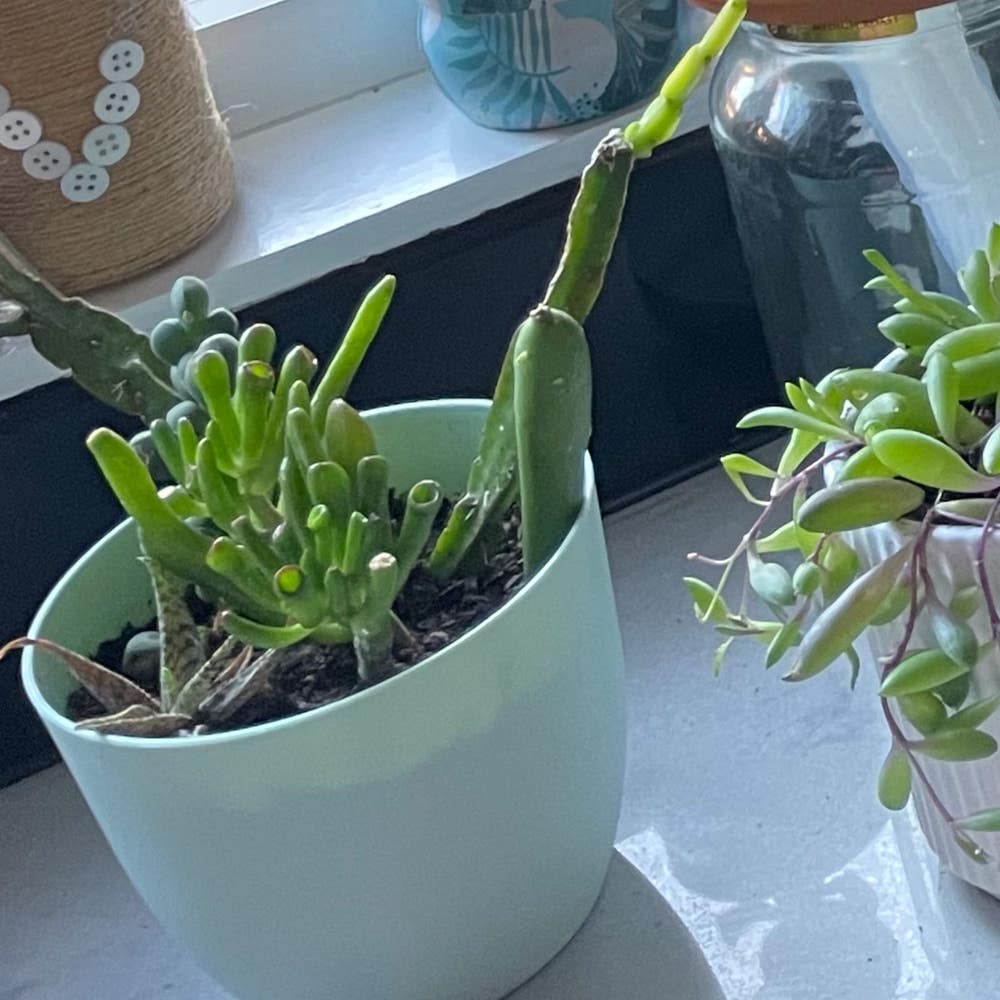
Why Are My Variegated Candle Plant Leaves Droopy?
Baculellum articulatum f. variegatus
By the Greg Editorial Team
Apr 03, 2024•3 min read
This article was created with the help of AI so we can cover more plants for you. May contain errors. See one? Report it here.
- Overwatering and underwatering both lead to droopy leaves; know the signs.
- Bright, indirect light is key; too much or too little harms the plant.
- Consistent temperatures help prevent droopiness; avoid sudden changes.
Pinpointing the Culprit: Diagnosing Droopy Leaves
💧 Overwatering vs. Underwatering
Overwatering turns your plant's soil into a swamp, leading to droopy leaves. The soil feels overly wet, and the leaves might yellow or develop black spots. In contrast, underwatering leaves the soil bone-dry and the leaves crispy. If your plant's pot feels suspiciously light, it's time to water.
🌞 Light and Shadow Play
Too much sun leaves your plant looking sunburned, while too little light results in stretched-out, colorless growth. Bright, indirect light is the sweet spot. If your plant's leaves are reaching for the light or losing their variegation, consider adjusting their position.
🔥 Feeling the Heat or the Chill
Temperature swings are like unexpected plot twists for your plant—unpleasant and disorienting. Consistent temperatures keep your plant's leaves from drooping. Watch out for cold drafts or too much heat, both of which can cause your plant to slump in despair.
First Aid for Your Droopy Plant
💧 Rescuing Overwatered Plants
If your Variegated Candle Plant is suffering from overwatering, it's time to take swift action. Stop watering immediately and let the soil dry out completely. If you suspect root rot, gently remove the plant from its pot and trim any dark, mushy roots. Repot in fresh, well-draining soil, and resist the urge to water it right away. It's like hitting the reset button—give your plant a chance to recover.
💦 Reviving Underwatered Plants
For an underwatered plant, slow and steady wins the race. Gradually rehydrate your plant, ensuring the water reaches the roots without flooding them. If the soil is bone-dry, consider soaking the pot in a tray of water to allow for even moisture absorption. Remember, you're not trying to create a mini tidal wave—just enough to quench your plant's thirst.
🌞 Adjusting Light Exposure
Finding the light sweet spot is crucial. Your plant craves bright, indirect light—think of it as the plant equivalent of a cozy reading nook. Too much direct sunlight can scorch the leaves, while too little can lead to a lackluster plant. Monitor the light throughout the day and adjust your plant's position as needed to avoid the extremes.
🌡️ Stabilizing Temperature
Keep your plant's temperature as consistent as your favorite coffee shop's playlist. Avoid the drama of sudden temperature swings. If it's too hot or too cold, your plant will let you know with its droopy demeanor. Aim for a comfortable room temperature, steering clear of drafty windows or hot radiators. It's all about creating that just-right environment where your plant can thrive without throwing a temper tantrum.
Crafting the Perfect Environment
💧 Watering Wisdom
Creating a watering schedule that keeps your Variegated Candle Plant's leaves perky is less about strict adherence to a calendar and more about tuning into the plant's needs.
Observe your plant's response to watering and adjust accordingly. Overwatering is a common misstep, so ensure the soil is dry a few inches down before giving it a drink.
🌟 Lighting the Way
Your plant craves light, but not the kind that'll leave it with a sunburn. Aim for bright, indirect light where the leaves can bask without crisping.
Rotate your plant regularly to prevent uneven growth and ensure all sides receive their fair share of illumination.
🌡️ Temperature Consistency
Steady temperatures keep your plant from throwing a fit. Think of it as maintaining a comfortable room temperature—not too hot, not too cold.
Avoid placing your plant near drafty windows or heating vents, as sudden temperature changes are the nemesis of perky leaves.
Remember, consistency is the backstage pass to your plant's stellar performance.
⚠️ Safety First
This content is for general information and may contain errors, omissions, or outdated details. It is not medical, veterinary advice, or an endorsement of therapeutic claims.
Always consult a qualified healthcare professional before using any plant as food, medicine, or supplement.
Never eat any plant (or feed one to pets) without confirming its identity with at least two trusted sources.
If you suspect poisoning, call Poison Control (800) 222-1222, the Pet Poison Helpline (800) 213-6680, or your local emergency service immediately.
Spotted an error? Please report it here.
Ensure your variegated candle plant's leaves stay upright and lively 🍃 by using Greg to create a tailored care schedule that prevents droopiness.