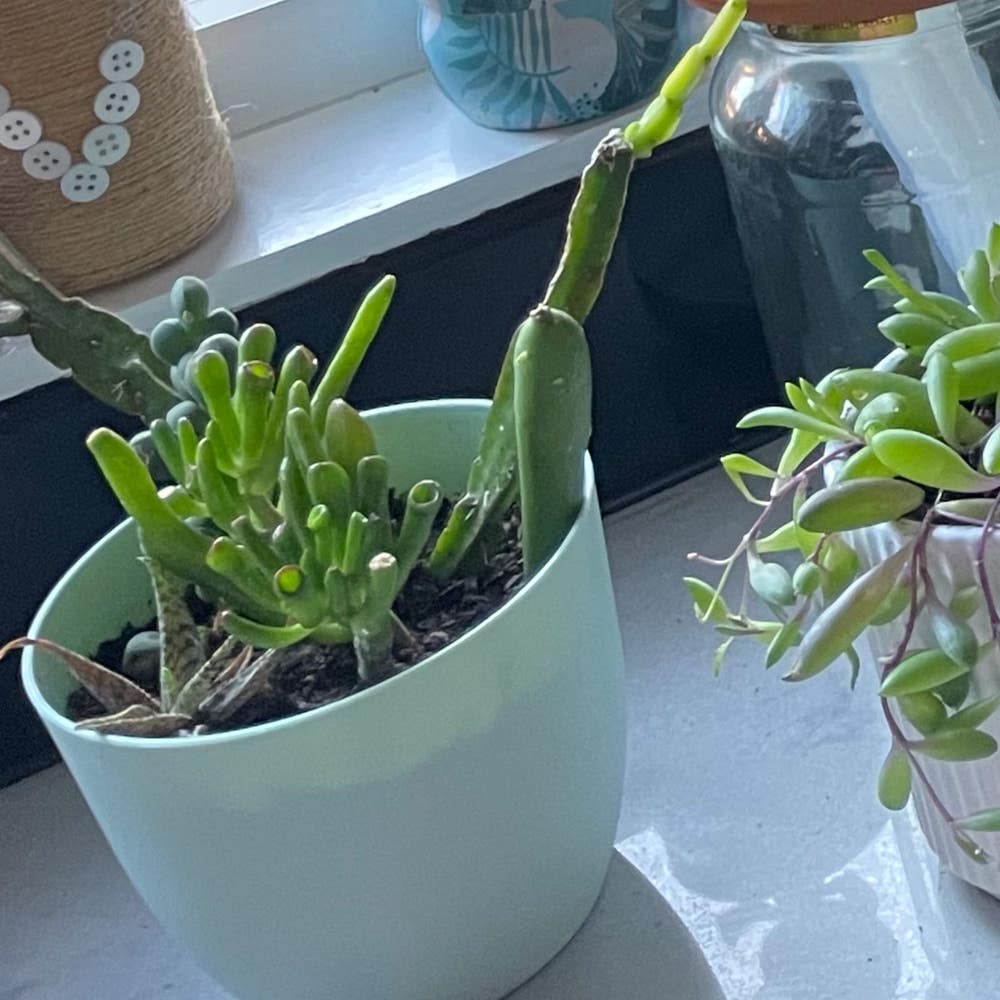
How Can You Tell If A Variegated Candle Plant Is Dying?
Baculellum articulatum f. variegatus
By the Greg Editorial Team
Apr 03, 2024•6 min read
This article was created with the help of AI so we can cover more plants for you. May contain errors. See one? Report it here.
- Wilting or yellowing leaves signal health issues.
- Proper watering and light are critical for survival.
- Watch for pests and fungal problems, take immediate action.
Spotting Trouble: Key Symptoms of a Dying Variegated Candle Plant
🥀 Wilting, Yellowing, or Browning Leaves
Wilting leaves are your plant's white flag; they're not just being dramatic, they're parched or stressed. Yellowing could mean your green buddy's roots are failing or it's starving for nutrients. Browning? That's the final curtain call, possibly from too much sun or a pest's farewell kiss.
🌱 Stunted Growth or Leaf Drop
When your plant hits the pause button on growth, it's not just slacking—it could be drowning in root rot or feeling nutrient-poor. Leaf drop is like your plant's way of saying, "I can't even," often due to temperature fits or a shock to its system. Keep an eye out for these signs; they're your cue to act.
Water Woes: Over and Under-Watering
💦 Over-watering Signs and Solutions
Over-watering can turn your Variegated Candle Plant into a soggy mess. Yellow leaves and a soil texture reminiscent of a wet sponge are dead giveaways. To rectify this, let the soil dry out completely before you even think about giving it another drink. Consider repotting if the soil feels like a swamp, and switch to a well-draining mix to prevent future waterlogged tragedies.
🏜️ Under-watering Signs and Solutions
Conversely, under-watering leaves your plant as parched as last year's Christmas tree. Look for shriveled leaves and stems that have less bounce than a deflated basketball. When the soil's as dry as a comedian's humor, it's time to water deeply. Ensure the moisture reaches the roots without turning the pot into a mini lake. Stick to a consistent watering schedule, like your plant's life depends on it—because it does.
Light and Temperature: Finding the Sweet Spot
🌞 Too Much Sun, Not Enough Light
In the quest for perfect lighting, your Variegated Candle Plant is a bit like Goldilocks; it wants conditions that are just right. Bright, indirect sunlight is the sweet spot. If your plant's leaves are reaching out like they're begging for light, it's time to move it closer to a window. Conversely, if the leaves start looking like they've had a bit too much fun in the sun, diffuse that enthusiasm with a sheer curtain or relocate to a less intense spot. Rotate your plant regularly to avoid lopsided growth and to give all sides their moment in the (indirect) sun.
🌡️ Temperature Tantrums
Your plant doesn't appreciate temperature swings any more than you enjoy unexpected cold showers. Keep the thermostat steady, aiming for a comfortable 65°F to 75°F range during the day, with a slight dip at night. Steer clear of drafts, heaters, and air conditioners, as these can cause your plant to throw a fit. When seasons change, don't just shove your plant around; introduce it to new spots gradually, like easing into a hot bath. Remember, stability is key—sudden changes in temperature are as welcome as a hiccup in a meditation session.
Unwelcome Guests and Other Ailments
🐜 Pests: The Invaders
Variegated Candle Plants can fall victim to pest infestations. Vigilance is key; regularly inspect your plant for signs of trouble.
🕷️ Spider Mites
These tiny critters create webbing on leaves. If you spot them, it's time for action. A strong water spray can dislodge them, or introduce natural predators like ladybugs.
🦟 Aphids
Sticky residue on your plant? You've got aphids. Blast them with water or use insecticidal soap to send them packing.
🐞 Mealybugs
White, cottony masses signal mealybugs. Alcohol-dipped swabs or neem oil can be effective treatments.
🍄 Fungal Foes: Mold and Root Rot
Fungal issues often start quietly but can quickly escalate.
🍄 Mold
If you notice a musty smell or fuzzy growth, mold may be the culprit. Increase airflow and keep the foliage dry to combat it.
🌱 Root Rot
Root rot is a silent killer. Signs include soft, brown roots and wilting leaves. If suspected, remove the plant from its pot and trim away any rotted roots. Repot in fresh, well-draining soil.
🍃 Powdery Mildew and Leaf Spot
White powdery residue or black/brown spots on leaves are telltale signs. Prune affected areas and consider a fungicide.
Regular cleaning and monitoring are essential. Act swiftly at the first sign of these unwelcome guests to keep your Variegated Candle Plant healthy.
Revival Tactics: Bringing Your Plant Back from the Brink
🚑 Immediate Actions for Critical Conditions
In the plant ER, swift action is key. If your Variegated Candle Plant is on the brink, here's the drill:
- Inspect the roots: Gently remove the plant from its pot to check for rot. Healthy roots are firm and white.
- Trim the damage: With sterilized scissors, cut away any rotten roots or leaves. You're not just cutting; you're clearing the path for new growth.
- Refresh the soil: Ditch the old soil for a well-draining mix. It's not just dirt; it's the foundation for recovery.
- Repot with care: Choose a pot with drainage holes. This isn't just a new home; it's a fresh start.
- Water judiciously: Water until it drains out the bottom, then let the soil dry out. Think hydration, not a flood.
- Place strategically: Find a spot with bright, indirect light. Your plant is healing, not tanning.
- Monitor and adjust: Keep an eye on progress and tweak care as needed. It's like tuning an instrument to perfection.
🏥 Long-Term Recovery Plan
Once the crisis is averted, it's time for the long game:
- Routine checks: Treat them like regular health check-ups. Early detection is better than a full-blown plant crisis.
- Seasonal adjustments: Be ready to pivot your care with the seasons. It's not just about growth; it's about fostering resilience.
- Avoid drafts: Sudden temperature changes are stress triggers. Consistency in care is key.
- Monitor soil moisture: Check the soil's moisture level regularly. Dry? Time to water, but don't drown it.
- Post-pruning care: After snipping damage, it's all about TLC. Consistent watering and protection from harsh conditions are your go-tos.
- Ease up on fertilizer: A mild solution during the growing season is enough. You're nurturing resilience, not just nursing back to health.
- Patience: Recovery isn't a sprint; it's a marathon with water breaks. Your best ally is time.
⚠️ Safety First
This content is for general information and may contain errors, omissions, or outdated details. It is not medical, veterinary advice, or an endorsement of therapeutic claims.
Always consult a qualified healthcare professional before using any plant as food, medicine, or supplement.
Never eat any plant (or feed one to pets) without confirming its identity with at least two trusted sources.
If you suspect poisoning, call Poison Control (800) 222-1222, the Pet Poison Helpline (800) 213-6680, or your local emergency service immediately.
Spotted an error? Please report it here.
Avoid the guesswork in saving your variegated candle plant from pests and mold by letting Greg alert 🛎 you to the right care moves at the right time.