What Is The Best Way To Water a Variegated Candle Plant?
Baculellum articulatum f. variegatus
By the Greg Editorial Team
Apr 03, 2024•5 min read
This article was created with the help of AI so we can cover more plants for you. May contain errors. See one? Report it here.
- Look for visual cues: Lush, firm leaves mean well-watered; yellow, droopy or crispy leaves don't.
- Adjust watering seasonally: More in spring/summer, less in autumn/winter, considering humidity and temperature.
- Master technique: Use room temp water, ensure drainage, and consider bottom watering for root health.
Spotting the Thirsty Signs
💧 Visual cues of a well-watered plant
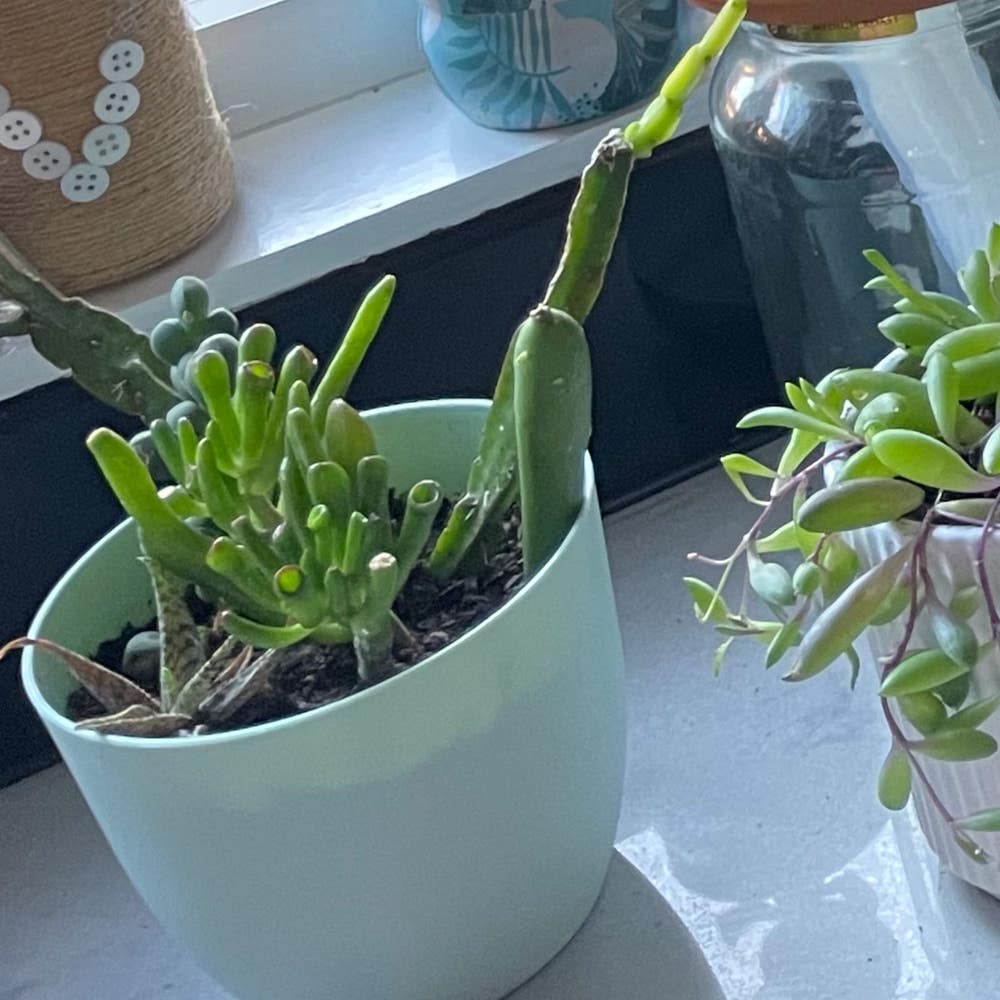
Lush leaves and a firm stance are your plant's way of saying "I'm good!" A well-watered variegated candle plant boasts vibrant variegation and a perky posture.
⚠️ Warning signs: Overwatering vs. Underwatering
Yellowing leaves and a sullen droop spell overwatering trouble. It's the plant's way of waving a white flag. On the flip side, leaves that are dry, crispy, and curling inward are broadcasting an underwatering SOS.
Soil moisture is the telltale heart of your plant's watering needs. If it's dry an inch down, it's time to water. But if it feels like a damp sponge, hold off – your plant isn't thirsty yet.
Root rot whispers of overwatering sins. If your plant's base is soft or blackened, it's time to ease up on the hydration. Conversely, roots that are brittle or shrinking back reveal a tale of underwatering woe.
Use a soil moisture meter to cut through the guesswork. It's your secret weapon in the battle to balance your plant's hydration.
Remember, the key is to observe and adjust. Your plant's thirst will vary with the seasons, just like your own. Keep a vigilant eye and a gentle hand, and you'll master the art of watering.
Watering Rhythms: How Often to Serenade Your Plant
🌱 Seasonal symphony: Adjusting to the time of year
Spring is a time of growth; your variegated candle plant is waking up. Increase watering as the plant's metabolism kicks into gear. Summer demands more frequent watering due to higher temperatures and longer daylight hours. Autumn is the wind-down period; begin to reduce watering as growth slows. Winter is the rest phase; water sparingly, as the plant's water needs diminish significantly.
💦 Humidity and temperature: The environmental dance partners
Humidity and temperature are like the bass and drums in a band—they set the groove for your watering routine. High humidity can mean less watering; the air is already doing part of the job. Dry, hot conditions will have you reaching for the watering can more often. Keep a close eye on your plant during extreme weather spells; it might need a quick tempo change.
🌿 Potting mix and pot size: The stage for your plant's performance
The potting mix is your plant's foundation. A well-draining, airy mix will require more frequent watering than a denser one. Pot size also plays a role. A larger pot holds more soil and, consequently, more moisture, which means you can space out watering sessions. Conversely, a small pot dries out faster, so you'll need to water more often. Keep this in mind when choosing the vessel for your variegated candle plant's encore.
Mastering the Watering Techniques
💧 Bottoms up: The art of bottom watering
Bottom watering is a covert operation for hydration. Place your variegated candle plant in a shallow tray of water and let the soil guzzle it up from below. This encourages deep root growth and avoids the leaf-wetness that could lead to fungal invaders.
💦 Top-down approach: Using a watering can with finesse
When using a watering can, target the soil like a sniper—avoiding the leaves is crucial. Circle the base with water, ensuring you don't create a foliage swamp. This technique is about precision, providing moisture where it's needed without the collateral damage of wet leaves.
🚰 The drainage factor: Ensuring your plant doesn't drown
Proper drainage is the lifeguard for your plant's roots. Water slowly and watch for the escape from the bottom. If there's no trickle, you've got a drainage issue. And remember, after watering, evict any excess water from the saucer—your plant isn't training for an aquatic event.
The Finer Details: Water Quality and Plant Health
💧 Room Temperature Water: Avoiding Thermal Shock
Room temperature water is the unsung hero in the plant watering saga. It's like the neutral gear for your car; it just makes everything run smoother. Cold water can be a shock to the system, like jumping into a cold pool, and hot water is a no-go unless you're making tea. Stick to water that feels like nothing on your wrist, and you'll keep those roots cozy and stress-free.
🌡️ pH and Mineral Content: Keeping the Roots Happy and Healthy
When it comes to pH, think of Goldilocks – you want it just right. A pH that's too high or too low locks away nutrients like a bank vault, and your plant doesn't have the combination. Aim for a slightly acidic to neutral pH, somewhere between 6.1 and 7.5, to keep the nutrient buffet open.
As for the water itself, think of it as a cocktail – you want the good stuff without any unwanted additives. Filtered or aged water is like giving your plant a VIP spa treatment. If you're using tap water, let it sit out overnight to off-gas the chlorine, because nobody likes a chlorinated aftertaste. And if you're feeling fancy, distilled or reverse osmosis water with a TDS level around 70 PPM is like spring water for your green friends.
Remember, consistency is key. Keep the water quality steady, and you'll avoid turning your plant's life into a rollercoaster ride of highs and lows.
⚠️ Safety First
This content is for general information and may contain errors, omissions, or outdated details. It is not medical, veterinary advice, or an endorsement of therapeutic claims.
Always consult a qualified healthcare professional before using any plant as food, medicine, or supplement.
Never eat any plant (or feed one to pets) without confirming its identity with at least two trusted sources.
If you suspect poisoning, call Poison Control (800) 222-1222, the Pet Poison Helpline (800) 213-6680, or your local emergency service immediately.
Spotted an error? Please report it here.
Keep your variegated candle plant thriving 🌱 with Greg's personalized watering plans that consider everything from soil moisture to seasonal shifts.