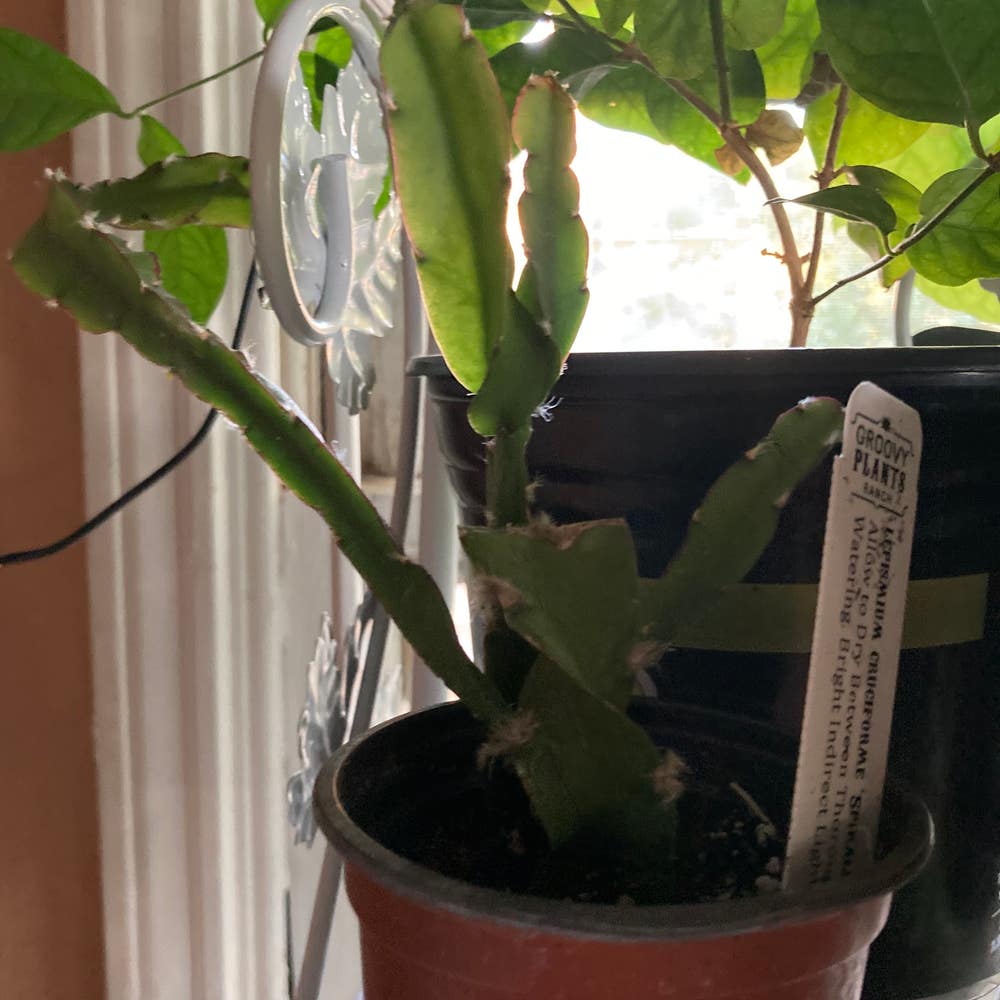
What Should I Do When Snowdrop Cactus Leaves Turn Yellow?
Lepismium houlletianum
By the Greg Editorial Team
Mar 23, 2024•3 min read
This article was created with the help of AI so we can cover more plants for you. May contain errors. See one? Report it here.
Banish yellow leaves 🍂 and restore your Snowdrop Cactus's vibrance with these targeted care tips!
- Over/underwatering and light affect leaf color; adjust both for health.
- Pests and diseases can cause yellowing; treat promptly to prevent spread.
- Consistent care with watering, light, and soil prevents yellow leaves.
Spot the Signs: Identifying Yellow Leaf Causes
💧 Check the Watering Habits
Overwatering and underwatering can both turn Snowdrop Cactus leaves yellow. Overwatering leads to soft, yellow leaves, while underwatering results in crispy, brown-tipped foliage. To check soil moisture, stick a finger an inch deep; if it's dry, it's time to water. For a more precise method, consider a moisture meter. Remember, a heavier pot indicates more moisture.
🌞 Assess the Light Situation
Yellowing leaves may cry out for more light. The Snowdrop Cactus thrives in bright, indirect sunlight. Too little light can cause yellowing, while too much can scorch the leaves. Observe your plant's location and adjust accordingly, ensuring it gets its daily dose of light without overdoing it.
👾 Look Out for Pests and Diseases
Pests like spider mites and mealybugs can stress your cactus, leading to yellowing. Diseases, often stemming from overwatering, manifest as yellow spots or mushy areas. Inspect your plant regularly for these invaders and address them promptly with appropriate treatments, such as insecticidal soap or neem oil.
Turn the Tide: Treating Yellow Leaves
🚰 Adjust Your Watering Technique
Overwatering is a common misstep that can lead to yellow leaves. If your Snowdrop Cactus is sitting in soggy soil, it's time to ease up on the hydration. Let the top inch of the soil dry out before you water again. Conversely, if the soil is as dry as a bone, give your plant a thorough drink. Remember, the goal is consistently moist soil, not a wetland.
🌞 Get the Light Right
Lighting is crucial. Too much sun can bleach your cactus's leaves, while too little can cause them to yellow. Rotate your plant to ensure even light exposure. If your indoor lighting is lackluster, consider using a grow light. It's about finding that sweet spot where your Snowdrop Cactus can bask without getting a sunburn.
🛡️ Eradicate Pests and Disease
Pests and diseases can turn your plant's leaves yellow quicker than you can say "infestation." At the first sign of trouble, use insecticidal soaps or a dab of rubbing alcohol to tackle pests. For diseases, prune affected areas and adjust your care routine to prevent future issues. Good hygiene practices, like cleaning your tools and avoiding overhead watering, can also keep diseases at bay.
Keep It Green: Preventative Measures
💧 Watering Wisdom
Creating a consistent watering schedule is crucial. Your Snowdrop Cactus craves routine, so mark your calendar or set a phone reminder. Check the soil before watering; if the top inch feels dry, it's time to hydrate. Remember, your cactus prefers a drought to a flood.
🌞 Perfecting the Environment
Light is like a double-edged sword; too much scorches, too little starves. Find that Goldilocks zone where your cactus gets enough light without getting sunburned. Keep an eye on the temperature too; these plants enjoy a stable, warm environment without drastic fluctuations.
🌱 Soil and Nutrient Know-How
Use well-draining soil to avoid waterlogged roots. A mix with sand or perlite does wonders. Be a soil sleuth and watch for signs of nutrient deficiencies—pale leaves might be crying out for a nutrient boost. But don't go overboard; think of fertilizer as a seasoning, not the main dish.
⚠️ Safety First
This content is for general information and may contain errors, omissions, or outdated details. It is not medical, veterinary advice, or an endorsement of therapeutic claims.
Always consult a qualified healthcare professional before using any plant as food, medicine, or supplement.
Never eat any plant (or feed one to pets) without confirming its identity with at least two trusted sources.
If you suspect poisoning, call Poison Control (800) 222-1222, the Pet Poison Helpline (800) 213-6680, or your local emergency service immediately.
Spotted an error? Please report it here.
Keep your Snowdrop Cactus thriving 🌵 with Greg's custom watering plans and light exposure advice, ensuring yellow leaves are a thing of the past!