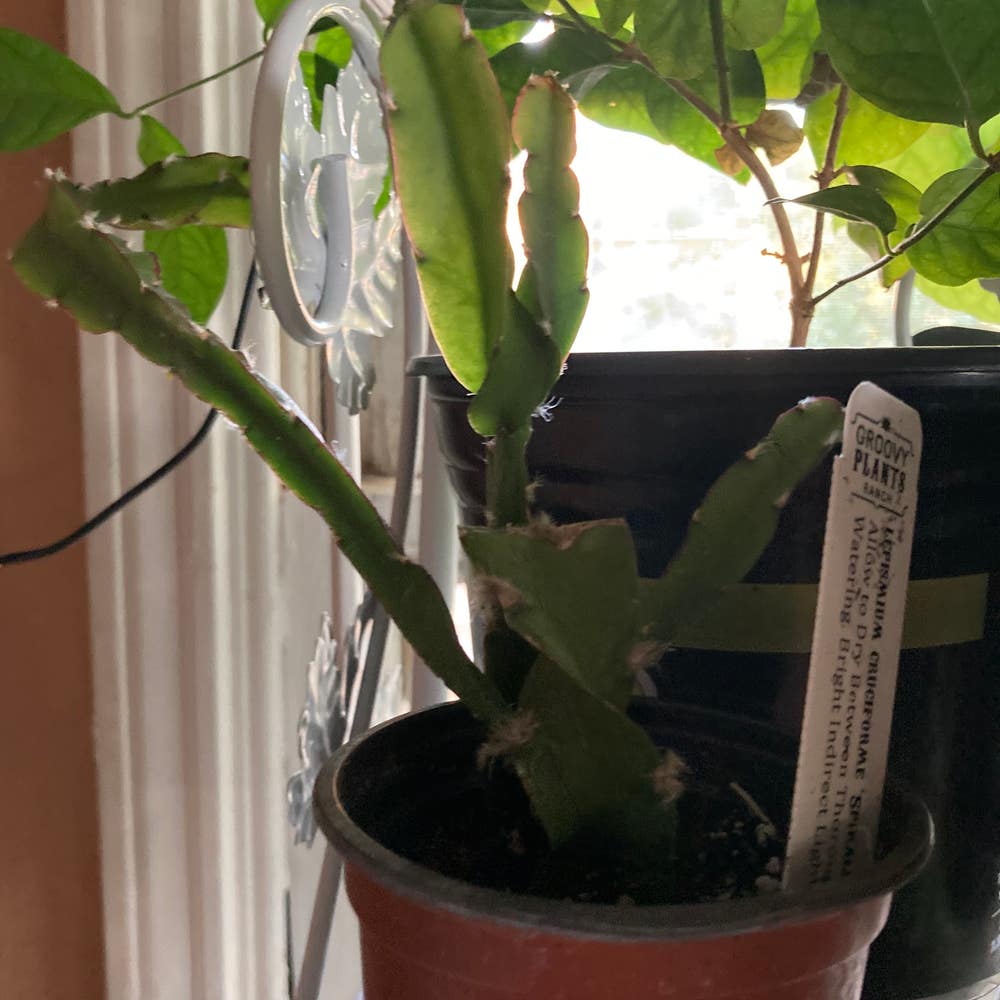
Snowdrop Cactus - Ultimate Guide to Fertilizing
Lepismium houlletianum
By the Greg Editorial Team
Mar 23, 2024•4 min read
This article was created with the help of AI so we can cover more plants for you. May contain errors. See one? Report it here.
Nurture vibrant Snowdrop Cactus blooms 🌼 with the perfect fertilization strategy from our ultimate guide.
- Choose low-nitrogen fertilizer for better blooms, not just growth.
- Fertilize in spring/summer; rest in winter to mimic natural cycles.
- Watch for over-fertilization; leaf discoloration means it's time to flush soil.
Picking the Right Fertilizer for Your Snowdrop Cactus
💡 Balanced vs. Specialized Cactus Fertilizers
Navigating the fertilizer aisle can feel like a chemistry pop quiz. Your Snowdrop Cactus craves a balanced diet, but not all fertilizers are created equal. Balanced fertilizers sport an even N-P-K ratio, like a 5-10-5, offering a smorgasbord of nutrients. These are your go-to for general maintenance. On the flip side, specialized cactus fertilizers tweak these ratios, often lowering nitrogen to prevent the cactus equivalent of a sugar rush—excessive growth at the expense of blooms.
💡 The Low-Down on Low-Nitrogen Fertilizers
Why skimp on nitrogen? Your Snowdrop Cactus isn't trying to win a leafy green beauty pageant. Low nitrogen means more energy for flowers, not foliage. Aim for a 1-1-1 or 2-1-1 N-P-K ratio, which is like a tailored suit for your cactus—fits the blooming phase like a glove. Remember, too much nitrogen and you'll be the proud owner of a lush, green, bloomless cactus.
Timing is Everything: When to Fertilize
🌱 Syncing with the Growing Season
Spring and summer are the Snowdrop Cactus's prime time for growth. This is when you should align your fertilizing efforts with its natural spurt. As the temperatures rise and the days get longer, your cactus gears up for action. It's during this period that a monthly dose of balanced fertilizer can work wonders.
❄️ The Dormancy Rule
Come winter, the Snowdrop Cactus hits the brakes and enters dormancy. It's a period of rest, and your fertilizing should take a break too. Over-fertilizing during this phase is not just unnecessary; it's counterproductive. Let your cactus chill without the extra nutrients, mirroring the natural cycle of its habitat.
The Art of Fertilizing Snowdrop Cactus
💧 Mixing it Up: Dilution Ratios and Solutions
Creating the perfect fertilizer mix for your Snowdrop Cactus is a bit like mixing a cocktail – it's all about the right balance. Start with a balanced fertilizer with a low nitrogen count; think 5-10-5 NPK ratio. During the growing season, dilute to a quarter or half the strength suggested on the package. This isn't a one-shot deal; it's about consistent, gentle nourishment.
Frequency and Application Techniques
When it comes to frequency, less is often more. Biweekly applications of your diluted mix should suffice during active growth periods. Apply to moist soil to aid nutrient uptake and avoid creating a nutrient swamp. And remember, always adjust based on your plant's response – if it's thriving, you're on the right track; if not, it's time to recalibrate.
Recognizing and Resolving Over-Fertilization
🚩 Spotting the Tell-Tale Signs
Leaf discoloration, such as yellowing or browning, can signal that your Snowdrop Cactus is getting more nutrients than it can handle. Burned leaf edges or tips are the plant's distress flares, indicating a nutrient overload. If you notice a crust of fertilizer on the soil surface or roots that look more like they've been through a battle than a growth spurt, it's time to take action.
🛠️ The Recovery Plan
When you've crossed the line into over-fertilization territory, stop all fertilizer applications immediately. Remove any visible fertilizer from the soil to prevent further harm. Begin the recovery process by flushing the soil with water, which will help wash away excess nutrients. This isn't a one-and-done deal; repeat every few days, monitoring your plant's response. If your Snowdrop Cactus is potted, consider repotting it into fresh, nutrient-free soil. Give your plant a break from fertilizers for a few weeks to recover from the nutrient hangover. Remember, over-fertilization can mimic over-watering, so make sure you're addressing the right issue. If the situation doesn't improve, a soil test can help pinpoint the problem and guide your next steps.
⚠️ Safety First
This content is for general information and may contain errors, omissions, or outdated details. It is not medical, veterinary advice, or an endorsement of therapeutic claims.
Always consult a qualified healthcare professional before using any plant as food, medicine, or supplement.
Never eat any plant (or feed one to pets) without confirming its identity with at least two trusted sources.
If you suspect poisoning, call Poison Control (800) 222-1222, the Pet Poison Helpline (800) 213-6680, or your local emergency service immediately.
Spotted an error? Please report it here.
Ensure your Snowdrop Cactus blooms spectacularly by picking the ideal fertilizer, and rely on Greg for timely reminders 🌵 to nail the perfect feeding schedule.