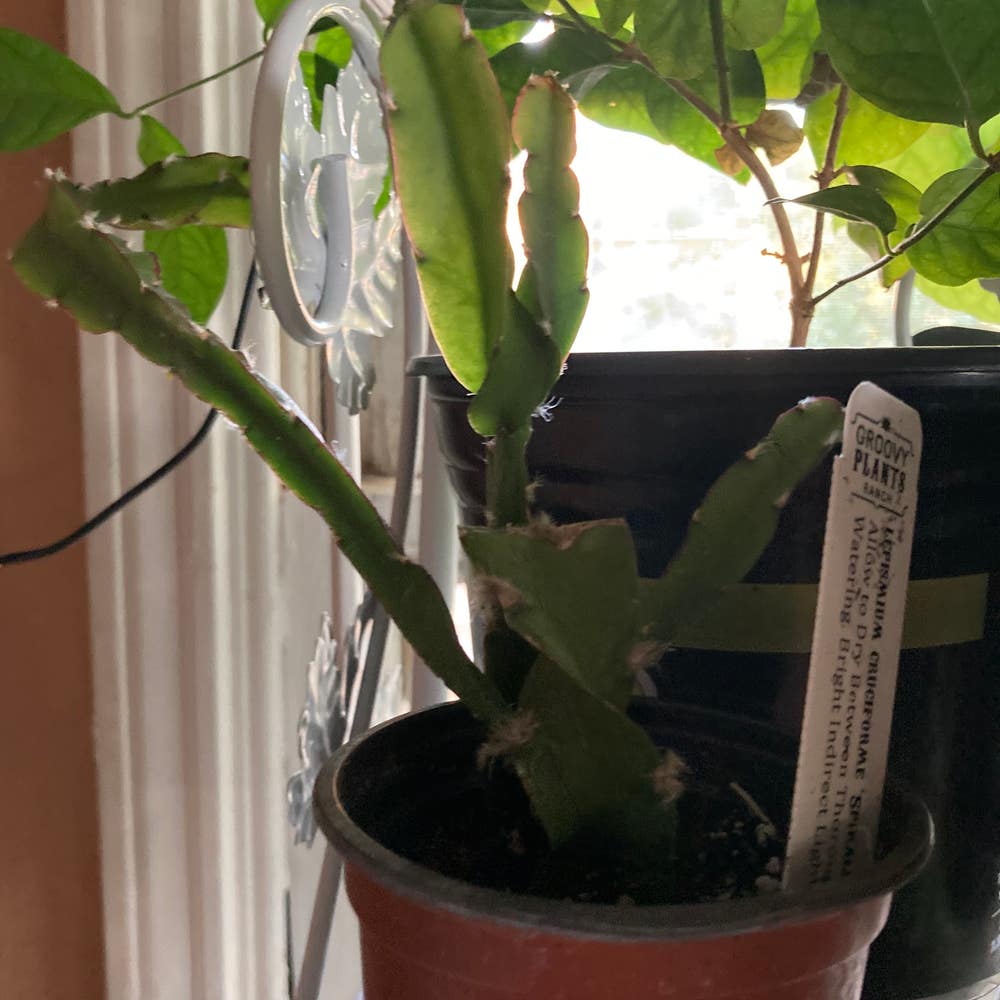
How Can You Tell If A Snowdrop Cactus Is Dying?
Lepismium houlletianum
By the Greg Editorial Team
Mar 23, 2024•5 min read
This article was created with the help of AI so we can cover more plants for you. May contain errors. See one? Report it here.
Spot and save your wilting Snowdrop Cactus 🌵 with these life-saving care tips!
- Soft stems and foul soil? Over-watering alert! Change soil and adjust watering.
- Wrinkled stems? It's hydration time—water slowly and regularly.
- Leaf scorch or wilting? Adjust light and temperature for cactus comfort.
When Water Works Against You
💦 Over-watering Woes
Soft stems and a foul-smelling soil are telltale signs your Snowdrop Cactus is drowning in excess water. It's like your cactus is sending an SOS with every squishy squeeze.
- Cease watering immediately to let the soil dry out.
- Consider a soil change to a mix that drains faster, preventing future water-logged tragedies.
🌵 The Thirsty Cactus Conundrum
On the flip side, a cactus that's more wrinkled than a raisin is crying out for hydration. Shriveled stems and dry soil are your plant's way of telling you it's parched.
- Water slowly to ensure moisture reaches the roots without overwhelming the plant.
- Establish a consistent watering schedule; a regular drink can prevent your cactus from becoming a desert itself.
Light and Temperature: The Balancing Act
🌞 Too Much Sun, Too Little Shade
Leaf scorch is the cactus's version of a bad sunburn. Discoloration and brown patches are your plant's way of crying out for help. To combat this, place your cactus in a spot that's bright enough to read by, yet doesn't cast a harsh shadow.
Sheer curtains can be your best friend here, diffusing that intense midday sun into a gentle glow. If you've already got a crispy cactus on your hands, it's time for some plant triage. Move it to a cooler location and snip off the burnt bits. Think of it as helping your cactus let go of its traumatic sunbathing experience.
🌡️ Chilly Cactus? Warm It Up!
Just like us, cacti can't stand sudden temperature drops. Wilting is a sign that your spiky friend is not a fan of the cold. Stable warmth is key, so keep your cactus away from drafty windows and doors during the winter months.
If your cactus is shivering, consider moving it to a spot that gets consistent warmth. Not too hot, not too cold, just a cozy corner where it can bask without fear of the next cold snap. Remember, your cactus doesn't have the luxury of layering up – so keep that thermostat steady.
Unwelcome Guests and Unseen Enemies
🐛 Pests: The Tiny Terrors
Your Snowdrop Cactus might be hosting a bug bash without your invitation. Mealybugs, scale insects, and spider mites are the main partygoers. These pests are not just annoying; they can be downright destructive, sapping the life from your plant. Mealybugs leave a white, cotton-like residue, while scale insects appear as tiny, immovable bumps. Spider mites are even sneakier, leaving fine webbing as evidence of their feast on your cactus.
To kick these pests out, you need to be vigilant. Insecticidal soaps and neem oil are your first line of defense, safe for the plant but deadly for the bugs. For a natural approach, introduce predators like ladybugs into the mix. They're the bouncers of the bug world and will help keep the pest population down. Regular inspections are crucial—think of them as your routine security checks.
🍄 Mold and Fungus Among Us
Mold and fungus are the silent, sneaky types that thrive in the shadows. If you notice spotty stems or a musty smell, it's time to take action. These issues often arise from too much moisture and not enough airflow. To combat these uninvited guests, improve the circulation around your cactus and make sure it's not sitting in soggy soil.
When it comes to mold, sometimes you have to scoop out the affected soil and start fresh. If the problem persists, a fungicide might be necessary. Just remember to read the label as if you're decoding a secret message—precision is key. Keep the air moving and the soil dry, and you'll make your cactus's home less inviting to these fungal foes.
Root Rot: The Silent Killer
🚨 The Underground Emergency: Recognizing Root Rot
Root rot is the silent saboteur of your Snowdrop Cactus, often going unnoticed until it's too late. Look for stunted growth or leaves that have lost their firmness, resembling overripe fruit. When you unpot the cactus, healthy roots should be firm and light-colored. If they're dark, slimy, or emit a foul odor, root rot has taken hold.
🏥 Surgery for Survival: How to Treat and Prevent Further Rot
Immediate action is crucial to save your cactus. With sterilized scissors, carefully cut away the rotten roots. It's a delicate balance of removing the infected parts while preserving as much of the healthy root system as possible.
🩺 Root Triage: Assessing the Damage
After unpotting, gently remove soil to assess the roots. Healthy ones are firm and light in color. If they're brown, mushy, or smell bad, it's time for surgery.
🌡️ Treatment and Recovery
Once the bad roots are gone, disinfect the remaining roots with a cinnamon sprinkle or a hydrogen peroxide mix (1 part peroxide to 3 parts water). Repot in fresh, well-draining soil, and choose a pot that prioritizes drainage.
🛡️ Preventing Future Episodes
Prevention is key. Adjust your watering routine to ensure the soil dries out between waterings. Regular root check-ups can prevent a repeat of root rot, keeping your Snowdrop Cactus healthy and thriving.
⚠️ Safety First
This content is for general information and may contain errors, omissions, or outdated details. It is not medical, veterinary advice, or an endorsement of therapeutic claims.
Always consult a qualified healthcare professional before using any plant as food, medicine, or supplement.
Never eat any plant (or feed one to pets) without confirming its identity with at least two trusted sources.
If you suspect poisoning, call Poison Control (800) 222-1222, the Pet Poison Helpline (800) 213-6680, or your local emergency service immediately.
Spotted an error? Please report it here.
Nurture your snowdrop cactus back to health with Greg's tailored reminders 🌵, helping you water, repot, and protect against pests with ease!