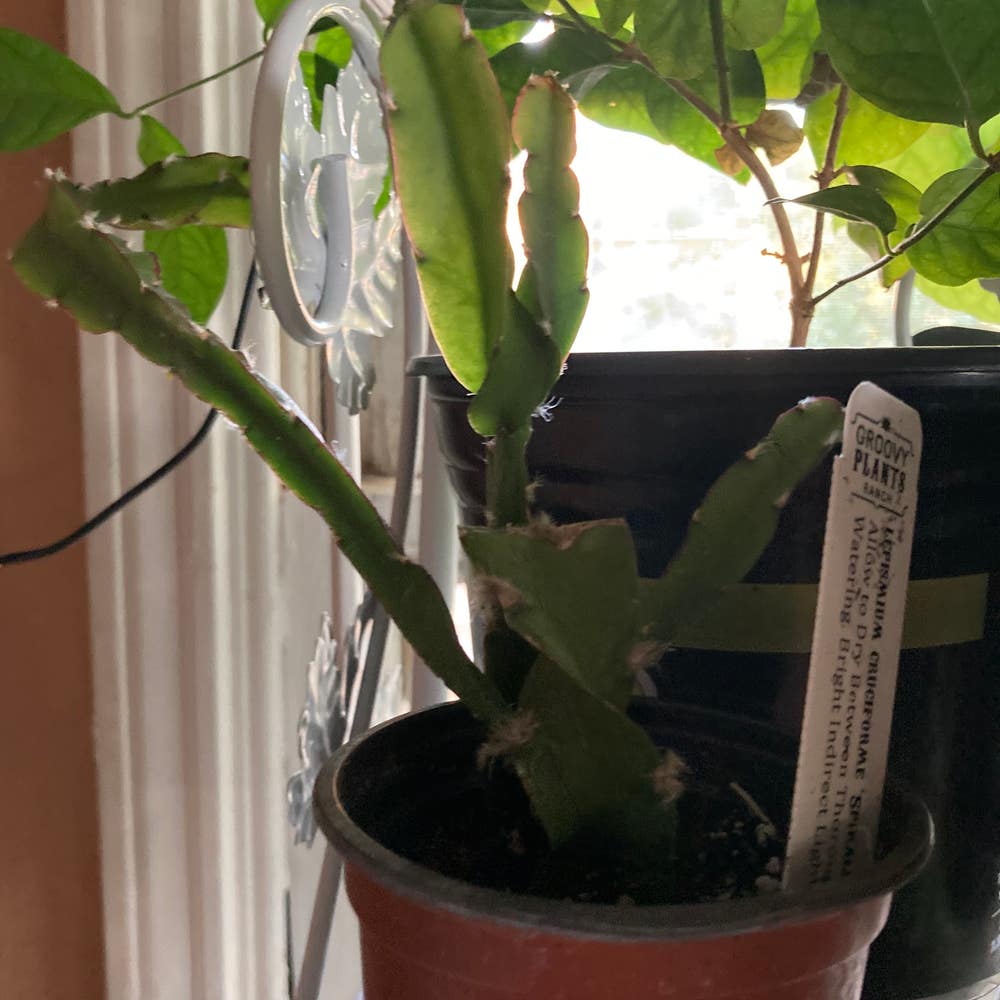
❄️ How Much Should I Water My Snowdrop Cactus?
Lepismium houlletianum
By the Greg Editorial Team
Mar 23, 2024•3 min read
This article was created with the help of AI so we can cover more plants for you. May contain errors. See one? Report it here.
Nurture your snowdrop cactus 🌵 to life with the perfect watering balance—no more guesswork!
- 🌵 Arid origins mean less water; store water efficiently.
- 💧 Soak and dry method mimics natural watering conditions.
- 🌡️ Adjust for seasons and home climate; watch for shriveled leaves.
When to Water Your Snowdrop Cactus
🌵 Considering the Cactus's Natural Habitat
The arid origins of your snowdrop cactus dictate a thirst that's more marathon than sprint. It's built for the long haul, storing water to outlast dry spells.
🏡 The Role of Your Home Environment
Your living room isn't the desert, but it's got its own climate. Adapt your watering to the humidity and temperature indoors, not just the season outside your window.
🚰 The Telltale Signs of Thirst
Keep an eye out for a cactus playing the shriveled card—it's a clear sign it's time to water. Soil dry as a bone? That's your cue to bring on the hydration.
Perfecting Your Watering Technique
💧 The Soak and Dry Method
To master the art of watering your snowdrop cactus, think of the soak and dry method as a desert downpour followed by sunshine. Saturate the soil until water escapes the drainage holes, then allow it to completely dry before the next watering. This cycle mimics the natural conditions the cactus is accustomed to and promotes healthy root growth.
🌱 Pot and Soil: The Dynamic Duo
Selecting the right pot and soil is crucial for your cactus's hydration balance. Ensure the pot has adequate drainage to prevent root rot. Pair it with a well-draining soil mix, typically one with a good amount of gritty material like perlite or sand. This dynamic duo works together to provide the perfect environment for your cactus to thrive.
The Balancing Act: Seasonal Watering Adjustments
🌱 Growing Season vs. Dormancy
In the growing season, your snowdrop cactus is like a sprinter at the starting blocks—eager and ready to grow. It will need more frequent watering to support this active phase. As the days shorten and temperatures drop, the cactus switches to dormancy mode. Think of it as the plant's version of binge-watching its favorite shows while lounging on the couch—it's going to need fewer drinks.
🌡️ Weather Watch: Responding to Humidity and Temperature
Your home isn't immune to the whims of Mother Nature. Humidity and temperature fluctuations inside mirror the great outdoors. In a dry winter, you might find your cactus still needs a decent sip to combat the arid indoor air. Conversely, a humid summer could mean dialing back on the watering frequency. Keep a moisture meter handy or trust the old-school touch test to stay in sync with your cactus's hydration needs.
The Dangers of Too Much or Too Little
💧 Spotting the Symptoms of Overwatering
Overwatering your snowdrop cactus can be a silent killer. Watch for leaves that have gone from firm to mushy—a sure sign you've been too generous with the watering can. If the base of your plant feels softer than a ripe avocado, you're witnessing the onset of root rot. And if the soil smells mustier than a damp basement, it's a red flag that your cactus is drowning in excess moisture.
🏜️ Underwatering Woes
Conversely, underwatering leaves your cactus as dry as a stand-up comedian's wit. Look for browning tips and a plant that's more wilted than your resolve on a Monday morning. If the soil is as dry as a stale cracker and the pot feels lighter than your spirits on a Friday, it's time to quench your cactus's thirst. Remember, consistent watering is key—aim for a schedule that's regular, but not smothering.
⚠️ Safety First
This content is for general information and may contain errors, omissions, or outdated details. It is not medical, veterinary advice, or an endorsement of therapeutic claims.
Always consult a qualified healthcare professional before using any plant as food, medicine, or supplement.
Never eat any plant (or feed one to pets) without confirming its identity with at least two trusted sources.
If you suspect poisoning, call Poison Control (800) 222-1222, the Pet Poison Helpline (800) 213-6680, or your local emergency service immediately.
Spotted an error? Please report it here.
Discover the perfect watering rhythm for your snowdrop cactus with Greg's 🌵 custom reminders, ensuring it stays plump and happy without the guesswork.