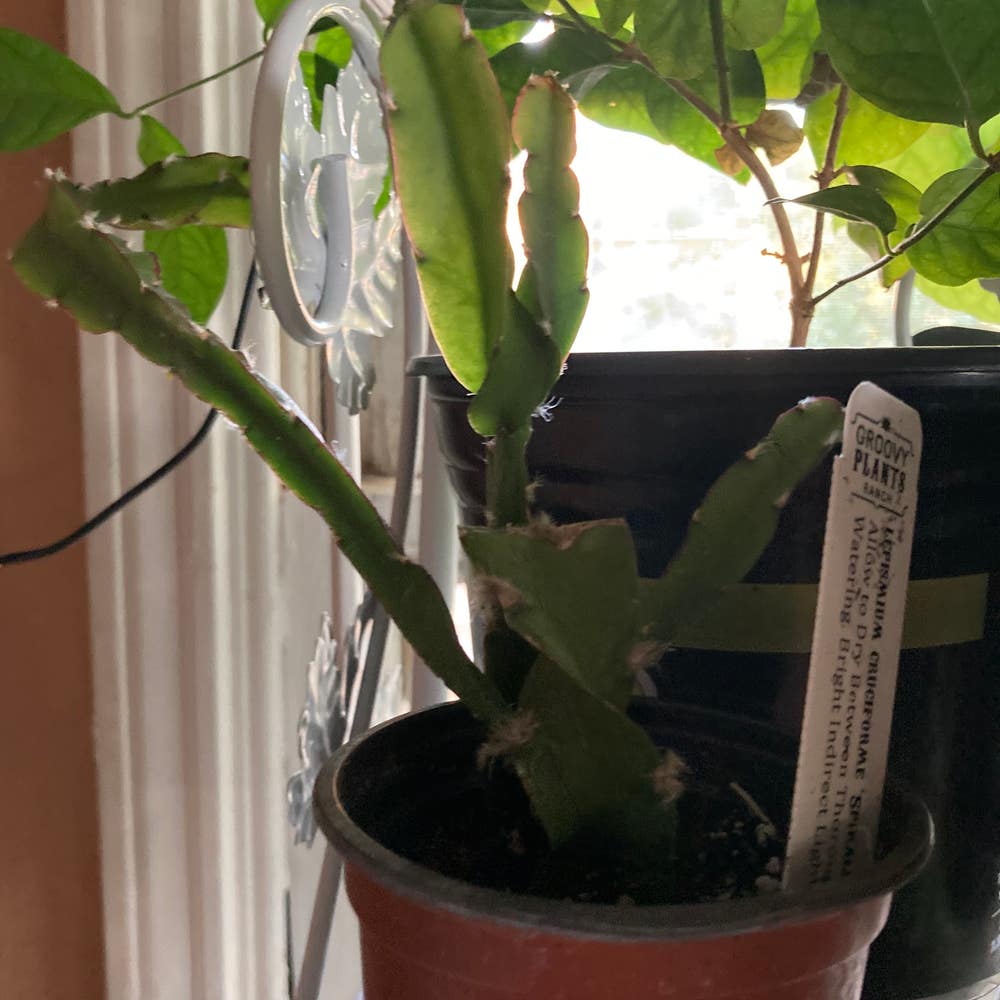
🌼 What Does It Mean When Snowdrop Cactus Blooms?
Lepismium houlletianum
By the Greg Editorial Team
Mar 23, 2024•5 min read
This article was created with the help of AI so we can cover more plants for you. May contain errors. See one? Report it here.
Unlock the secrets 🗝️ to a healthy Snowdrop Cactus bloom and its care essentials!
- Blooms indicate health and maturity in Snowdrop Cacti.
- 🌡️🌞 Light and temperature cues are crucial for triggering blooms.
- Pruning and proper feeding enhance the cactus's flowering potential.
Decoding the Blooms: What Flowering Tells Us
🌵 The Growth Cycle Connection
When Snowdrop Cactus blooms, it's not just showing off—it's demonstrating robust health and maturity. Each flower is a high-five from nature, signaling that your cactus has hit its growth milestones.
🌞 Environmental Cues and Flowering
Light, temperature, and seasons are the cactus's natural alarm clocks for blooming. They tell your plant it's showtime, prompting it to unfurl its floral finery.
(Source #5) Temperature is especially crucial; cooler nights can kickstart the flowering phase, mimicking the cactus's native desert chill. During the day, maintain a consistent warmth to keep the bloom cycle on track.
(Source #8) Timing is everything. Recognize the cues—longer daylight hours signal your cactus to get its bloom on. Miss these signs, and you might as well be waiting for a bus at a train station.
(Source #9) When the Snowdrop Cactus finally blooms, it's a botanical jackpot. This rare event is a nod to your attentive care and the plant's contentment. It's the plant world's equivalent of a standing ovation.
Creating the Perfect Bloom-Inducing Environment
💡 Light: The Ultimate Flower Power
To kickstart blooming, light is non-negotiable. Your Snowdrop Cactus craves bright, indirect sunlight. Direct rays? They're overkill, potentially scorching your plant. Monitor light levels with a meter or your phone's sensor, adjusting the cactus's spot to avoid the midday sun's harsh glare. As days grow longer, consider a grow light to supplement those dreary winter months.
🌡️ Temperature and Humidity: Getting the Balance Right
Think of your cactus as a Goldilocks guest; the climate needs to be just right. Temperature swings are a no-go. Keep your home draft-free and maintain a cozy range of 65°F to 75°F. For humidity, aim for a happy medium. A pebble tray or grouping plants can help. In the arid season, a humidifier might just be your best investment.
🌱 Soil and Water: The Foundation of Flowering
Soil is the stage, and drainage is the star. Opt for a mix that's well-draining yet nutrient-rich—think organic matter like compost. Watering is a delicate dance; too much and you're courting root rot, too little and you're in a desert standoff. Aim for moist, not soggy, soil. Adjust your watering rhythm to the cactus's flowering cues, ensuring you don't drown out its bloom potential.
Nurturing Your Cactus to Bloom
✂️ Pruning for Potency
Pruning your Snowdrop Cactus isn't just a trim; it's strategic sculpting. By snipping excess growth, you're directing the plant's energy towards blooming. Spring is your cue to prune, just as the cactus shakes off winter's chill. Remove dead or damaged parts to prevent wasted energy. It's like telling your cactus, "Hey, focus on the flowers!"
🌼 Feeding for Flowers
Fertilizing is like a pep talk for your cactus. A balanced liquid fertilizer, diluted to half-strength, is your go-to during the growing season. Potassium is the bloom booster, so check the label for a good dose of it. But go easy—overfeeding is the fast track to nutrient burn. It's a delicate dance of give and take, ensuring your cactus gets just the right amount of sustenance to burst into bloom.
Troubleshooting: When Blooms Are Bashful
💡 Identifying and Overcoming Flowering Faux Pas
When your Snowdrop Cactus is more barren than a desert in bloom season, it's time to play plant detective. Lighting is often the prime suspect. Too little, and your cactus is conserving energy, not wasting it on flowers. Too much, and it's like a sunburnt tourist—unhappy and unproductive. Gradually adjust the light to find that sweet spot where your cactus feels like it's basking in the perfect desert dawn.
Watering is a balancing act. Overwatering invites root rot to the party, while underwatering turns your cactus into a parched, bloomless husk. Aim for soil that's like a wrung-out sponge—moist but not dripping.
Fertilizer is like cactus caffeine—it should perk up your plant, not overwhelm it. Over-fertilization is a common misstep; it's like feeding your cactus an all-you-can-eat buffet when all it wanted was a snack. Stick to a balanced, half-strength fertilizer during the growing season to encourage those elusive blooms.
Don't overlook the pests. These tiny party crashers—think aphids and mealybugs—can suck the life and blooms out of your cactus. Regular inspections and prompt evictions are crucial.
If you've been overzealous with the pruning shears, you might have snipped away your chances for blooms. Prune with purpose, not like you're trying to set a topiary speed record. Strategic cuts can encourage flowering, but random hacking will just stress out your cactus.
Sometimes, despite your best efforts, your cactus might still be stubborn. If you've played by all the rules and blooms are still a no-show, it might be time to consult a local horticulturist. They're like plant therapists, able to diagnose issues that you might have missed.
Remember, patience is key. The Snowdrop Cactus won't be rushed. Give it time to adjust to the changes you've made, and with a bit of luck and a lot of care, those bashful blooms should make an appearance.
⚠️ Safety First
This content is for general information and may contain errors, omissions, or outdated details. It is not medical, veterinary advice, or an endorsement of therapeutic claims.
Always consult a qualified healthcare professional before using any plant as food, medicine, or supplement.
Never eat any plant (or feed one to pets) without confirming its identity with at least two trusted sources.
If you suspect poisoning, call Poison Control (800) 222-1222, the Pet Poison Helpline (800) 213-6680, or your local emergency service immediately.
Spotted an error? Please report it here.
Watch your Snowdrop Cactus flourish 🌵 with Greg's tailored care reminders, helping you master the art of light, water, and nutrient balance for those coveted blooms!