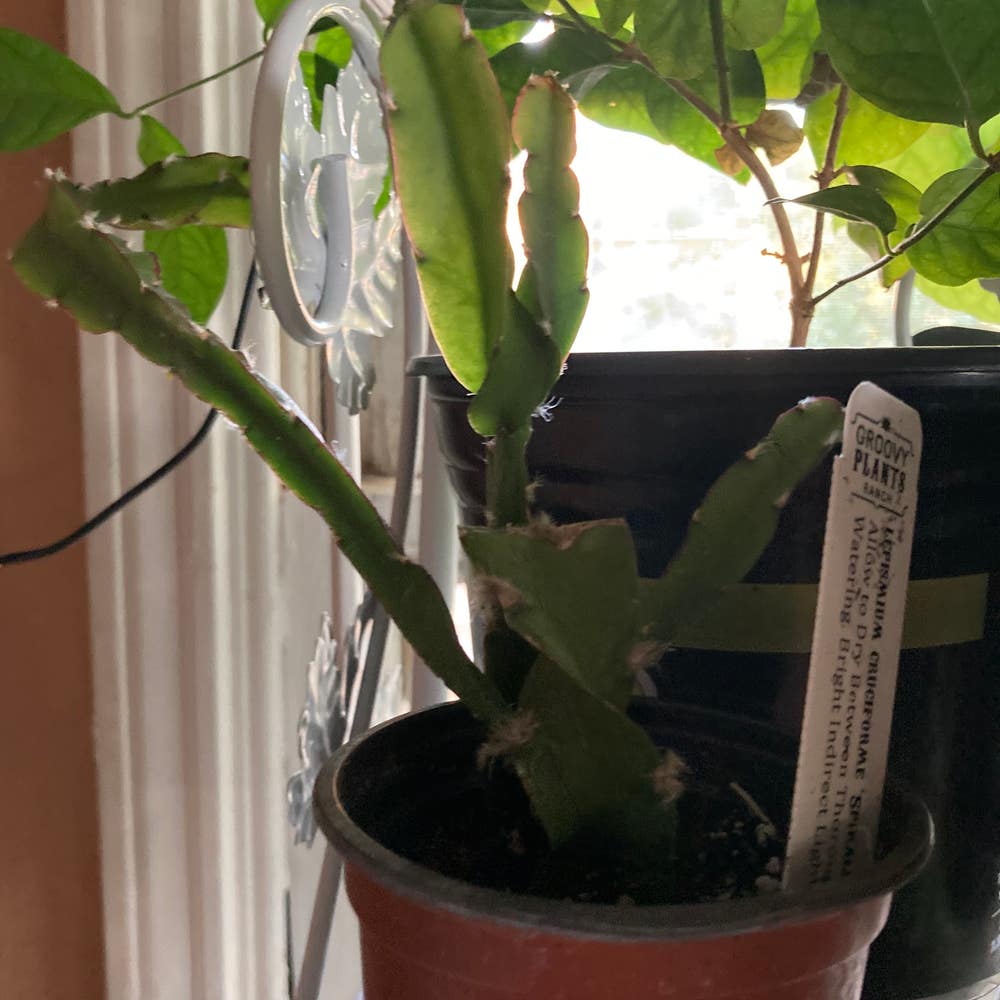
❄️ Why Are My Snowdrop Cactus Leaves Falling Over?
Lepismium houlletianum
By the Greg Editorial Team
Mar 23, 2024•4 min read
This article was created with the help of AI so we can cover more plants for you. May contain errors. See one? Report it here.
Revive droopy Snowdrop Cactus leaves and keep them perky with these essential care tips! 🌵✨
- Overwatering and underwatering both harm cacti; balance is crucial.
- 🌵 Proper light exposure is key—too little or too much can cause issues.
- Repotting promotes health, do it during the growing season with fresh soil.
When Watering Goes Wrong: Finding the Balance
💦 Overwatering Woes
Swollen stems and leaves that feel like a forgotten salad? You've overdone the H2O. Mushy roots are a red flag; it's time for a rescue mission. To dry out, hold off on watering and check your pot's drainage—it should be a freeway for water, not a cul-de-sac. If the soil feels like a swamp, consider a soil switcheroo. Trim the damaged parts with care; it's a health intervention, not a beauty trim. Let the soil's top layer dry out before you even think about watering again.
🏜️ The Perils of Underwatering
Leaves more wrinkled than a linen shirt in a suitcase scream dehydration. If the soil is pulling away from the pot's edge, your cactus is staging a sit-in for some H2O. Crispy leaves are a desperate plea for a drink. To rehydrate, water thoroughly, ensuring excess water drains away—no one likes wet feet. Create a watering schedule that's more of a guideline, and adjust to the weather's whims. Hot and sunny? Time to quench that thirst. Cool and cloudy? Hold off on the watering can. Remember, it's better to underwater than to overwater—a cactus can bounce back from a drought but might not survive a flood.
Let There Be Light: Ensuring Proper Exposure
🌞 Too Much Shade, Too Little Strength
If your Snowdrop Cactus is looking more like a limp noodle than a sturdy succulent, inadequate light might be the culprit. Leaves that are thin, elongated, or paler than a ghostly apparition are screaming for more sunshine.
Brighten up your cactus's life by shifting it to a spot where it can bask in bright, indirect light. Remember, it's craving those rays like a cat craves a warm windowsill.
☀️ Sunburn and Scorching
Conversely, if your cactus is sporting leaves that look like they've been in a tanning bed too long, it's time to intervene. Yellowed or crispy leaves are the plant's version of waving a white flag against too much direct sunlight.
Finding the sweet spot requires vigilance. Observe your cactus for signs of distress and adjust its position accordingly. A sheer curtain can be a game-changer, serving as a sunscreen for your spiky friend. Keep the air moving around your cactus to help prevent overheating, because nobody likes a sweaty plant.
Remember, once a leaf is sunburnt, it's toast. While you can't reverse the damage, you can prevent future flare-ups and encourage the growth of healthy, unscorched leaves.
Cramped Roots: Giving Your Cactus Room to Breathe
🌵 The Telltale Signs of a Root-Bound Cactus
If your Snowdrop Cactus has stopped growing or the soil dries out quicker than you can refill your watering can, it's likely root-bound. Roots peeking out of the drainage holes or circling the pot's interior are a clear SOS.
🌱 When and How to Repot for Success
Repotting should be done with care. Choose a new pot that's slightly larger than the current one—one size up is usually sufficient. Ensure it has ample drainage holes to prevent water from pooling. When transferring, gently tease out the roots to encourage them to spread out in their new space. Use fresh cactus mix soil, which will provide the right nutrients and drainage. The best time to repot is during the cactus's active growing season, typically in the spring or early summer. This timing gives your plant the best chance to recover and thrive post-transplant.
Proactive Measures: Keeping Your Cactus Happy
💧 Watering Wisdom
Consistency is key when it comes to watering your Snowdrop Cactus. Establish a routine that allows the soil to dry out between waterings. This isn't about sticking to a strict schedule, but rather about observing the soil's moisture level and acting accordingly. A soil moisture meter can be a game-changer, providing a clear indicator of when it's time to water. Remember, overwatering is a cactus's nemesis, so when in doubt, err on the side of dryness.
🌞 Light and Location
Your cactus craves bright, indirect sunlight. If it's stretching out or looking pale, it's begging for more light. Rotate the plant regularly to ensure even exposure, but watch out for too much direct sun, which can lead to sunburn. As the seasons change, so might the best spot for your cactus, so stay vigilant and be ready to move it to maintain that sweet spot of perfect lighting.
🌱 Repotting Routines
Repotting isn't just a chore; it's a chance for renewal. Every couple of years, give your cactus a new home with fresh, well-draining soil. Choose a pot that's slightly larger than the current one and make sure it has drainage holes. Terracotta or unglazed ceramic pots are ideal—they help wick away excess moisture. After repotting, monitor your cactus closely and adjust your care routine as it settles into its new digs.
⚠️ Safety First
This content is for general information and may contain errors, omissions, or outdated details. It is not medical, veterinary advice, or an endorsement of therapeutic claims.
Always consult a qualified healthcare professional before using any plant as food, medicine, or supplement.
Never eat any plant (or feed one to pets) without confirming its identity with at least two trusted sources.
If you suspect poisoning, call Poison Control (800) 222-1222, the Pet Poison Helpline (800) 213-6680, or your local emergency service immediately.
Spotted an error? Please report it here.
Ensure your Snowdrop Cactus remains upright and thriving 🌵 with Greg's assistance in perfecting watering routines and optimizing sunlight exposure, sidestepping the slump!