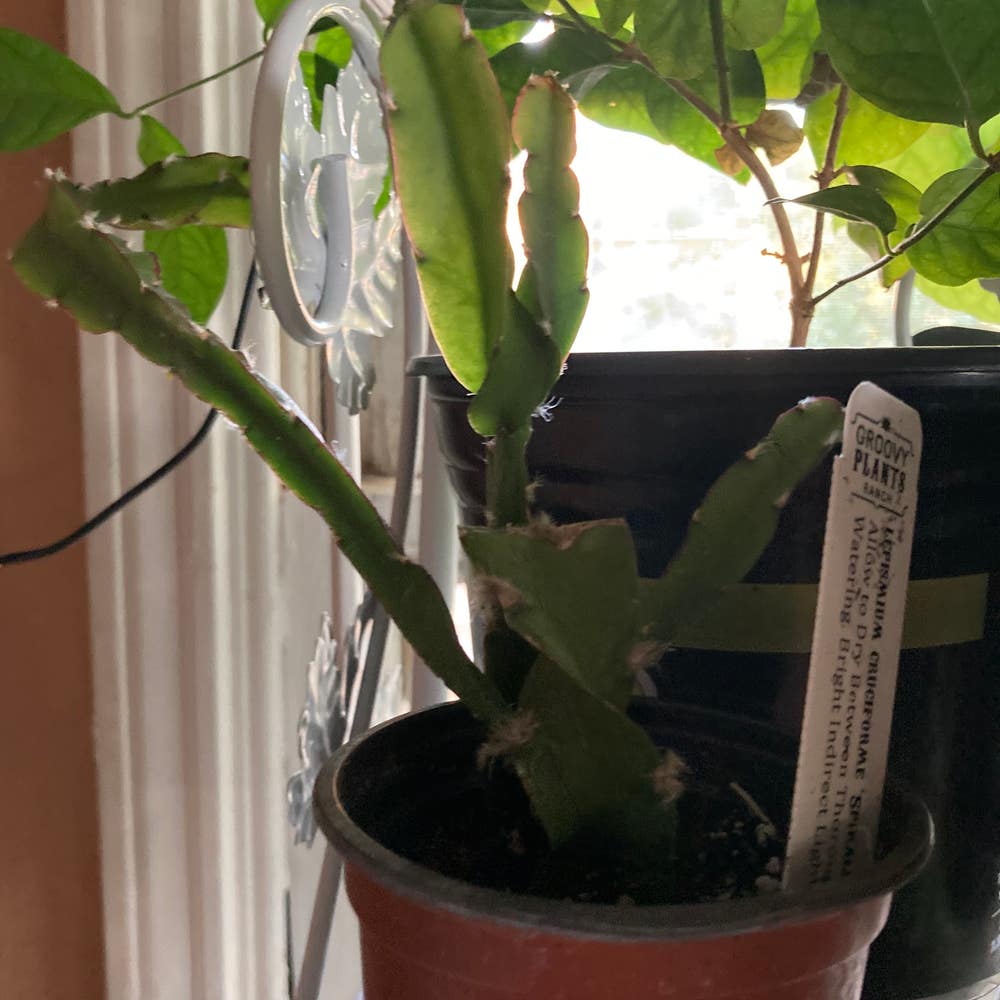
❄️ Why Are My Snowdrop Cactus Leaves Curling?
Lepismium houlletianum
By the Greg Editorial Team
Mar 23, 2024•4 min read
This article was created with the help of AI so we can cover more plants for you. May contain errors. See one? Report it here.
Unravel the mystery of curling Snowdrop Cactus leaves and revive your plant's splendor 🌵✨!
- Curling leaves signal watering issues, temperature stress, or improper lighting.
- Pests and diseases manifest as webs or residue; prompt treatment is crucial.
- Prevent curling with consistent watering, ideal light, and regular pest checks.
Spotting the Signs: Leaf Curling Symptoms
💧 Underwatering Symptoms
Dry, curled leaves are your cactus's silent scream for hydration. When the soil feels like a dusty road, it's time to quench that thirst.
💦 Overwatering Symptoms
Leaves that are limp and curled under are drowning in excess moisture. A soil check that reveals a swampy feel is your cue to cut back on the waterworks.
🌡️ Stress Signals from Temperature and Light
Leaves curling up could mean your cactus is too hot to handle or just plain thirsty. A shrink-rayed appearance suggests your cactus might be reacting to temperature swings or improper lighting.
🐜 Telltale Marks of Pests and Diseases
Fine webs or a cottony residue are the calling cards of uninvited guests like spider mites and mealybugs. These pests turn your cactus into an all-you-can-eat buffet, leading to leaf curling as a distress signal.
Getting to the Root: Identifying Causes
In unraveling the mystery of curling Snowdrop Cactus leaves, we dig into the trifecta of water, light, and pests.
💧 The Watering Balancing Act
Watering your Snowdrop Cactus is less about sticking to a rigid schedule and more about observing and responding to its needs. Overwatering can drown the roots, leading to rot, while underwatering leaves the plant dehydrated and stressed. Use a moisture meter or the finger test to ensure the top inch of soil is dry before watering again. Remember, a well-draining potting mix and pots with drainage holes are non-negotiables.
🌞 The Right Rays and Degree Days
Your cactus craves consistency in its light and temperature diet. Bright, indirect light is the sweet spot; direct sunlight can be as harsh as a midday desert. Temperature fluctuations are the enemy – keep it as stable as a rock. If your home is drier than a stand-up comic's humor, consider a pebble tray or occasional misting to maintain humidity without overdoing it.
🦟 Uninvited Troublemakers: Pests and Diseases
Pests and diseases can sneak up like a ninja if you're not vigilant. Keep an eye out for signs of infestation or fungal issues, and act fast. Isolate the affected plant, prune the damaged parts, and treat with appropriate measures. Prevention is better than cure, so maintain a clean environment and inspect your cactus regularly.
First Aid for Curly Leaves
💧 Adjusting Your Watering Technique
Fine-tuning your watering routine is crucial for your Snowdrop Cactus's recovery. Check the soil's top inch; if it's dry, it's time to water. But remember, your cactus is more camel than fish—it's built to withstand drought, not a deluge.
🌡 Creating a Cozy Environment
Keep temperatures steady, ideally between 65-75°F (18-24°C). Your cactus dislikes surprises, especially in its climate. Use a hygrometer to monitor humidity, and aim for low—think desert, not tropical.
🐜 Evicting Pests and Battling Diseases
Inspect leaves for freeloaders. Spot any? Insecticidal soap or neem oil can send pests packing. For fungal foes, prune affected areas and consider fungicides as a last resort. Always clean your tools after to prevent spreading any plant pathogens.
Keeping Leaves Lush and Flat: Prevention Tips
💧 Mastering the Art of Watering
Consistency is the cornerstone of cactus care. A fail-safe watering schedule hinges on the season. Winter whispers for less water, while summer might call for a bit more. Use a moisture meter or the trusty finger test—dry top inch signals it's time to hydrate. Remember, your cactus prefers a drought over a deluge.
🌿 Setting the Stage: Ideal Environment
Craft the perfect microclimate by balancing sunlight and airflow. Bright, indirect light will keep your cactus from throwing shade. Ensure good air circulation, but avoid placing your cactus in a drafty corridor. Temperature should be stable—think comfortable room temperature, not a tropical getaway or arctic expedition.
🛡️ Proactive Pest and Disease Defense
Routine checks are your cactus's suit of armor. Inspect regularly for pests and diseases, evicting any freeloaders with swift precision. A well-draining soil mix is your secret weapon against root rot. Rotate your cactus for even growth and exposure, and adjust care with the seasons to prevent any leaf-curling drama.
⚠️ Safety First
This content is for general information and may contain errors, omissions, or outdated details. It is not medical, veterinary advice, or an endorsement of therapeutic claims.
Always consult a qualified healthcare professional before using any plant as food, medicine, or supplement.
Never eat any plant (or feed one to pets) without confirming its identity with at least two trusted sources.
If you suspect poisoning, call Poison Control (800) 222-1222, the Pet Poison Helpline (800) 213-6680, or your local emergency service immediately.
Spotted an error? Please report it here.
Nip those curling leaves in the bud and nurture 🌵 your snowdrop cactus back to health with Greg's tailored watering reminders and expert pest control advice!