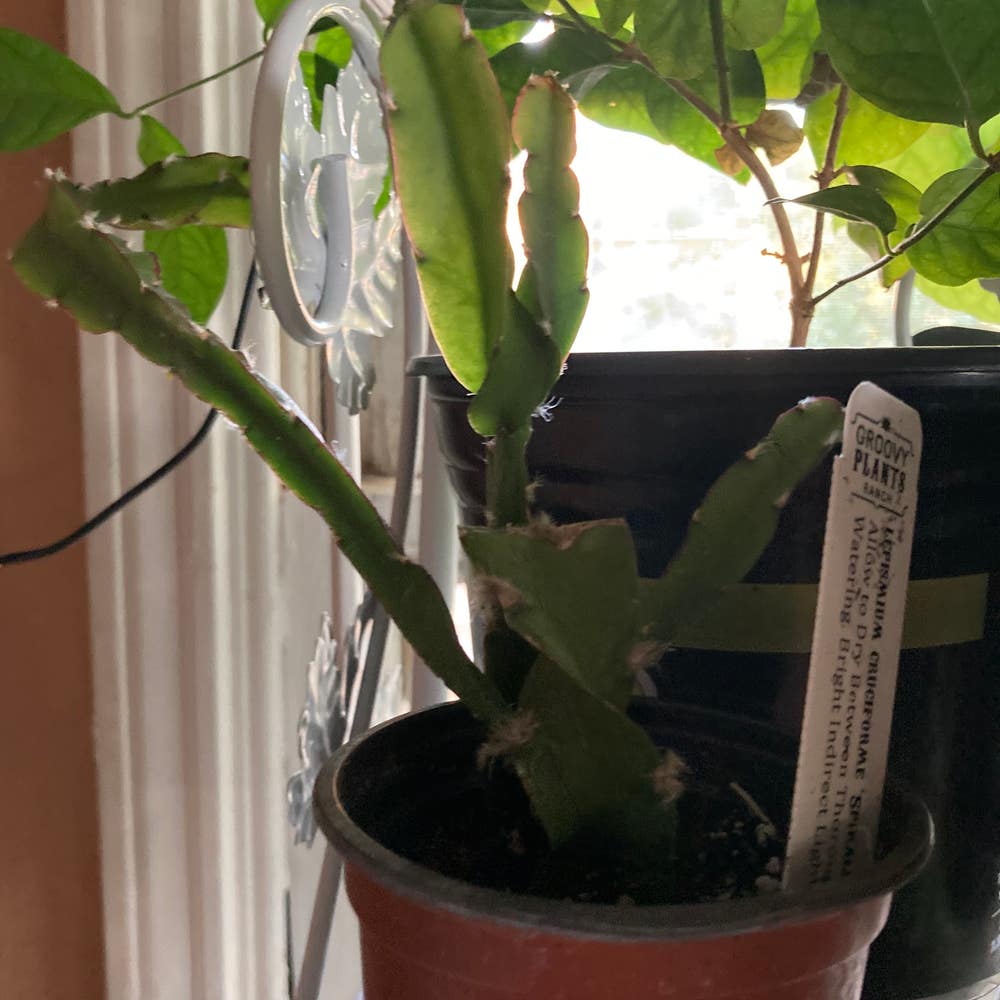
❄️ How Much Humidity Does My Snowdrop Cactus Need?
Lepismium houlletianum
By the Greg Editorial Team
Mar 23, 2024•3 min read
This article was created with the help of AI so we can cover more plants for you. May contain errors. See one? Report it here.
Discover the secret to a happy Snowdrop Cactus with the ideal humidity guide! 🌵🌬️
- Ideal humidity 40%-60% for Snowdrop Cactus health.
- 🌵 Hygrometers monitor; pebble trays & humidifiers boost humidity.
- Ventilation and dehumidifiers manage excess moisture.
Dialing in the Perfect Humidity for Your Snowdrop Cactus
🌵 Why Humidity Matters to Your Snowdrop Cactus
Humidity is crucial for your Snowdrop Cactus, striking the right balance is key. The ideal relative humidity (RH) range for this plant is typically between 40%-60%.
Too low RH and your cactus might start to look like it's been through a drought. Signs include shriveled or crispy leaves. Too high RH, and you might notice yellowing leaves or rot, indicating your cactus is in a moisture overload.
📏 Measuring Up: Tools and Tricks
Hygrometers are your best bet for keeping an eye on humidity. They're like a weatherman dedicated solely to your plant's needs.
Understanding your local humidity is like learning the mood swings of your environment. It's essential to know these patterns because what's happening outside affects the inside. Take daily readings to get a full picture of your cactus's climate throughout the day.
Boosting Humidity: When Your Cactus Craves More
🌴 Creating a Tropical Oasis
Your Snowdrop Cactus might not be a beach bum, but it does appreciate a humidity boost now and then. Here's how to dial it up without turning your home into a sauna.
🌱 Group Therapy: Plant Buddies and Microclimates
Cluster your plants together to create a communal vibe that naturally ups the moisture in the air. It's like each plant is throwing a tiny water party, and your cactus is on the guest list. Just keep that hygrometer handy to make sure the humidity levels don't spiral into a tropical storm.
💦 Mist and Pebbles: Simple Tricks for a Humidity Hike
The pebble tray is your low-tech lifesaver. Fill a tray with pebbles, add water, and set your cactus on top, ensuring it's not taking a bath. This setup lets evaporation do the heavy lifting, giving your cactus a moisture boost without any drama.
🚀 High-Tech Humidity Helpers
Sometimes, you need to bring in the big guns to keep your cactus from going thirsty. Enter the world of high-tech humidity control.
🌬️ Humidifiers: Giving Your Cactus the Spa Treatment
A humidifier can be like a personal rain cloud for your prickly friend. Set it up, let it puff out the perfect amount of moisture, and watch your cactus lap it up. Just don't turn your living room into a cloud, okay? We're aiming for refreshed, not drenched.
🏠 Terrariums and Greenhouses: The Ultimate Humidity Hack
If you're feeling fancy, a terrarium or greenhouse can be the ultimate humidity haven for your Snowdrop Cactus. It's like moving your plant into a posh penthouse with a built-in spa. Just remember to crack the door open sometimes; we don't want any moldy gatecrashers.
When It's Too Muggy: Bringing Down the Humidity
💨 Airflow is Your Friend
Ventilation isn't just a good idea; it's essential when combatting high humidity around your Snowdrop Cactus. Cracking a window can work wonders by inviting a fresh breeze to sweep away the moisture-laden air.
Fans are more than just room decor; they're a humidity warrior's best ally. Position them to create a gentle airflow, ensuring they don't turn your cactus into a wind-whipped mess.
💧 Humidity Busters
Dehumidifiers are the unsung heroes in the fight against clammy air. When the humidity feels like a warm hug you didn't ask for, it's time to let this gadget sip the dampness out of the room.
Using absorbent materials in your plant setup can be a game-changer. Think substrates that drink up excess moisture, keeping your cactus's feet dry and cozy.
⚠️ Safety First
This content is for general information and may contain errors, omissions, or outdated details. It is not medical, veterinary advice, or an endorsement of therapeutic claims.
Always consult a qualified healthcare professional before using any plant as food, medicine, or supplement.
Never eat any plant (or feed one to pets) without confirming its identity with at least two trusted sources.
If you suspect poisoning, call Poison Control (800) 222-1222, the Pet Poison Helpline (800) 213-6680, or your local emergency service immediately.
Spotted an error? Please report it here.
Ensure your Snowdrop Cactus thrives in the sweet spot of 40%-60% humidity 🌵 with Greg's tailored care reminders based on the insights from this article!