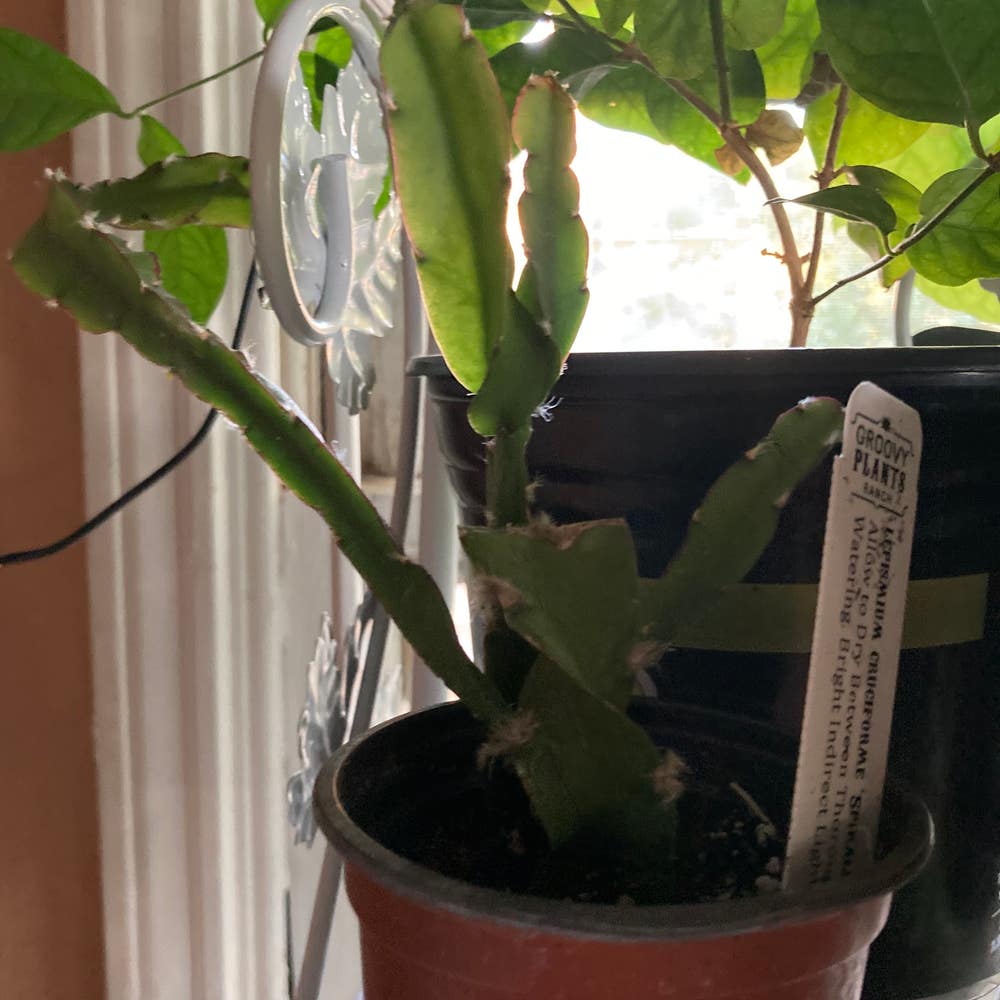
❄️ Why Are There Brown Spots on My Snowdrop Cactus Leaves?
Lepismium houlletianum
By the Greg Editorial Team
Mar 23, 2024•4 min read
This article was created with the help of AI so we can cover more plants for you. May contain errors. See one? Report it here.
Banish brown spots on your Snowdrop Cactus 🌵 and reclaim its pristine beauty with expert tips!
- Overwatering and sunburn can cause brown spots; adjust water and light exposure.
- Fungal infections show as spots with rings or halos; treat with fungicides.
- Prune affected leaves and adjust environment for plant health.
Spotting the Trouble: Identifying Brown Spots
🍂 What Brown Spots Look Like
Brown spots on Snowdrop Cactus leaves can masquerade as harmless quirks, but they're often distress signals. They might look like dry, crusty patches, or they could be soggy and dark. The spots may show up anywhere, from the center to the edges of the leaves. Yellow halos can sometimes encircle these brown spots, hinting at more than just a cosmetic issue.
🤔 Common Misconceptions
It's crucial not to confound brown spots with natural variegation or the benign signs of aging. These spots are not the plant's attempt at a new leaf pattern; they're a cry for help. Uniform spots often point to a systemic problem, while random spotting could indicate environmental stress or physical damage. Don't let these blemishes fool you; they're not just a bad skin day for your cactus.
The Usual Suspects: Common Causes of Brown Spots
🚿 Too Much Love: The Perils of Overwatering
Overwatering can turn your Snowdrop Cactus into a soggy mess. Brown spots from this are often soft and dark, resembling a wet sponge. If the soil feels more like a marsh than a desert, it's time to reassess your watering habits.
🚰 Quick Tips to Correct Your Watering Routine
- Check the soil dryness before watering; it should not cling to your fingers.
- Ensure pots have proper drainage to avoid waterlogged soil.
- Water less frequently in cooler months when evaporation slows down.
☀️ Sunburn Strikes: When the Sun is Too Strong
Too much sun can leave your cactus with the plant equivalent of a sunburn. These spots are typically dry, bleached, and often found on the most exposed parts of the leaves.
🌞 Best Practices for Sun Exposure and Plant Placement
- Gradually acclimate your plant to bright spots to prevent shock.
- Provide shade during peak sunlight hours to protect from harsh rays.
- Consider filtering sunlight through curtains or blinds if indoors.
Fungal Foes: When Microbes Attack
🍄 Spotting Signs of Fungal Infections
Fungal infections on your Snowdrop Cactus can be sneaky. Look for brown spots with concentric rings or a yellow halo—these are the red flags. Unlike the uniformity of overwatering damage, fungal spots are more like a chaotic party on the leaves, each one dancing to its own beat.
⚔️ Battling the Bloom: Fungicide and Beyond
When it comes to fungal infections, fungicides are your first line of defense. Think of them as the bouncers at the door, keeping the unruly fungi out. But don't go wild with them; overuse can cause more harm than good. Rotate your fungicides to prevent the fungi from getting too comfortable. Remember, the key is to act fast but act smart—like a chess player, not a bull in a china shop. For a more natural approach, consider potassium bicarbonate—a less aggressive, but effective, option. And don't forget about air circulation; it's like giving your plant its own personal space, making it less inviting for fungal gatecrashers.
First Aid for Foliage: Treating Brown Spots
🌿 The Pruning Prescription
Prune with purpose. When brown spots mar your Snowdrop Cactus, it's time for some tough love. Grab your shears, but first, sterilize them—think surgeon, not gardener. Snip off the spotted leaves, aiming close to the base without nicking healthy tissue. Dispose of the trimmings far from your plant pals to prevent any disease spread.
💡 Environmental Adjustments
Next up, play detective with your plant's environment. Too much sun can turn leaves into crispy critters, so consider relocating your cactus to a spot with indirect light. If you've been heavy-handed with the watering can, ease up. Let the soil dry out between waterings to avoid root rot. Remember, your plant's not a fish—it doesn't need to swim. Keep airflow in mind, too; good circulation is like a breath of fresh air for your plant's leaves.
⚠️ Safety First
This content is for general information and may contain errors, omissions, or outdated details. It is not medical, veterinary advice, or an endorsement of therapeutic claims.
Always consult a qualified healthcare professional before using any plant as food, medicine, or supplement.
Never eat any plant (or feed one to pets) without confirming its identity with at least two trusted sources.
If you suspect poisoning, call Poison Control (800) 222-1222, the Pet Poison Helpline (800) 213-6680, or your local emergency service immediately.
Spotted an error? Please report it here.
Eradicate those unwelcome brown spots 🍂 on your Snowdrop Cactus by using Greg's custom watering plans to keep your plant's environment perfect.