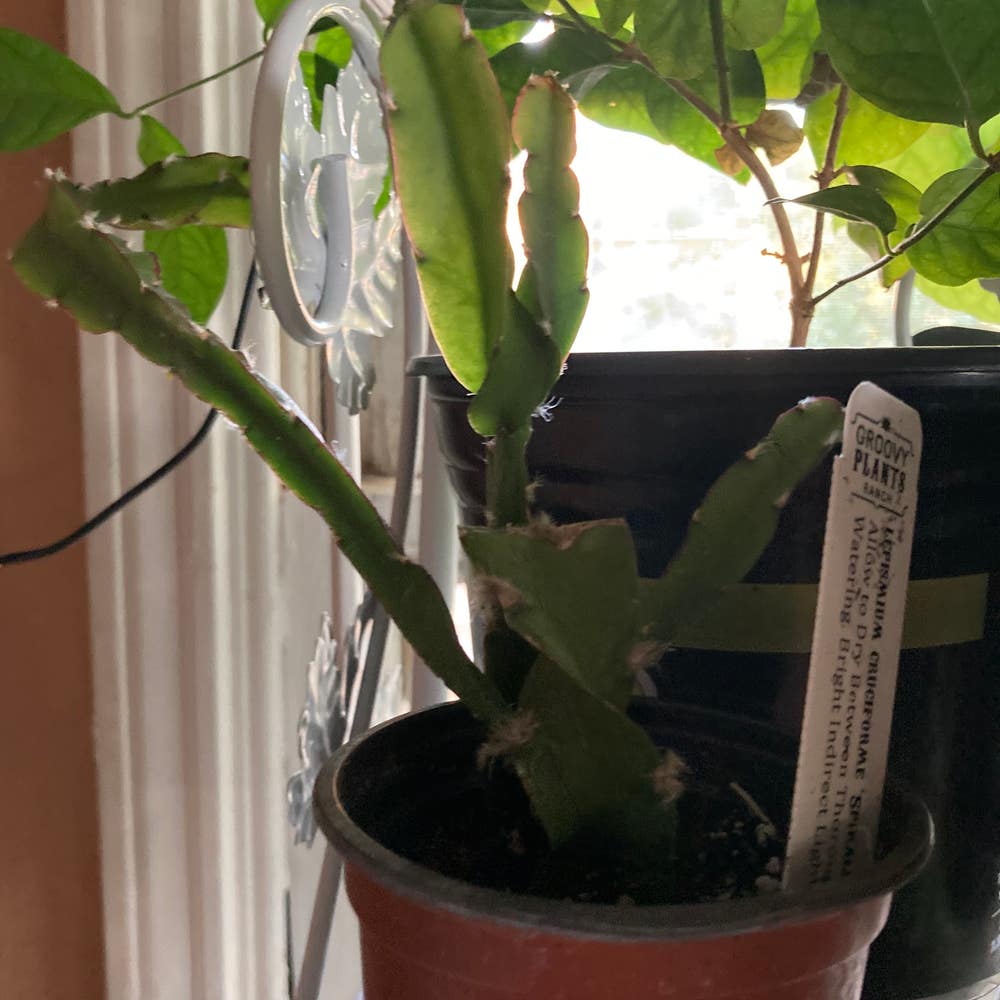
Why Are My Snowdrop Cactus Leaves Mushy?
Lepismium houlletianum
By the Greg Editorial Team
Mar 23, 2024•4 min read
This article was created with the help of AI so we can cover more plants for you. May contain errors. See one? Report it here.
Prevent mushy cactus despair 🌵 by spotting and fixing overwatering before it's too late!
- Mushy leaves signal overwatering; check for root rot and discoloration.
- Immediate action: Reduce watering, ensure soil dries out.
- Long-term health: Use well-draining soil, water wisely, and maintain proper environment.
Spotting Trouble: Signs Your Snowdrop Cactus is Too Wet
💧 Visual Symptoms of Overwatering
When your Snowdrop Cactus starts feeling like a squishy tomato, it's screaming for a watering intervention. Mushy leaves and discoloration are the plant's distress signals. If the leaves are more yellow than a school bus and the soil feels like a wet sponge, you've overdone it with the H2O.
🌱 Root Check-Up
Time for a root inspection. Gently unearth your cactus and check the roots. Healthy roots look like fresh, crunchy carrots, not like something you'd find in a swamp. Blackened or mushy roots are a clear sign of rot. If your plant is leaning or the growth looks as pale as a ghost, it's waving a red flag for root rot. Act fast, or your cactus could be a goner.
The Usual Suspects: Common Causes of Mushiness
🌊 Overwatering Woes
Overwatering is the plant equivalent of an overbearing caretaker. It's a common mistake that leads to mushy leaves. When you water too much, you're essentially suffocating the roots, depriving them of the oxygen they need to thrive. The result? Leaves that feel like a wet sponge rather than the firm, plump foliage you're aiming for.
🚰 The Root Rot Connection
Root rot is a silent killer, often going unnoticed until it's too late. It's the consequence of poor drainage, transforming your pot into a miniature swamp. If the roots are brown and squishy, and the soil smells like last week's leftovers, you've got a case of root rot. To avoid this, ensure your pots have proper drainage and aren't sitting in water.
🍄 Fungal Foes
Fungi are like unwanted guests at a party, thriving in the damp and causing havoc. If you notice brown spots or a general sense of defeat in your plant, it might be a sign of a fungal invasion. This is often a result of overwatering, which creates the perfect environment for fungi to flourish. Keep an eye out for any discoloration or softening of the leaves, and take action promptly.
Saving Your Succulent: Immediate Steps to Take
🚱 Cutting Back on H2O
Reduce your watering immediately. Succulents thrive on neglect when it comes to hydration. Wait for the soil to be completely dry before even thinking about giving your Snowdrop Cactus another drink. Overwatering is a surefire way to send your succulent to an early grave.
🌱 Soil and Drainage Overhaul
Choose a well-draining soil mix designed for succulents. This isn't just a tip, it's a lifeline. Ensure your pot has drainage holes to prevent water from pooling at the bottom. If you're using a pot without them, you're basically giving your plant a pair of concrete shoes. Consider adding perlite or pumice to your soil to boost drainage and aeration, mimicking the cactus's natural, arid habitat. After repotting, resist the urge to water for a few days to let the roots settle in their new, well-drained home.
Keeping Your Cactus Happy: Long-Term Prevention Strategies
💧 Watering Wisdom
Consistency is key in watering your Snowdrop Cactus. Let the soil dry completely before the next watering. This mimics the natural arid conditions the cactus is accustomed to. Overwatering is a no-go; it's like giving a fish a bicycle, utterly useless and potentially harmful.
🍄 Fungal Prevention Tactics
Fungi despise dryness. Water at the base to avoid wetting the leaves, and ensure the soil is bone-dry before watering again. Think of it as a drought-loving plant's dream. If you're watering more than the Sahara sees rain, you're doing it wrong.
🌞 Ideal Environment Setup
Your cactus thrives in bright, indirect sunlight. Direct rays can be harsh, so aim for a spot that's sunny without being a desert. Temperature-wise, keep it stable; think room temperature, not a summer in Death Valley or a winter in Siberia. And airflow? It's essential. Stagnant air is the enemy, inviting pests and diseases like unwanted party crashers.
⚠️ Safety First
This content is for general information and may contain errors, omissions, or outdated details. It is not medical, veterinary advice, or an endorsement of therapeutic claims.
Always consult a qualified healthcare professional before using any plant as food, medicine, or supplement.
Never eat any plant (or feed one to pets) without confirming its identity with at least two trusted sources.
If you suspect poisoning, call Poison Control (800) 222-1222, the Pet Poison Helpline (800) 213-6680, or your local emergency service immediately.
Spotted an error? Please report it here.
Avoid the mushy-leaf mishap in your Snowdrop Cactus with Greg's tailored watering plan 🌵, ensuring just the right amount of moisture for a happy, healthy plant.