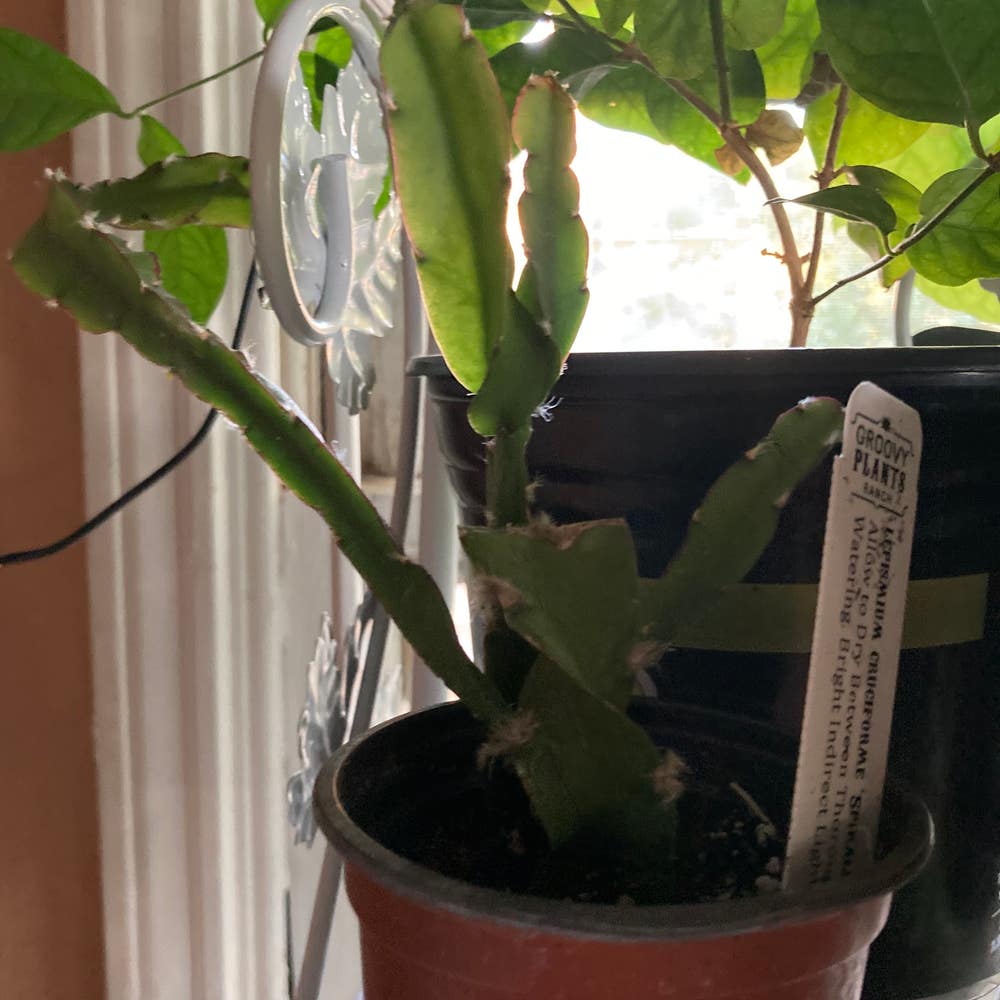
❄️ Why Are There Black Spots on My Snowdrop Cactus Leaves?
Lepismium houlletianum
By the Greg Editorial Team
Mar 23, 2024•3 min read
This article was created with the help of AI so we can cover more plants for you. May contain errors. See one? Report it here.
Learn to decode and defeat those alarming black spots on your Snowdrop Cactus leaves! 🌵🔍
- Black spots indicate distress, especially with leaf drop or wilting.
- 🌵 Overwatering and sunburn are common causes; adjust water and sunlight exposure.
- Prevent with well-draining soil, correct watering, and good airflow.
Spotting the Trouble: Recognizing Black Spots
🕵️ What You're Looking For
Black spots on Snowdrop Cactus leaves are alarm bells. These spots are typically dark, possibly with a brownish hue, and may be encircled by a yellowish edge. They can appear as tiny specks or grow into larger blotches. If you see concentric rings or spots with dark margins, it's time to act—these are classic signs of a serious problem.
🚨 When to Worry
Leaf health is paramount. If black spots are accompanied by leaf drop, wilting, or a general lackluster appearance, your cactus is crying out for help. Spots that are raised, sunken, or emit a foul odor are particularly concerning. They're not just blemishes; they're symptoms of distress. Regular inspection is key—flip those leaves and examine every nook and cranny.
Rooting Out the Causes
💧 Too Much Love: Overwatering Woes
Overwatering is like a bad habit—easy to start, hard to quit, and terrible for your Snowdrop Cactus. Fungal issues often stem from roots that can't breathe, trapped in soggy soil. The signs? A soft, mushy base and leaves that look more like a sad salad than a perky plant.
🌞 Sun Kissed or Sun Scorched?
Your cactus loves the sun, but too much can turn a sun kiss into a sunburn. If your plant's leaves sport crispy edges and faded colors, it's waving a white flag. Moderation is key—think of it as a suntan, not a sunburn.
☠️ Invasion Alert: Pathogens at Play
Beware the silent assassins—bacterial and viral infections. They're sneaky, spreading quickly and often going unnoticed until it's too late. Look for unusual patterns, color changes, and a general look of despair in your plant. It's the plant equivalent of catching a cold in a rainstorm—unpleasant and avoidable.
Turning the Tide: Effective Treatments
💧 Drying Out: Watering Wisdom
Adjusting watering habits is crucial in the fight against fungal growth. Ensure the top inch of soil is dry before watering again. Mimic natural rainfall by watering deeply but infrequently, and cut back during cooler months when the plant isn't growing as much.
🌥️ Shady Solutions: Managing Sun Exposure
Balance is key when it comes to sunlight. Your Snowdrop Cactus needs enough light to thrive but not so much that it gets sunburned. Find that sweet spot where the plant gets sufficient indirect light to keep those black spots at bay.
🧪 Chemical Allies: When to Use Fungicides
Sometimes, you've got to call in the chemical cavalry. Use fungicides or bactericides as directed, and only after other methods have failed. Remember, it's about precision—apply early and rotate products to prevent resistance. Always gear up with protective wear and follow the label to the letter.
Keeping Spots at Bay: Prevention Tactics
💧 The Right Foundation: Soil and Potting Choices
Well-draining soil is a must-have for your Snowdrop Cactus. It's the difference between a comfortable home and a swamp for your plant's roots. Choose a pot with drainage holes—non-negotiable. Unglazed clay or terracotta pots are your best bet for breathability, helping to wick away excess moisture.
💦 The Watering Sweet Spot
Watering is a precision game. Before you pour, check the soil's dryness—think of it as knocking on the door before entering. Aim for moist, not soggy, soil. It's about hitting that Goldilocks zone: not too wet, not too dry, but just right.
🌬 Circulation is Key
Airflow is like your cactus's personal trainer—it keeps things tight and toned, preventing fungal flab. Space out your plants to avoid moisture build-up. Rotate them periodically for even growth and to discourage any fungal freeloaders from settling in.
⚠️ Safety First
This content is for general information and may contain errors, omissions, or outdated details. It is not medical, veterinary advice, or an endorsement of therapeutic claims.
Always consult a qualified healthcare professional before using any plant as food, medicine, or supplement.
Never eat any plant (or feed one to pets) without confirming its identity with at least two trusted sources.
If you suspect poisoning, call Poison Control (800) 222-1222, the Pet Poison Helpline (800) 213-6680, or your local emergency service immediately.
Spotted an error? Please report it here.
Eradicate black spots 🌵 on your Snowdrop Cactus with ease, as Greg guides you to perfect watering and sunlight balance for a spotless plant victory.