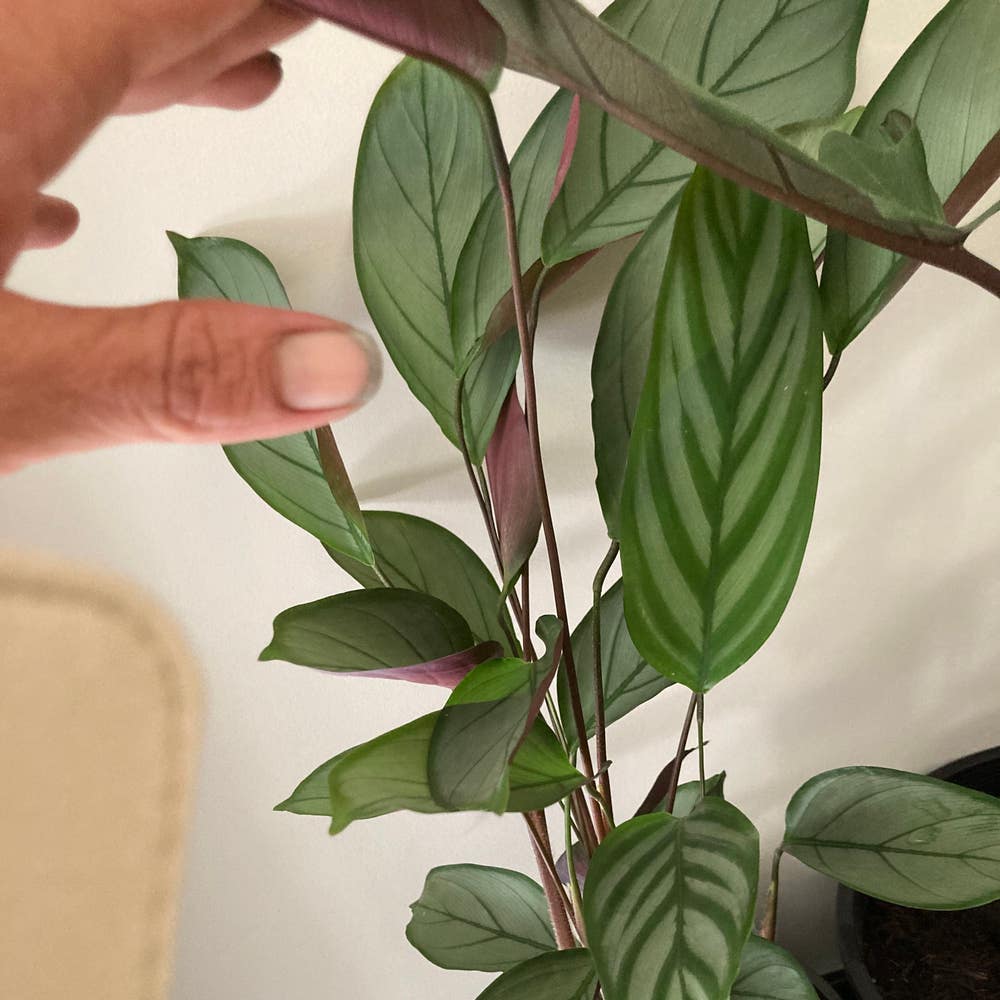
What Should I Do When Never Never Plant Leaves Turn Yellow?
Ctenanthe oppenheimiana
By the Greg Editorial Team
Jun 17, 2024•6 min read
This article was created with the help of AI so we can cover more plants for you. May contain errors. See one? Report it here.
Stop yellow leaves in their tracks and ensure your Never Never Plant thrives with expert care tips! 🌿✨
- 🌱 Nutrient balance and watering prevent yellow leaves; monitor soil moisture.
- ☀️ Bright, indirect light is ideal; avoid direct sun exposure.
- 🌬️ Ensure good air circulation and consistent temperature for leaf health.
Identifying Yellowing Leaves
🍋 Visual Symptoms
Yellowing leaves on your Never Never Plant can be as obvious as a neon sign. Look for leaves turning from lush green to a sickly yellow, sometimes with brown spots or edges. This isn't a fashion statement—it's a cry for help.
🕵️♂️ Understanding Underlying Causes
Nutrient deficiencies often manifest as yellowing leaves. Think of it like your plant being on a bad diet—it's not getting the vitamins it needs. Overwatering is like giving your plant too much to drink, leading to a hangover characterized by yellow, limp leaves. Underwatering, on the other hand, leaves your plant parched, with leaves that are dry and crispy to the touch. Lastly, light exposure can be a Goldilocks situation—too much or too little, and your plant throws a fit with yellow leaves.

Adjusting Watering Practices
💧 Proper Watering Techniques
Watering frequency for the Never Never Plant isn't a one-size-fits-all schedule. Check soil moisture by feeling if the top inch is dry before watering. Ensure thorough drainage, allowing water to escape from the bottom of the pot. Avoid waterlogging; empty drip trays promptly. During winter, reduce watering as growth slows.
🚱 Signs of Overwatering and Underwatering
Overwatering can turn leaves yellow, lead to root rot, and attract pests. If the soil feels soggy or you see standing water, it's time to cut back. Underwatering shows up as droopy, crispy leaves and slowed growth. Gradually increase watering without drenching the soil to revive a thirsty plant. Remember, moderation is key—your plant's roots crave consistency, not extremes.

Nutrient Management
💪 Essential Nutrients for Leaf Health
Nitrogen, phosphorus, and potassium are the trifecta of nutrients that keep Never Never Plant leaves from throwing in the towel and turning yellow. Nitrogen is like the green machine, fueling leaf growth. Phosphorus roots for robust roots and blooming success. Potassium is the plant's personal trainer, ensuring overall health and resilience.
Micronutrients, though needed in smaller doses, are no less VIP for plant vitality. Iron, manganese, and zinc are the supporting cast that help the stars shine. Without them, you're looking at a lackluster performance from your green buddy.
🌱 Fertilization Tips
When it's time to feed, think of fertilizer as a vitamin supplement, not a meal. Use a balanced houseplant fertilizer at half strength, monthly during the growing season. It's like a nutrient nip, just enough to keep things perky without tipping into excess.
In the off-season, give your plant a break. No fertilizing in fall and winter; it's their time to chill. If you've repotted recently, hold off on the fertilizer and let the plant settle. If it's been a couple of years, consider repotting with fresh, nutrient-rich soil to give it a boost.
Remember, yellow leaves are a cry for help, not a death sentence. With the right nutrient nudge, you'll have your Never Never Plant back to its vibrant self in no time.

Optimizing Light Exposure
💡 Ideal Light Conditions
Bright, indirect light is the sweet spot for Never Never Plants. Direct sunlight is a no-go—it's like putting your plant in a fryer. Aim for a location that bathes your plant in gentle light without the harshness of direct rays. Think about placing it near a window with a sheer curtain for a soft filter.
🌞 Addressing Light-related Issues
If your plant's leaves are throwing shade by turning yellow, it might be crying out for a light adjustment. Too much sun, and you'll see leaves as scorched as a bad barbecue. Too little, and your plant's as pale as a vampire in moonlight. Rotate your plant regularly to ensure even light distribution, and if you spot signs of sunburn, move it further from the window. Remember, consistent exposure to the right amount of light keeps your Never Never Plant from never ever thriving.
Soil Health and Drainage
💧 Importance of Well-Draining Soil
Well-draining soil is non-negotiable for the Never Never Plant. It's the difference between a thriving green beauty and a sad, yellow-leafed mess. Soil that doesn't drain can drown roots, leading to yellow leaves—a clear distress signal.
🌱 Soil Amendment Techniques
To avoid waterlogging, mix in some horticultural grit or perlite. These amendments increase aeration, allowing roots to breathe and water to flow through. Consider a coir-based potting mix; it's like a life jacket for roots, keeping them buoyant and happy. If you're repotting, ensure the new home has drainage holes. No holes? You're basically asking for trouble.
Regular checks are key. If the soil feels like a wet sponge, it's time to intervene. Add organic matter like compost to enrich the soil and improve its structure. It's like hitting the reset button on your plant's living environment. Remember, the goal is to create a fluffy, nutrient-rich bed where water and roots have a balanced relationship—not too clingy, not too distant.
Lastly, don't let your pot sit in a saucer of water. It's the equivalent of leaving your plant's feet in a puddle—uncomfortable and unhealthy. If you've accidentally overwatered, tilt the pot to drain excess liquid. It's a simple move that can save your plant from root rot.
Maintaining Environmental Conditions
🌡️ Temperature and Humidity Control
Consistency is key when it comes to temperature and humidity for your Never Never Plant. Aim to maintain a room temperature between 68-80°F to keep your plant from throwing a fit. High humidity levels are like a comfort blanket for this tropical beauty, so don't let the air become as dry as a desert. If you're seeing more brown tips than a coffee shop, it's time to increase humidity. Misting or a pebble tray can be your go-to move here.
💨 Air Circulation
Good air flow is like a breath of fresh air for your Never Never Plant's leaves. It helps keep them dry and disease-free, much like a well-ventilated gym locker room. Ensure your plant isn't suffocating in stagnant air, which can be as harmful as an awkward silence. A gentle fan or an open window can work wonders, just don't create a wind tunnel that could leave your plant feeling like it's in a leaf-blaster.
⚠️ Safety First
This content is for general information and may contain errors, omissions, or outdated details. It is not medical, veterinary advice, or an endorsement of therapeutic claims.
Always consult a qualified healthcare professional before using any plant as food, medicine, or supplement.
Never eat any plant (or feed one to pets) without confirming its identity with at least two trusted sources.
If you suspect poisoning, call Poison Control (800) 222-1222, the Pet Poison Helpline (800) 213-6680, or your local emergency service immediately.
Spotted an error? Please report it here.
Banish yellow leaves and ensure your Never Never Plant thrives with Greg's tailored care reminders 🌿, providing the right balance of water, nutrients, and light.