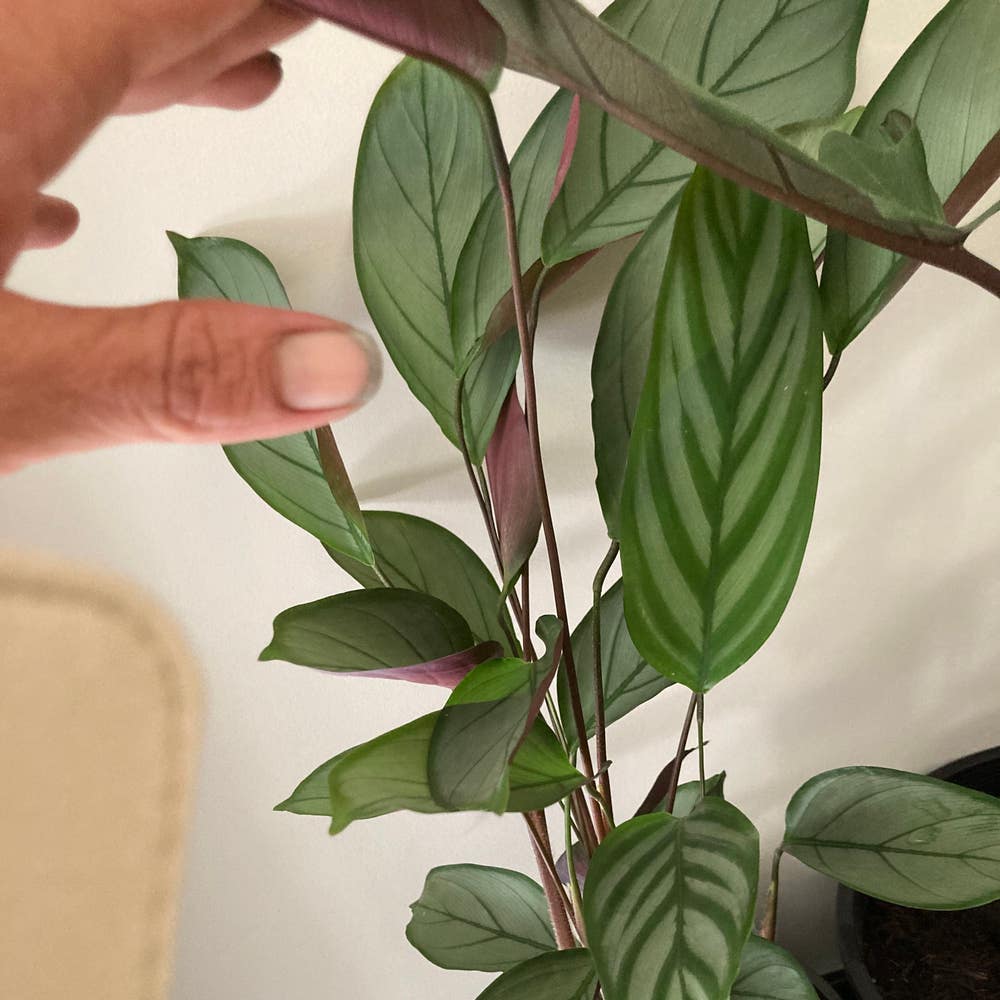
Why Is My Never Never Plant Dropping Leaves? 🍂
Ctenanthe oppenheimiana
By the Greg Editorial Team
Jun 17, 2024•5 min read
This article was created with the help of AI so we can cover more plants for you. May contain errors. See one? Report it here.
Halt the leaf-drop blues 🍂 of your Never Never Plant with our life-saving care tips.
- 🚱 Overwatering and underwatering can both cause leaf drop; monitor soil moisture.
- 🌡️ Maintain 60°F to 70°F to prevent temperature stress and wilting leaves.
- 🌞 Bright, indirect light is best; rotate plant for even exposure and growth.
When Too Much Love Hurts: Overwatering Woes
💧 Signs Your Never Never Plant Is Swimming Instead of Sipping
Yellowing leaves and a stench of decay are telltale signs that your Never Never Plant might be getting too much H2O. If the soil feels more like a swamp than a bed, it's time to rethink your watering strategy. Overwatering can suffocate roots, preventing them from absorbing the nutrients they need and leading to a dramatic leaf-drop performance.
🌊 Balancing Act: Finding the Right Watering Rhythm
Consistency is key. Develop a watering schedule that takes into account the plant's environment and your own forgetfulness. If you're the type to shower your plant with love, learn to channel that urge into misting for some extra humidity—it's hard to overdo. Remember, a well-draining soil mix can save you from overwatering sins. And when in doubt, let the soil dry out a bit before the next watering session.

Thirsty for Attention: The Perils of Underwatering
🚰 Spotting the SOS signals from your plant
Your Never Never Plant has a dramatic way of asking for a drink. If you notice droopy leaves hanging like a teenager's posture, it's time to pay attention. A soil surface pulling away from the pot's edge is your plant's version of a parched throat. And when the leaves feel crispier than autumn leaves underfoot, your green friend is definitely in a drought.
💧 Quenching the thirst: Proper hydration techniques
To avoid turning your plant into a desert mirage, check the soil before watering. If it's as dry as yesterday's toast, it's time to hydrate. Water your plant slowly, letting the moisture seep in like a gentle rain, not a monsoon. If the soil's drying out faster than you can keep up, consider a more moisture-retentive potting mix or a self-watering system to keep the hydration consistent. Remember, the goal is to mimic a natural watering pattern—not too little, not too much, just the right amount to keep your Never Never Plant never wanting for water.

Feeling Hot and Bothered: Temperature Stress
🌡️ Recognizing Temperature Tantrums in Your Never Never Plant
Temperature stress in plants is like wearing a winter coat during a summer day—uncomfortable and unhealthy. Your Never Never Plant prefers a stable climate, ideally between 60°F to 70°F. Watch out for wilting leaves; they're not just drooping for fun, they're signaling distress. If your plant's leaves start to look like they've seen a ghost, it's time to reassess its spot in your home.
🏖️ Keeping Cool: Creating a Comfy Climate for Your Green Buddy
To avoid turning your Never Never Plant into a drama queen, keep it away from the chilly drafts that sneak in through cracks or the intense heat from a nearby radiator. Think of your plant's environment as a miniature sanctuary that needs to be protected from the harsh realities of fluctuating indoor climates. If you catch your plant looking like it's trying to escape the heat, consider moving it to a cooler, shaded area. Remember, consistency is key—avoid moving your plant from hot to cold spots abruptly. Instead, create a gradual transition to help it acclimate without the shock.

Let There Be (The Right Amount of) Light!
Deciphering your Never Never Plant's light needs is crucial for its well-being.
💡 Decoding Your Plant's Light Language
Your plant's leaves are like a mood ring; they change according to the light. Leggy stems and small leaves suggest it's time to up the lumens. Conversely, leaves that mimic crispy bacon are crying out for less light.
💡 Shifting Shades: Adjusting Light Levels for Happy Leaves
Bright, indirect sunlight is the sweet spot for your Never Never Plant. Direct rays are a no-no—think of it as a tanning bed mishap waiting to happen. If your plant's leaves could talk, they'd ask for a spot with a sheer curtain's protection.
- Rotate your plant regularly to ensure even light exposure.
- If natural light is scarce, consider grow lights as a supplement.
- Introduce new light conditions gradually to prevent shock.
- Monitor leaf color; a lack of red indicates a need for more light, while browning tips are a plea for shade.
Remember, it's about reading the room—or in this case, the leaves. Adjust your plant's position with the seasons, as the sun's position changes. Keep an eye on your green buddy and be ready to adapt; it's like being a plant DJ, mixing the right balance of care to keep the vibe alive.
The Hunger Games: Nutrient Deficiencies
In the botanical arena of your Never Never Plant, nutrient deficiencies can be the silent assassins of leaf health.
🚩 Uncovering the Signs of a Nutrient-Starved Never Never Plant
Yellow leaves might scream nitrogen deficiency, while spindly growth whispers of a potassium shortfall. It's a plant's version of a distress signal, so keep your eyes peeled for these visual cues.
🍽️ Serving Up a Balanced Diet: Fertilization Without the Fuss
Soil testing is the plant equivalent of a blood panel; it tells you what's missing. Once you've diagnosed the deficiency, it's time to hit the garden center. Choose a fertilizer that's like a multivitamin for your plant, and stick to a regular feeding schedule. Remember, more isn't always better—overfeeding is just as harmful as underfeeding.
💪 Macronutrients: The Big Three
Nitrogen, phosphorus, and potassium are the plant's main course. They're essential, but they need to be in balance. Too much nitrogen and you'll get all leaves and no flowers.
✨ Trace Elements: The Spice of Plant Life
Don't forget the micronutrients like iron and magnesium. They're like the herbs and spices that make a meal great.
🌱 Organic Options: Slow and Steady Wins the Race
Organic options like compost or bonemeal offer a slow-release feast for your plant. They're the crockpot dinner to synthetic fertilizers' microwave meal.
Remember, the goal is to create a buffet, not a famine or a feast. Balance is key, and your plant will thank you with lush, uncurled leaves.
⚠️ Safety First
This content is for general information and may contain errors, omissions, or outdated details. It is not medical, veterinary advice, or an endorsement of therapeutic claims.
Always consult a qualified healthcare professional before using any plant as food, medicine, or supplement.
Never eat any plant (or feed one to pets) without confirming its identity with at least two trusted sources.
If you suspect poisoning, call Poison Control (800) 222-1222, the Pet Poison Helpline (800) 213-6680, or your local emergency service immediately.
Spotted an error? Please report it here.
Prevent your Never Never Plant from shedding leaves by letting Greg fine-tune 🎚 your care routine with reminders for watering, light, and fertilization based on your home environment.