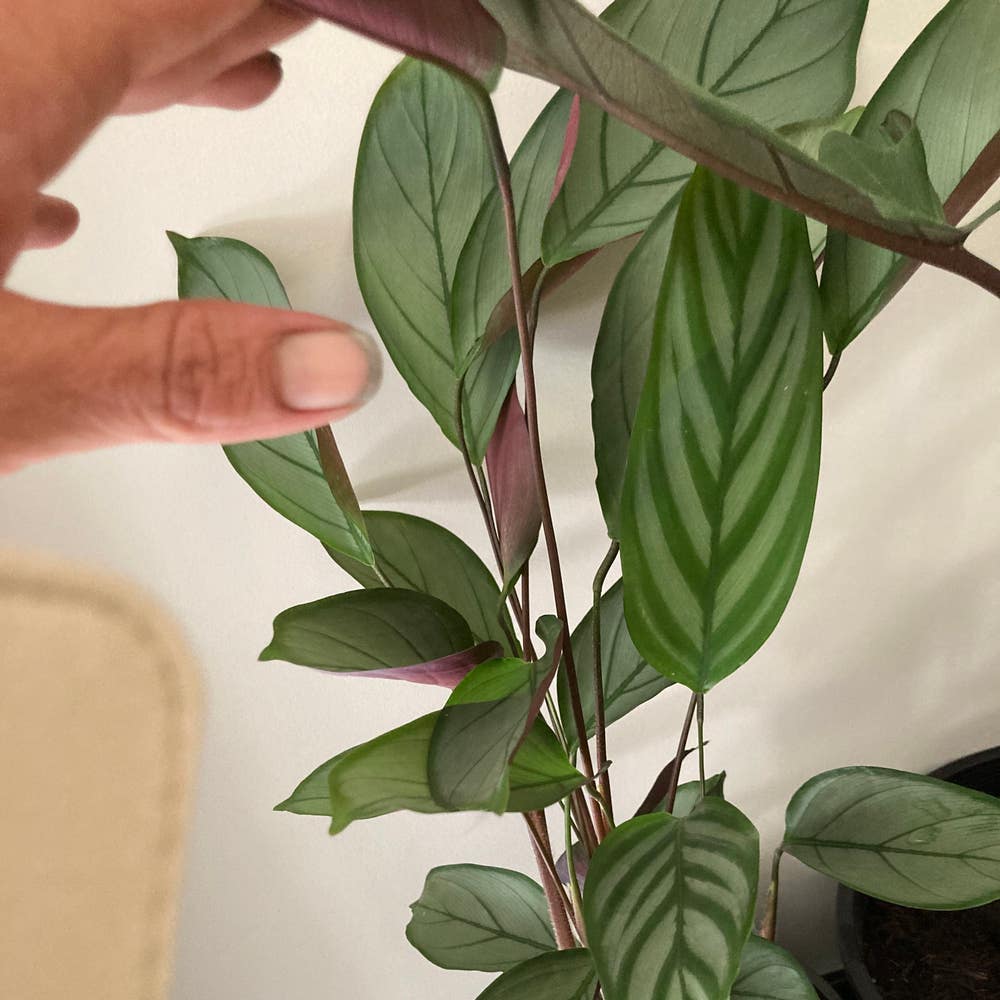
Why Are There Black Spots on My Never Never Plant Leaves?
Ctenanthe oppenheimiana
By the Greg Editorial Team
Jun 17, 2024•5 min read
This article was created with the help of AI so we can cover more plants for you. May contain errors. See one? Report it here.
Banish black spots on your Never Never Plant 🌿 and restore your garden's glory with these expert insights!
- Fungal and bacterial infections cause black spots, often with distinct textures.
- Pests contribute to spots and subsequent infections; treat with insecticidal soaps.
- Prevent spots with environmental control and proactive plant care like pruning and cleaning.
Spotting the Culprit: Recognizing Black Spots
🕵️ What Do Black Spots Look Like?
Black spots on your Never Never Plant can be alarmingly diverse. They might be tiny specks or large splotches, with a texture that ranges from velvety to crispy. You'll often find them playing hide-and-seek on the underside of leaves or brazenly showcasing themselves on top. The edges of these spots may be sharply defined or as fuzzy as a moth's wing.
🚫 Not All Spots Are Created Equal
Not every black spot is a sign of the plantpocalypse. Some are the plant's version of a bad hair day—a response to too much sun or a dry spell. Others are more sinister, like a fungal freeloader or a bacterial blow-in, and they'll throw a party at your plant's expense. Pest damage? That's like graffiti on your plant's leaves, a sure sign of tiny vandals at work. Each type of spot has its own M.O., and your job is to play plant sleuth to figure it out.

The Usual Suspects: Common Causes of Black Spots
🍄 Fungal Foes
Fungi are the covert operatives in the world of plant ailments, often leaving behind a signature of black spots on your Never Never Plant. These spots can range from circular to irregular shapes, sometimes accompanied by a powdery residue. High humidity and poor air circulation are their best allies, creating a breeding ground for these spore-slinging villains. Cercospora and Anthracnose are the usual suspects, thriving in the moist, shadowy nooks of your plant's foliage.
🦠 Bacterial Bullies
Bacteria are the ninjas of plant pathogens, stealthily infiltrating through the tiniest of wounds and leaving behind slimy, black or dark brown spots. These spots may look water-soaked at first, a deceptive sign of their destructive nature. Bacterial infections like Pseudomonas leaf spot revel in stagnant air and high humidity, turning your plant's habitat into a landscape riddled with black spots.
🐜 Pests: The Tiny Terrorists
Pests are the tiny terrorists of the plant world, capable of turning a healthy leaf into a spotty mess. Spider mites spin fine webs as a precursor to the black spot drama, while fungus gnats are a telltale sign of over-moist soil. These critters not only damage the plant directly but also pave the way for fungal and bacterial parties. Keep an eye out for fine webs and the presence of tiny flies to catch these culprits red-handed.

The Plant Detective: Diagnosing and Treating Black Spots
🕵️ Clues to Look For
Detecting the cause of black spots on your Never Never Plant leaves is like unraveling a mystery. Texture is a telltale sign: crusty spots often point to fungal issues, while soggy ones suggest bacteria. Look for halos around the spots—red or yellow rings could indicate an infection. Don't overlook the location of the spots; those on lower leaves might hint at bacterial problems, while widespread spotting could mean a fungal invasion.
🍄 Fungal Infections: Fighting Back
Combatting fungal foes starts with isolation; keep the infected plant away from its leafy peers. Prune the drama—remove affected leaves with sterilized shears. Fungicides are your allies here, but use them wisely and rotate types to prevent resistant strains. Remember, fungi love moisture, so keep the foliage dry and water at the base to avoid creating a fungal playground.
🦠 Bacterial Infections: Battling the Bacteria
When bacteria are the bullies, cleanliness is your shield. Sterilize your tools—think of it as hygiene for plant surgery. Remove any infected leaves and dispose of them properly to halt the bacteria's march. Improve air circulation and consider a bactericide if the situation calls for it. But be cautious, as overuse can lead to resistant bacteria.
🐜 Pest Infestations: Defending Your Plant
Pests are the tiny terrorists of the plant world, often leaving black spots in their wake. Use a lens to inspect for insects on stems and leaf undersides. Ants can be a giveaway—where there's honeydew, there's usually trouble. Show these pests the door with insecticidal soaps or neem oil treatments. Vigilance is key—regular inspections can catch these critters before they cause chaos.

Keeping the Spots at Bay: Prevention Strategies
💨 Environmental Mastery
Adjusting humidity, temperature, and air flow is crucial for preventing black spots on Never Never Plant leaves. High humidity is a fungi's best friend; keep it low. Ensure your plant's environment isn't a sauna by using a dehumidifier or placing it in naturally less humid rooms. Temperature should be stable—not too hot, not too cold, just right for your leafy friend.
Airflow is key; stagnant air is like a stagnant life, nothing good comes out of it. A gentle breeze from a fan or a slightly open window can work wonders, but avoid creating a wind tunnel.
🌱 Proactive Plant Care
When it comes to watering, think of it as a morning ritual. Early watering gives leaves time to dry, making them less appealing to fungi. The soil should feel like a wrung-out sponge—moist but not drenched.
Pruning isn't just a haircut for your plant; it's a strategic move to prevent overcrowding and improve air circulation. Remember to clean your tools post-snip to prevent spreading any unseen nasties.
Cleaning leaves can be therapeutic, not just for you but for your plant too. Wipe them down gently to remove dust and potential spores. It's like giving your plant a spa day, minus the cucumber slices.
Lastly, keep an eye on your plant like it's the season finale of your favorite show. Regular check-ups can catch black spots before they turn into a full-blown drama series.
⚠️ Safety First
This content is for general information and may contain errors, omissions, or outdated details. It is not medical, veterinary advice, or an endorsement of therapeutic claims.
Always consult a qualified healthcare professional before using any plant as food, medicine, or supplement.
Never eat any plant (or feed one to pets) without confirming its identity with at least two trusted sources.
If you suspect poisoning, call Poison Control (800) 222-1222, the Pet Poison Helpline (800) 213-6680, or your local emergency service immediately.
Spotted an error? Please report it here.
Keep your Never Never Plant spotless 🍃 with Greg's tailored environment tracking and care advice, ensuring those black spots are a thing of the past!