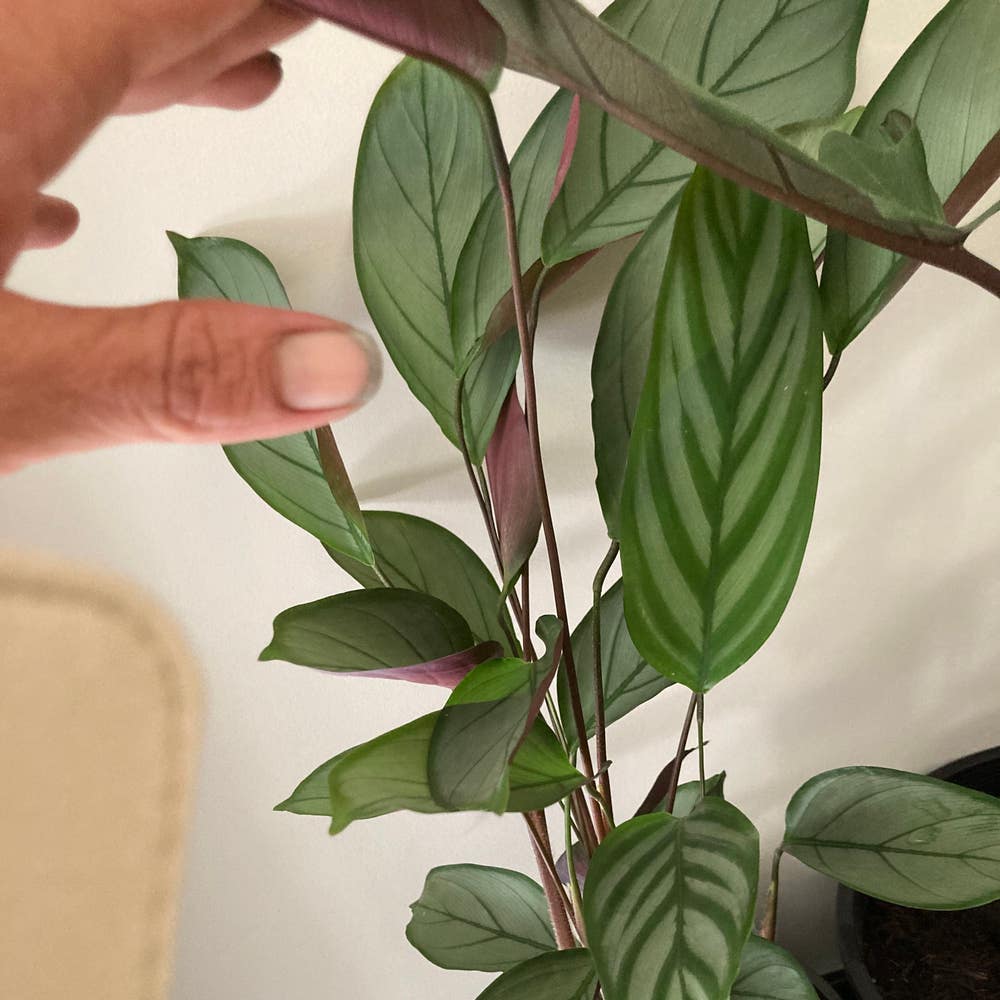
Common Never Never Plant Problems
Ctenanthe oppenheimiana
By the Greg Editorial Team
Jun 17, 2024•6 min read
This article was created with the help of AI so we can cover more plants for you. May contain errors. See one? Report it here.
Rescue your Never Never Plant from peril 🌿 and cultivate thriving greenery with these essential care tips!
- Yellow leaves? Could be over-watering or root rot; let soil dry or repot.
- Droopy or pale? Under-watering or low light; water deeply or find brighter spot.
- Pests or mold? Improve air circulation and treat with water stream or fungicide.
Water Woes: Too Much or Too Little
💦 Over-Watering
Yellow leaves and mushy stems are distress flares from your Never Never Plant. It's practically waving a white flag. Over-watering is like throwing a pool party for your plant when it just wanted a quiet bath.
Spotting the Signs
- Yellowing leaves scream 'Help! I'm drowning!'
- Mushy stems feel like a sad, overripe banana.
Drying Out
- Check the roots for rot—snip the soggy offenders.
- Let the soil dry out like a day-old baguette.
- Resume watering only when the top inch of soil feels like a dry martini.
🏜️ Under-Watering
Drooping leaves and dry soil are your Never Never Plant's way of telling you it's parched. It's sitting there, dreaming of a desert oasis.
Recognizing Thirst
- Leaves droop like they've just heard bad news.
- The soil is as dry as a stand-up comedian's wit.
Quenching the Thirst
- Give it a drink when the topsoil feels like a neglected sandbox.
- Water deeply, like you're pouring a foundation for hydration, but let the soil go back to being a touch dry before the next watering rendezvous.

Light and Shade: Finding the Balance
🌞 Too Much Sun
Burn notice: Your Never Never Plant isn't trying to get a summer tan. Brown or white patches on the leaves are a clear sign of sunburn. To fix this, move your plant to a spot with bright, indirect light. If it's already crispy, it's time to rotate or relocate. And remember, as the seasons change, so should your plant's position to avoid the harsher angles of the sun.
💡 Not Enough Light
Growing pale: A Never Never Plant stretching out for light is like a kid reaching for the cookie jar—desperate and likely to topple over. If the leaves are losing their vibrant green, it's a sign they're starved for sunlight. Find that sweet spot with enough light but not too much; think of it as setting the mood lighting for a plant's perfect day. Rotate the plant occasionally to ensure every side gets its moment in the sun.

Temperature Tantrums
In the world of Never Never Plants, temperature is the diva that demands constant attention.
🌡️ Keeping it Cool (or Warm)
Stability is the name of the game when it comes to your plant's comfort. Aim for a consistent temperature range, typically between 60-85°F (15-29°C). Think of your plant as a guest at a party—it wants to relax in a comfy chair, not dance on a table.
🚫 Avoiding the Drama
Never place your plant next to a heater or an air conditioner; that's like seating it next to the speakers at a rock concert. It's all fun and games until the leaves start to drop like confetti.
💼 The Right Tools for the Job
Consider investing in a thermostat. It's like giving your plant a personal bodyguard against temperature bullies.
🌍 Real-World Tips
Keep an eye out for wilting or leaves that crisp up faster than bacon in a pan—that's your plant's way of saying, "I'm not okay." Swift action can prevent your Never Never Plant from becoming a botanical drama queen.
🗝️ Consistency is Key
Remember, your plant isn't looking for a thrill ride of temperature highs and lows. Keep it as even-keeled as a librarian during story time for happy, healthy growth.
🎯 The Ideal Spot
Find a location in your home that's as consistent as your grandma's Sunday dinners—away from drafts, direct heat sources, and the icy embrace of an open window.
🕵️ Monitoring Mastery
Stay vigilant. Like a hawk with a weather vane, keep your eyes on the temperature, ensuring your plant's environment is as stable as a seasoned yogi's tree pose.

Uninvited Guests: Pests and Pathogens
🐜 Pests
Bug off: Dealing with common critters like spider mites and aphids.
Aphids and spider mites are the unwelcome squatters in your Never Never Plant's lush foliage. Webbing, speckled leaves, or the critters themselves are telltale signs of infestation. Blast them away with a strong stream of water or apply insecticidal soap as a non-toxic eviction notice. For persistent pests, miticides might be necessary, but consult with local extension services to ensure you're not causing more harm than good.
🍄 Mold and Fungus
Fungus among us: Tackling mold and fungal issues head-on.
Mold and fungus are the silent creepers, thriving in the shadows and moisture around your plant. If you spot mold on the soil, scoop it out like last week's leftovers. Prevent its return by improving air circulation and avoiding wet leaves. Clip away dead foliage to deter mold from settling in. In terrariums or particularly humid environments, vigilance is key—these conditions are mold's favorite playground. Consider using a fungicide if the problem persists, but remember, the best offense is a good defense: maintain cleanliness and dry conditions to keep mold at bay.
Root Rot: The Silent Killer
Root rot is the stealthy assassin of the plant world, striking from below where it's least expected.
🚱 Unearthing the Problem: How to Spot and Stop Root Rot Before It's Too Late
Yellowing leaves and a plant that seems to wilt despite proper watering are the distress flares of root rot. When the roots look like the aftermath of a horror movie—blackened, mushy, and emitting a foul odor—it's time to act fast.
🩺 The Diagnosis
Root rot is a consequence of excessive moisture and poor drainage, creating a playground for fungi and bacteria. It's like setting up a buffet for these pathogens, and they feast on your plant's life support system.
🛠️ The Extraction
If you catch it early, you might save the plant with some root surgery. Snip away the rotted parts with sterile shears, as if you're a plant surgeon on a life-saving mission.
💪 The Recovery
After the operation, repot in fresh, well-draining soil. Make sure the pot has drainage holes that would make a colander jealous.
🛡️ Prevention Tactics
Watering should be a disciplined ritual—only when the soil is dry. Think of it as a desert survival tactic. And always ensure your soil is the type that drains faster than your patience on hold with customer service.
🌿 The Takeaway
Root rot doesn't have to be a death sentence. With vigilance and quick action, you can turn the tide against this silent killer.
⚠️ Safety First
This content is for general information and may contain errors, omissions, or outdated details. It is not medical, veterinary advice, or an endorsement of therapeutic claims.
Always consult a qualified healthcare professional before using any plant as food, medicine, or supplement.
Never eat any plant (or feed one to pets) without confirming its identity with at least two trusted sources.
If you suspect poisoning, call Poison Control (800) 222-1222, the Pet Poison Helpline (800) 213-6680, or your local emergency service immediately.
Spotted an error? Please report it here.
Avoid the pitfalls of over and under-watering your Never Never Plant by letting Greg optimize 🌱 your care routine, ensuring your plant thrives in its environment!