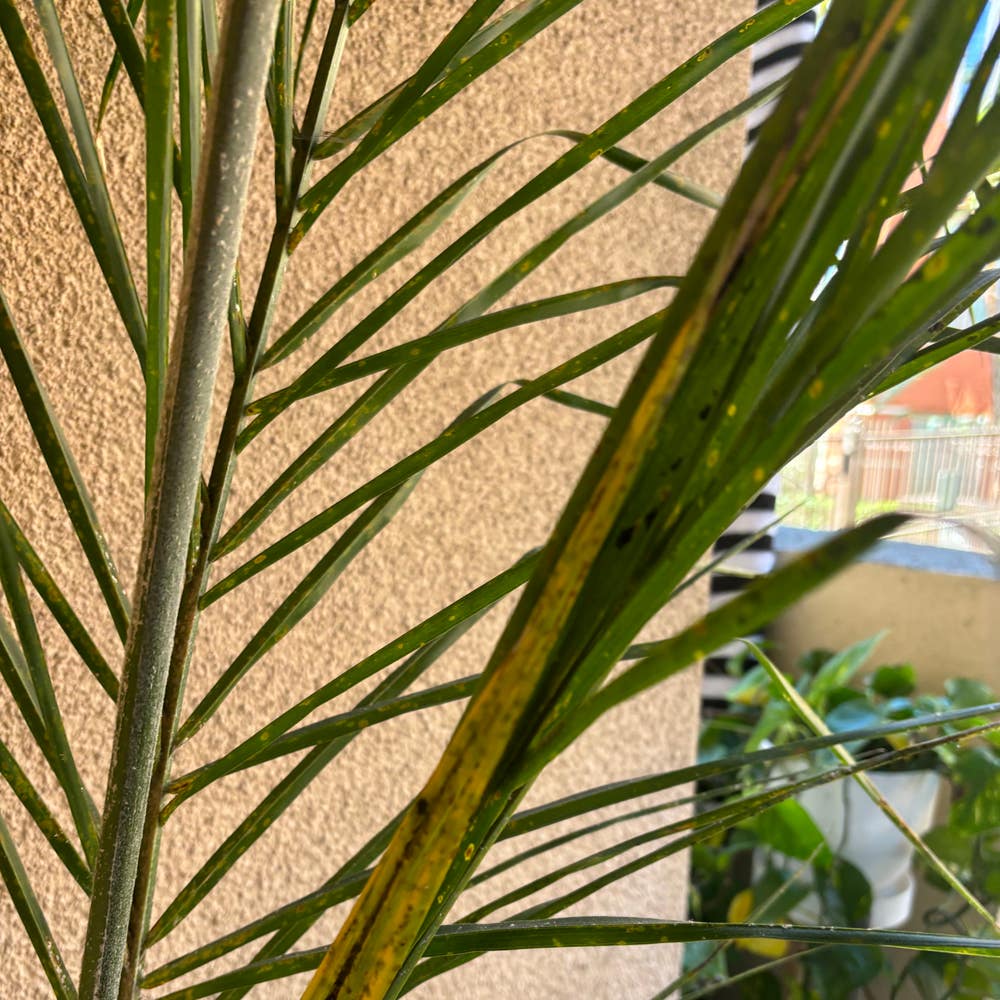
🍂 How to Fix Yellow Leaves on Your Dwarf Queen Palm
Syagrus romanzoffiana 'Dwarf'
By the Greg Editorial Team
Oct 20, 2024•6 min read
This article was created with the help of AI so we can cover more plants for you. May contain errors. See one? Report it here.
- 🌱 Yellow leaves indicate issues like nutrient deficiencies, pests, or improper watering.
- 💧 Overwatering and underwatering both cause yellowing; maintain consistent moisture for health.
- 🌞 Bright, indirect light and humidity above 50% are crucial for vibrant Dwarf Queen Palms.
Causes of Yellow Leaves
🌱 Nutrient Deficiencies
Nitrogen Deficiency
Nitrogen deficiency is a common issue that manifests as general yellowing of older leaves and stunted growth. This nutrient is crucial for chlorophyll production, which keeps your Dwarf Queen Palm vibrant and healthy.
Magnesium Deficiency
Magnesium deficiency presents itself through yellowing between leaf veins, often leading to browning tips. This mineral plays a vital role in photosynthesis and overall plant health, making it essential for your palm's vitality.
💧 Overwatering and Root Rot
Symptoms of Overwatering
Overwatering can lead to yellowing leaves, wilting, and mushy roots. Proper soil drainage is critical for palms; without it, root rot can quickly become a serious issue.
Root Rot
Root rot occurs when excess moisture leads to fungal infections. To prevent this, ensure your pots have drainage holes and use an appropriate soil mix that promotes healthy drainage.
🌵 Underwatering and Drought Stress
Signs of Underwatering
Underwatering shows up as yellowing of younger leaves and crispy leaf edges. Consistent moisture is vital for the health of your Dwarf Queen Palm, so keep an eye on your watering routine.
🐜 Pests
Common Pests Affecting the Plant
Spider mites are notorious for their webbing and stippled leaves, while scale insects leave a sticky residue and can cause yellowing. Regular inspections can help catch these pests early.
Pest Control
Effective pest control methods include using neem oil, insecticidal soap, and introducing beneficial insects. Staying proactive can save your palm from significant damage.
🌡️ Environmental Stress
Temperature Sensitivity
Dwarf Queen Palms thrive in temperatures between 65°F to 85°F (18°C to 29°C). Extreme temperature fluctuations can stress the plant, leading to yellowing leaves.
Humidity Requirements
High humidity is essential for these palms; low humidity can result in yellowing. Solutions like using a humidifier or pebble trays can help maintain the necessary moisture levels.
Understanding these causes is the first step in addressing yellow leaves on your Dwarf Queen Palm. Next, we’ll explore how to diagnose the specific issues affecting your plant.
Diagnosing Yellow Leaves
🧐 Visual Signs of Yellowing Leaves
Identifying the cause of yellow leaves starts with observing their position. Older leaves typically yellow first due to natural aging, while younger leaves may signal more urgent issues.
Pay attention to the overall pattern of yellowing. If only a few leaves are affected, it might be a minor concern. However, widespread yellowing could indicate a more significant problem.
💧 Assessing Soil Moisture Levels
Next, check the soil moisture. Use the finger test: insert your finger about an inch into the soil. If it feels dry, it’s time to water.
Alternatively, a moisture meter can provide a more precise reading. The ideal moisture level is consistently moist soil, but avoid sogginess to prevent root rot.
🐛 Checking for Pests and Diseases
Regularly inspect your Dwarf Queen Palm for pests and diseases. Look for signs like webbing or sticky residue, which can indicate infestations.
Early detection is crucial for effective pest control. The sooner you identify a problem, the easier it is to treat.
☀️ Evaluating Light Conditions
Finally, assess the light conditions. Dwarf Queen Palms thrive in bright, indirect sunlight. If your plant is in a dim spot, it may struggle, leading to yellowing leaves and leggy growth.
Adjusting its position can make a significant difference. Ensure your palm gets the light it needs to flourish.
With these diagnostic steps, you can pinpoint the cause of yellow leaves and take action. Next, let’s explore how to fix these issues effectively.
Fixing Yellow Leaves
🌊 Adjusting Watering Practices
To revive your Dwarf Queen Palm, start by adjusting your watering practices. Water the plant when the top inch of soil feels dry to the touch.
Using room temperature water helps avoid shocking the roots. Additionally, ensure your pot has proper drainage to prevent waterlogging, which can lead to root rot.
🌱 Fertilizing with Appropriate Nutrients
Next, focus on fertilization. Choose a balanced fertilizer that contains both nitrogen and magnesium, essential for healthy growth.
Apply this fertilizer during the growing season, specifically in spring and summer. Always follow the package instructions for dosage and frequency to avoid over-fertilizing.
🕳️ Improving Soil Drainage
Soil drainage is crucial for your palm's health. Repot your plant using a well-draining potting mix to enhance aeration.
Consider adding perlite or sand to the mix for better drainage. Also, ensure that your pots have adequate drainage holes to prevent excess moisture buildup.
🐛 Treating Pests and Diseases
Finally, keep an eye out for pests and diseases. Start by identifying any pests affecting your plant, such as spider mites or scale.
Apply appropriate treatments, like neem oil for spider mites, and monitor your plant regularly for signs of recovery. Early detection is key to effective pest control.
By following these steps, you can help your Dwarf Queen Palm regain its vibrant green color and thrive in your home. Next, let’s explore how to prevent yellow leaves from becoming a recurring issue.
Preventing Yellow Leaves
💧 Best Practices for Watering
Establishing a consistent watering schedule is crucial for your Dwarf Queen Palm. Adjust your frequency based on seasonal changes to ensure your plant receives the right amount of moisture.
Consider using the Greg plant care app for AI-powered reminders. This handy tool can help you stay on track with your watering routine.
🌱 Regular Fertilization Schedule
Fertilizing your palm every 4-6 weeks during the growing season is essential. This regular feeding helps replenish nutrients and supports healthy growth.
Be sure to adjust your fertilization based on the plant's response. If you notice changes in leaf color or growth, it might be time to tweak your nutrient strategy.
☀️ Optimal Light and Humidity Conditions
Position your Dwarf Queen Palm in a spot with bright, indirect light. This lighting is ideal for preventing yellow leaves and promoting lush foliage.
Maintaining humidity levels above 50% is also vital. Consider using a humidifier or placing a pebble tray filled with water beneath the pot to enhance moisture.
🍂 Seasonal Care Tips
Adjust your care practices according to the seasons. For instance, you may need to reduce watering in winter when the plant's growth slows down.
Regularly monitor temperature and humidity levels. Keeping an eye on these factors will help you catch any potential issues before they escalate.
By following these preventive measures, you can keep your Dwarf Queen Palm thriving and vibrant. Next, let’s explore common misconceptions about yellow leaves and plant care.
Common Misconceptions
🌼 Myths About Yellow Leaves and Care
A common misconception is that all yellow leaves signal a serious issue. In reality, some yellowing is a natural part of a plant's growth cycle, especially for older leaves.
Understanding this can ease your worries. It's essential to differentiate between normal aging and signs of distress.
💡 Clarifying the Role of Light in Leaf Color
Another myth is that more light always prevents yellowing. While bright light is beneficial, too much direct sunlight can lead to yellowing and even leaf burn.
Finding the right balance is crucial. Aim for bright, indirect light to keep your Dwarf Queen Palm thriving without the risk of damage.
With these clarifications, you can approach your plant care with confidence. Next, let’s dive into diagnosing yellow leaves effectively.
⚠️ Safety First
This content is for general information and may contain errors, omissions, or outdated details. It is not medical, veterinary advice, or an endorsement of therapeutic claims.
Always consult a qualified healthcare professional before using any plant as food, medicine, or supplement.
Never eat any plant (or feed one to pets) without confirming its identity with at least two trusted sources.
If you suspect poisoning, call Poison Control (800) 222-1222, the Pet Poison Helpline (800) 213-6680, or your local emergency service immediately.
Spotted an error? Please report it here.
Revive your Dwarf Queen Palm's vibrant leaves 🌿 with Greg's tailored care reminders and expert tips that ensure it thrives in its ideal environment!