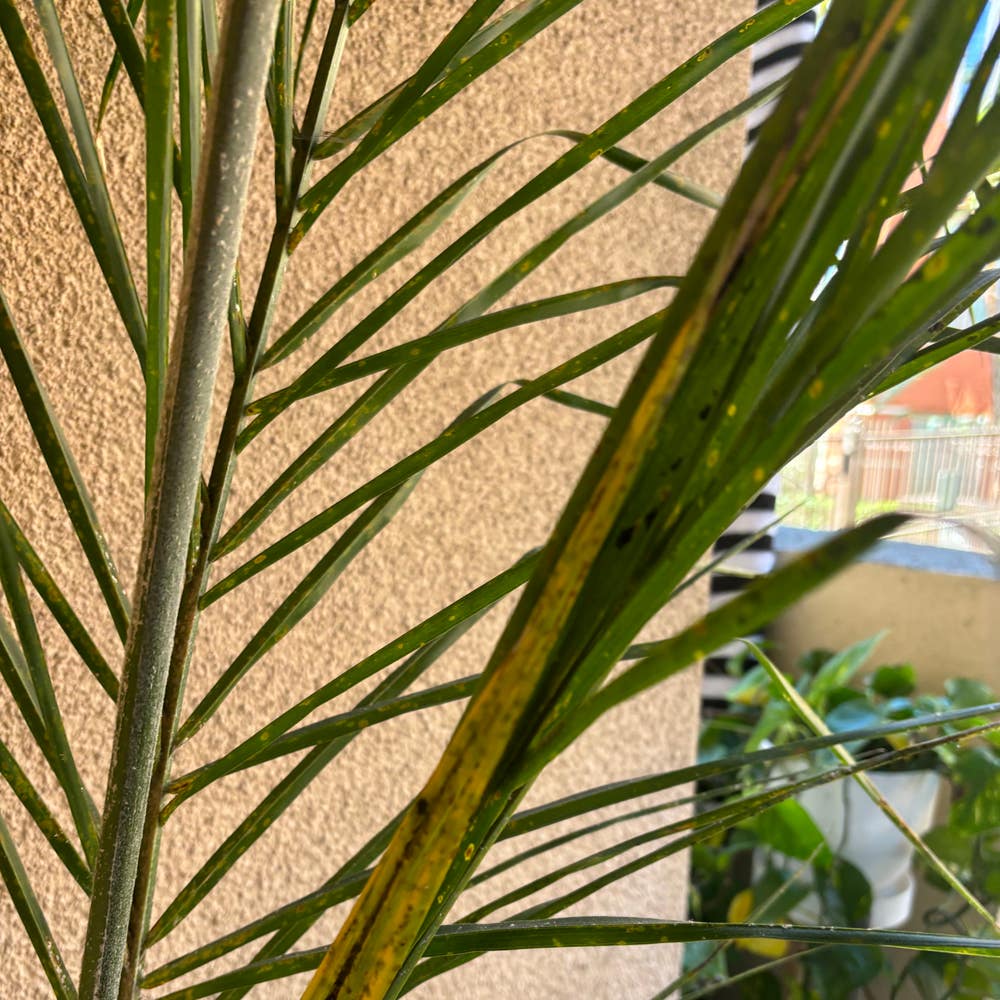
How to Cure Droopy Leaves on Your Dwarf Queen Palm 💧
Syagrus romanzoffiana 'Dwarf'
By the Greg Editorial Team
Oct 20, 2024•7 min read
This article was created with the help of AI so we can cover more plants for you. May contain errors. See one? Report it here.
- 💧 Overwatering and underwatering both cause droopy leaves; balance is key!
- 🌱 Nutrient deficiencies like nitrogen and potassium affect leaf health; fertilize regularly.
- 🌡️ Humidity and temperature are crucial; maintain 50-70% humidity and 65°F-85°F.
Causes of Droopy Leaves
💧 Overwatering and Its Effects
Overwatering is a common issue that can lead to droopy leaves on your Dwarf Queen Palm. Symptoms include yellowing leaves, soft, mushy roots, and a foul odor emanating from the soil.
Root rot is a significant consequence of overwatering, which directly impacts leaf health by causing them to droop. To prevent this, ensure your palm is planted in well-draining soil to avoid waterlogging.
🚰 Underwatering and Its Symptoms
On the flip side, underwatering can also cause droopy leaves. Signs include brown tips on leaves, crispy, dry fronds, and soil pulling away from the pot edges.
Insufficient water leads to stress, which manifests as droopy leaves. To maintain optimal moisture, check the soil regularly, ideally every 1-2 weeks.
🌱 Nutrient Deficiencies
Nitrogen Deficiency
A lack of nitrogen can result in pale green leaves and stunted growth. Nitrogen is essential for leaf development and overall vigor in palms.
Potassium Deficiency
Potassium deficiency shows up as marginal leaf burn and weak fronds. This nutrient plays a crucial role in water regulation and disease resistance.
🌡️ Environmental Stress Factors
Temperature Requirements
Dwarf Queen Palms thrive in temperatures ranging from 65°F to 85°F (18°C to 29°C). Fluctuations outside this range can stress the plant, leading to droopy leaves.
Humidity Requirements
Optimal humidity levels for these palms are between 50% and 70%. Low humidity can cause leaf curling and droopiness, but you can increase humidity using humidifiers or pebble trays.
🐜 Pests and Diseases Affecting Leaf Health
Pests like spider mites and mealybugs can wreak havoc on your palm. Spider mites leave webbing and stippled leaves, while mealybugs appear as white, cotton-like masses.
Diseases such as Fusarium wilt can also impact leaf health, causing yellowing and wilting. Early detection and treatment are crucial to prevent further damage.
Understanding these causes is the first step in addressing droopy leaves effectively. Next, we’ll explore how to diagnose the specific issues affecting your Dwarf Queen Palm.
Diagnosing Droopy Leaves
👀 Visual Signs of Droopiness
Droopy leaves are often the first sign that something's off with your Dwarf Queen Palm. Look for leaves bending downward and a noticeable loss of turgor pressure, which indicates that the plant is struggling.
It's crucial to differentiate between symptoms of overwatering and underwatering. Overwatered palms typically show yellowing leaves, while underwatered ones develop brown tips and crispy fronds.
💧 Soil Moisture Testing Methods
To accurately assess soil moisture, employ simple techniques. The finger test involves inserting your finger 1-2 inches into the soil; if it feels dry, it's time to water.
Alternatively, a moisture meter can provide precise readings. For Dwarf Queen Palms, the ideal moisture level is consistently moist but not soggy.
🌡️ Assessing Environmental Conditions
Monitoring temperature and humidity is essential for your palm's health. Use thermometers and hygrometers to keep track of these conditions.
Adjusting your indoor climate can significantly impact growth. Aim for a stable environment that mimics the palm's natural habitat.
🐞 Identifying Pest Infestations
Regular inspections of leaves and soil are vital for early pest detection. Look for visible pests like spider mites or mealybugs, as well as any signs of damage.
Addressing infestations promptly can save your plant from further stress. Early intervention is key to maintaining a healthy Dwarf Queen Palm.
With these diagnostic steps, you can effectively identify the root cause of droopy leaves. Next, let’s explore treatment options to revive your palm and restore its vitality.
Treatment for Droopy Leaves
🌊 Adjusting Watering Practices
Establishing a consistent watering schedule is crucial for your Dwarf Queen Palm. Water when the top inch of soil feels dry to the touch, ensuring the plant receives adequate moisture without becoming waterlogged.
For effective watering, apply water thoroughly until it drains from the bottom of the pot. This ensures that the roots absorb enough moisture while preventing standing water that can lead to root rot.
🕳️ Improving Soil Drainage
Soil composition plays a vital role in your palm's health. A recommended mix includes potting soil, perlite, and sand to create a well-draining environment.
When repotting, choose pots with drainage holes to enhance water flow. This simple step can significantly reduce the risk of overwatering and promote healthier root systems.
🌱 Fertilization Techniques for Recovery
Fertilization is key to reviving droopy leaves. Use balanced NPK fertilizers, which provide essential nutrients for growth and recovery.
Aim to fertilize every 4-6 weeks during the growing season. This regular feeding will help your Dwarf Queen Palm regain its vigor and lush appearance.
💧 Increasing Humidity Levels
Humidity is another critical factor for your palm's well-being. To boost humidity, consider grouping plants together, as this creates a microclimate that retains moisture.
Using a humidifier or misting the leaves can also help maintain optimal humidity levels. These methods are especially beneficial in dry indoor environments.
🐞 Pest Control Methods
Pest infestations can exacerbate droopiness, so regular monitoring is essential. Consider organic pest control options like neem oil and insecticidal soap to treat any issues promptly.
Stay vigilant and check your plants frequently. Early detection and treatment can save your Dwarf Queen Palm from significant damage.
By implementing these treatment strategies, you can help your Dwarf Queen Palm bounce back from droopy leaves. With the right care, your palm will thrive and bring beauty to your space. Next, let’s explore how to prevent future droopiness and ensure long-term health.
Preventing Future Droopiness
🌊 Best Practices for Watering
Establishing a consistent watering routine is crucial for your Dwarf Queen Palm. Adjust your frequency based on seasonal changes, especially during winter months when the plant requires less water.
Always check the soil moisture before watering. This simple practice helps prevent both overwatering and underwatering, ensuring your palm stays healthy.
🌱 Ideal Soil Composition
For optimal growth, use a well-draining potting mix enriched with organic matter. This composition allows for proper aeration and moisture retention, essential for your palm's health.
Remember to repot your Dwarf Queen Palm every 2-3 years. This not only refreshes the soil but also gives the roots more space to grow.
🌡️ Regular Monitoring of Environmental Conditions
Keep a close eye on temperature and humidity levels in your home. Regular monitoring helps you adjust the indoor climate as needed, creating a stable environment for your palm.
Maintaining stable conditions is vital. Fluctuations can stress your plant, leading to droopy leaves and other issues.
❄️ Seasonal Care Adjustments
Modify your care practices according to the seasons. For instance, reduce watering during winter when the plant is dormant.
In contrast, increase humidity during dry months. Simple methods like grouping plants together or using a humidifier can make a significant difference.
By following these preventive measures, you can keep your Dwarf Queen Palm thriving and vibrant. Next, let’s explore how to recognize signs of recovery after addressing droopiness.
Recovery and Care Post-Droop
Signs of Recovery to Look For 🌱
After addressing the droopiness, watch for signs of recovery. New growth emerging and leaves regaining turgor and vibrant color are excellent indicators that your Dwarf Queen Palm is bouncing back.
Continued Care After Treatment 💧
Maintaining consistent care is crucial during recovery. Regularly check soil moisture and adjust your watering schedule as needed, ensuring your palm gets the hydration it craves.
Long-Term Maintenance Tips 🌴
For ongoing health, implement best practices in palm care. Regularly prune dead or damaged fronds to encourage new growth and keep your plant looking its best.
Additionally, stay vigilant by consistently monitoring for pests and diseases. This proactive approach will help you maintain a thriving Dwarf Queen Palm for years to come.
By following these steps, you can ensure your palm not only recovers but flourishes in its environment. Now, let’s dive into how to prevent future droopiness!
⚠️ Safety First
This content is for general information and may contain errors, omissions, or outdated details. It is not medical, veterinary advice, or an endorsement of therapeutic claims.
Always consult a qualified healthcare professional before using any plant as food, medicine, or supplement.
Never eat any plant (or feed one to pets) without confirming its identity with at least two trusted sources.
If you suspect poisoning, call Poison Control (800) 222-1222, the Pet Poison Helpline (800) 213-6680, or your local emergency service immediately.
Spotted an error? Please report it here.
Revive your Dwarf Queen Palm's droopy leaves and keep them standing tall 🌴 with Greg's tailored watering reminders and moisture tracking to ensure a thriving, vibrant plant!