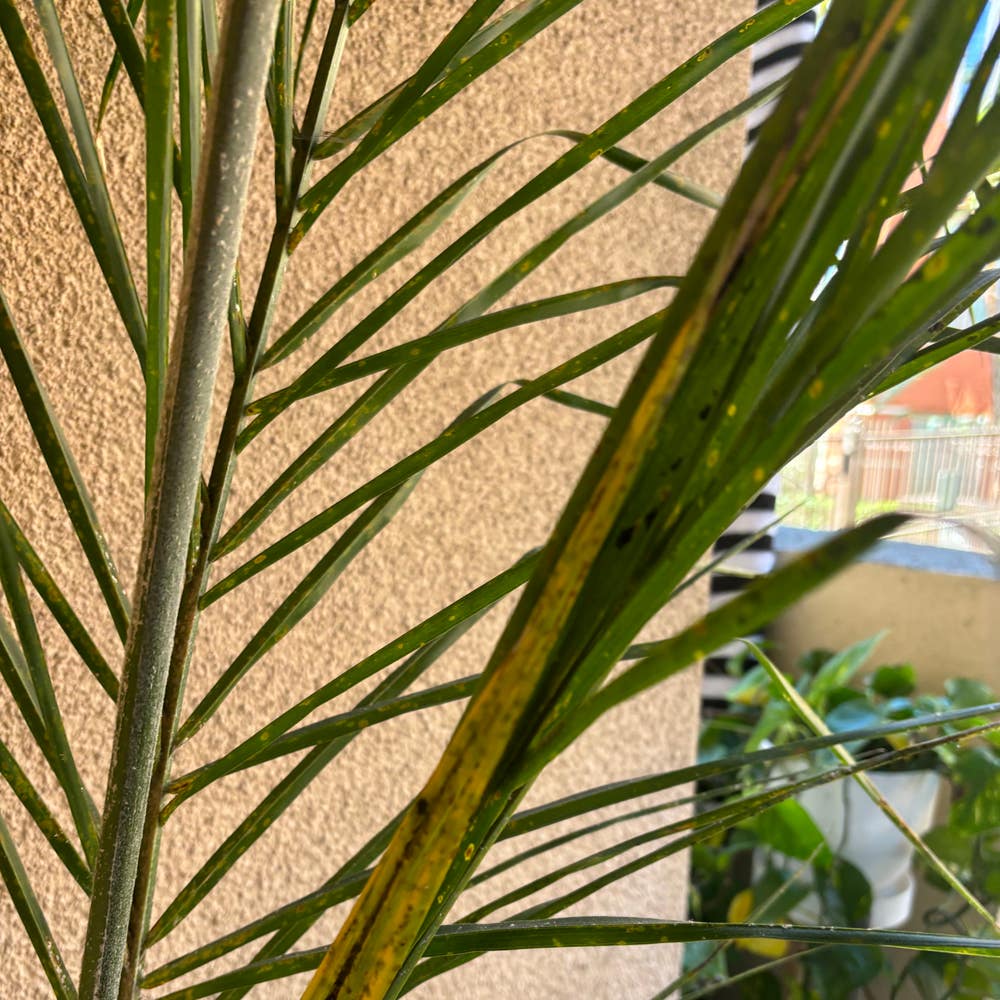
🌴 Managing Leaf Drop on Your Dwarf Queen Palm
Syagrus romanzoffiana 'Dwarf'
By the Greg Editorial Team
Oct 20, 2024•5 min read
This article was created with the help of AI so we can cover more plants for you. May contain errors. See one? Report it here.
- 💧 Overwatering and underwatering both cause leaf drop; balance is key!
- 🌱 Nutrient deficiencies can lead to stunted growth; use balanced fertilizer regularly.
- 🐜 Pest infestations like spider mites harm palms; inspect and treat promptly.
Common Causes of Leaf Drop
💧 Overwatering: Symptoms and Solutions
Overwatering can wreak havoc on your Dwarf Queen Palm. Look for symptoms like yellowing leaves, mushy roots, and, of course, leaf drop.
To tackle overwatering, start by checking the soil moisture. Use a moisture meter or your finger to gauge how wet the soil is.
Next, adjust your watering schedule. Allow the soil to dry out between waterings to prevent further issues.
Finally, improve drainage by repotting your palm in well-draining soil. This will help keep the roots healthy and happy.
🌵 Underwatering: Symptoms and Solutions
Underwatering is another culprit behind leaf drop. Symptoms include browning leaf tips, wilting, and leaf drop.
To remedy this, assess your watering frequency. Increase it based on environmental conditions, especially during hot spells.
Make sure to water thoroughly, ensuring that moisture reaches the root zone. This will help your palm regain its vitality.
🥦 Nutrient Deficiencies: Identifying and Correcting
Nutrient deficiencies can also lead to leaf drop. Common deficiencies include nitrogen, potassium, and magnesium, which can manifest as yellowing leaves and stunted growth.
Start by conducting a soil test to identify any deficiencies. This will give you a clear picture of what your palm needs.
Once you know the issue, use a balanced fertilizer formulated for palms. This will help restore essential nutrients and promote healthy growth.
🐛 Pest Infestations: Common Pests and Treatment
Pest infestations can be sneaky but damaging. Common pests like spider mites and scale insects can cause symptoms such as webbing, sticky residue, and discolored leaves.
Begin treatment with manual removal. Wipe the leaves with a damp cloth to eliminate pests.
If the problem persists, apply insecticidal soap as directed to affected areas. Regular monitoring will help you catch any re-infestation early.
Understanding these common causes of leaf drop will empower you to take action. With the right care, your Dwarf Queen Palm can thrive and flourish.
Preventing Leaf Drop
Proper Watering Techniques 🌊
To keep your Dwarf Queen Palm thriving, focus on proper watering techniques. Water the plant when the top inch of soil feels dry to the touch.
Deep watering is essential. This encourages the roots to grow deeper, making your palm more resilient.
Ideal Soil Conditions 🌱
Choosing the right soil is crucial for your palm's health. A well-draining potting mix, enriched with perlite or sand, is ideal.
Good drainage prevents root rot and promotes healthy growth. This simple step can make a significant difference in your plant's vitality.
Fertilization Schedule and Tips 🌿
Fertilizing your Dwarf Queen Palm is key to preventing leaf drop. Aim to fertilize every 4-6 weeks during the growing season.
Opt for a slow-release, balanced fertilizer specifically designed for palms. This ensures your plant receives the nutrients it needs over time.
Environmental Factors: Light, Temperature, and Humidity ☀️
Creating the right environment is essential for your palm's well-being. Ensure it receives bright, indirect light while avoiding harsh direct sunlight.
Maintain a temperature range between 65°F to 85°F (18°C to 29°C) for optimal growth. Additionally, keep humidity levels above 50% to support healthy foliage.
By focusing on these preventive measures, you can significantly reduce the risk of leaf drop in your Dwarf Queen Palm. Next, let’s explore step-by-step solutions for assessing and adjusting watering practices.
Step-by-Step Solutions
🌊 How to Assess and Adjust Watering
Check Soil Moisture: Use a moisture meter or your finger to test the soil. If the top inch is dry, it’s time to water.
Adjust Watering Frequency: Based on your findings, modify how often you water. This ensures your Dwarf Queen Palm gets just the right amount.
Observe Plant Response: After adjusting, keep an eye on your plant for a few weeks. Look for signs of improvement or further issues.
🌱 How to Amend Soil for Better Drainage
Choose a Well-Draining Potting Mix: Start with a quality potting mix designed for palms. This is crucial for healthy roots.
Mix in Perlite or Sand: Incorporate perlite or sand to enhance aeration. This helps prevent water from pooling around the roots.
Repot the Plant if Necessary: If drainage issues persist, consider repotting your palm. A fresh mix can make a world of difference.
🐛 How to Treat Pests Effectively
Identify the Pest Type: Conduct a visual inspection to determine what pests are present. Common culprits include spider mites and scale insects.
Apply Appropriate Treatment: Use insecticidal soap or neem oil as directed. This will help eliminate the pests without harming your plant.
Monitor for Re-Infestation: Keep an eye on your palm for any signs of pests returning. Repeat treatment as needed to maintain a healthy plant.
🌼 How to Fertilize Properly
Select a Balanced Fertilizer: Choose a fertilizer specifically formulated for palms. This ensures your plant receives the nutrients it needs.
Follow Package Instructions: Adhere to the recommended application rates. Over-fertilizing can be just as harmful as under-fertilizing.
Apply During the Growing Season: Fertilize every 4-6 weeks while your palm is actively growing. This timing maximizes nutrient absorption.
By following these step-by-step solutions, you can effectively manage your Dwarf Queen Palm’s health. Next, let’s explore how to prevent leaf drop altogether.
⚠️ Safety First
This content is for general information and may contain errors, omissions, or outdated details. It is not medical, veterinary advice, or an endorsement of therapeutic claims.
Always consult a qualified healthcare professional before using any plant as food, medicine, or supplement.
Never eat any plant (or feed one to pets) without confirming its identity with at least two trusted sources.
If you suspect poisoning, call Poison Control (800) 222-1222, the Pet Poison Helpline (800) 213-6680, or your local emergency service immediately.
Spotted an error? Please report it here.
Keep your Dwarf Queen Palm thriving 🌴 by using Greg for tailored watering alerts and nutrient tips that will help you prevent leaf drop and promote lush growth!