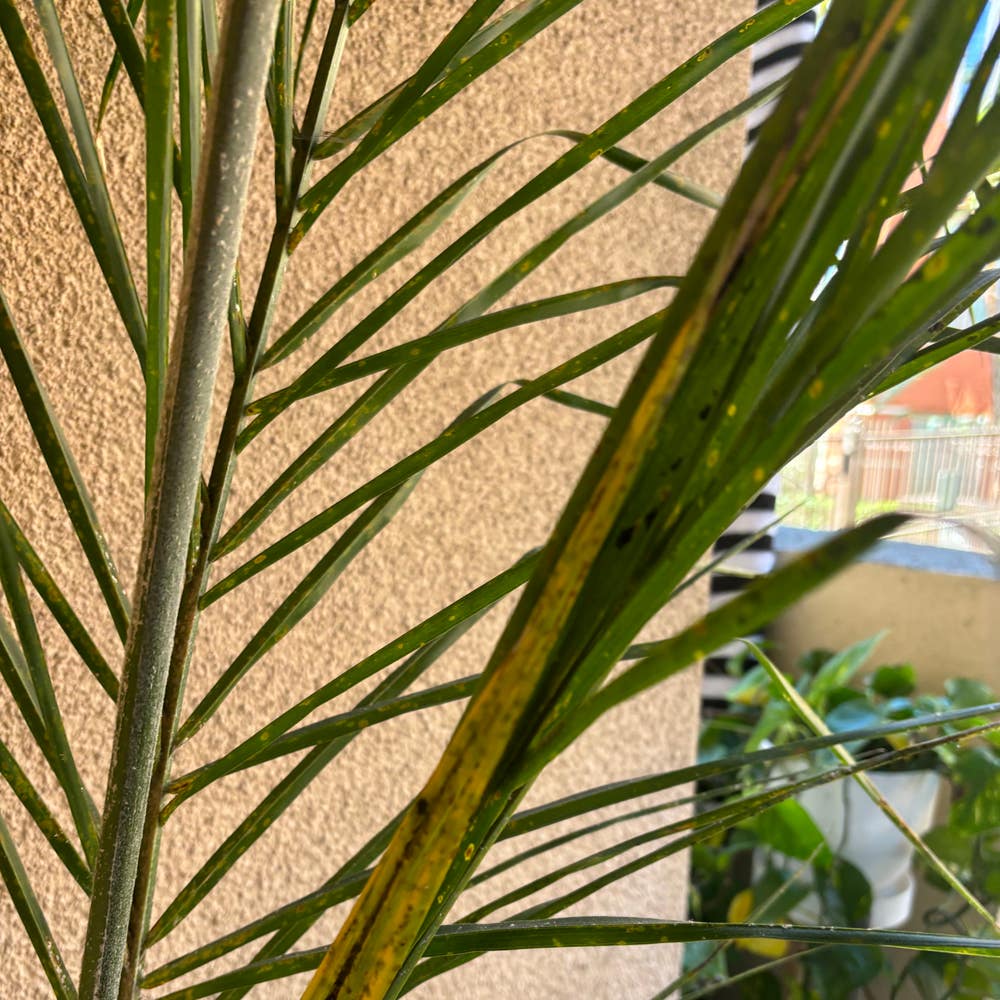
Ultimate Guide to Fixing Curling Leaves on Dwarf Queen Palm 🌴
Syagrus romanzoffiana 'Dwarf'
By the Greg Editorial Team
Oct 20, 2024•6 min read
This article was created with the help of AI so we can cover more plants for you. May contain errors. See one? Report it here.
- 💧 Overwatering and underwatering cause curling leaves; check soil moisture regularly.
- 🌱 Nutrient deficiencies like nitrogen lead to yellowing; test soil for targeted fertilization.
- 🐛 Pests like spider mites can damage leaves; inspect regularly to prevent infestations.
Causes of Curling Leaves
💧 Overwatering and Its Effects
Overwatering is a common issue that can lead to curling leaves on your Dwarf Queen Palm. Symptoms include yellowing leaves and mushy roots, indicating root stress.
To prevent root rot, ensure your palm is planted in well-draining soil. Signs of root rot can severely impact leaf health, leading to further curling and deterioration.
🚰 Underwatering and Dehydration Symptoms
Underwatering can also cause curling leaves, with symptoms like browning leaf tips and edges. This is a clear sign of dehydration, which can stress your plant.
Maintaining consistent soil moisture is crucial for your palm's health. Aim to water your plant regularly, checking the soil's moisture level to avoid dehydration.
🥦 Nutrient Deficiencies
Nitrogen Deficiency
A nitrogen deficiency manifests as yellowing of older leaves and stunted growth. Nitrogen is vital for healthy frond development, so addressing this deficiency is essential.
Magnesium Deficiency
Magnesium deficiency shows up as interveinal chlorosis, where the area between leaf veins turns yellow. Magnesium plays a key role in chlorophyll production and overall plant health.
🐜 Pest Infestations
Spider Mites
Spider mites can wreak havoc on your Dwarf Queen Palm, leaving fine webbing and stippled leaves. Their presence can significantly impact leaf health, leading to curling.
Scale Insects
Scale insects are another threat, identifiable by sticky residue and small bumps on leaves. Their sap-sucking behavior damages the plant, contributing to leaf curling.
🌡️ Environmental Stress
Temperature Stress
Temperature stress occurs when your palm is exposed to unsuitable conditions. The ideal temperature range is between 65°F to 80°F (18°C to 27°C), with symptoms like leaf curl and discoloration indicating stress.
Humidity Requirements
Humidity levels also play a critical role in leaf health. The ideal humidity for a Dwarf Queen Palm is between 50-70%. Low humidity can lead to curling leaves, so monitoring this factor is essential for your plant's well-being.
Understanding these causes can help you diagnose and treat curling leaves effectively. Next, we’ll explore how to diagnose the specific symptoms your palm may be exhibiting.
Diagnosing Curling Leaves
🌊 Identifying Symptoms of Overwatering
Overwatering can lead to several telltale signs. Look for yellowing leaves, wilting, and a mushy texture, which indicate root stress.
Checking soil moisture levels is crucial. Use your finger to gauge the dampness; if it feels soggy, it’s time to adjust your watering habits.
💧 Recognizing Signs of Underwatering
Underwatering manifests through dry, crispy leaf edges and overall wilting. These symptoms signal that your Dwarf Queen Palm is thirsty.
To assess soil moisture, stick your finger into the soil. If it feels dry beyond the top inch, it’s time to water.
🥦 Assessing Nutrient Deficiency Symptoms
Nutrient deficiencies can also cause curling leaves. For nitrogen deficiency, look for yellowing of older leaves and stunted growth.
Magnesium deficiency presents as interveinal chlorosis, where the area between leaf veins turns yellow. Soil testing can confirm nutrient levels, helping you take corrective action.
🐜 Checking for Pest Presence
Pests can wreak havoc on your palm's health. Inspect leaves and stems for signs of infestation, such as webbing or sticky residue.
Early detection is key for effective treatment. Regular checks can save your plant from severe damage.
🌡️ Evaluating Environmental Conditions
Environmental factors play a significant role in leaf health. Assess temperature and humidity levels in your growing area to ensure they meet your palm's needs.
Use tools like thermometers and hygrometers for accurate readings. Maintaining optimal conditions can prevent curling leaves and promote overall plant vitality.
Understanding these diagnostic steps will empower you to take action. Next, let’s explore treatment options to revive your Dwarf Queen Palm.
Treatment Options
Adjusting Watering Practices 🌊
- Start by assessing your current watering frequency and adjust it based on the soil moisture levels.
- Create a consistent watering schedule using reminders to help you stay on track.
- Use the finger test: Insert your finger into the soil up to 2 inches to check for moisture.
Fertilization Techniques for Nutrient Deficiencies 🌱
- For general health, consider using balanced NPK fertilizers.
- If you notice specific deficiencies, opt for fertilizers high in nitrogen or magnesium as needed.
- Apply fertilizers every 4-6 weeks during the growing season for optimal results.
Pest Control Methods 🐞
Organic Options
- Use neem oil and insecticidal soap to tackle spider mites and scale insects effectively.
- Regularly introduce beneficial insects like ladybugs to help keep pest populations in check.
Chemical Options
- For severe infestations, systemic insecticides can be effective.
- Always follow label instructions to ensure safe application and protect your plants.
Improving Humidity and Temperature Conditions 🌡️
- To increase humidity, consider using a humidifier or pebble trays filled with water.
- Grouping plants together can create a microclimate that benefits all your greenery.
- Adjust temperature by avoiding drafts and heat sources, placing your plants away from air conditioning vents.
Pruning Damaged Leaves ✂️
- Prune leaves only after diagnosing the cause of the curl to avoid unnecessary stress on the plant.
- Use clean, sharp pruning shears for the best results.
- Cut at the base of the leaf stem and dispose of cut leaves to prevent attracting pests.
By implementing these treatment options, you can effectively address curling leaves on your Dwarf Queen Palm. Next, let’s explore preventive measures to keep your palm healthy and thriving.
Preventive Measures
Best Watering Practices 🌊
Establishing a consistent watering routine is crucial for your Dwarf Queen Palm. Adjust your schedule based on seasonal changes to ensure your plant receives the right amount of moisture.
Always check the soil moisture before watering. This simple step can prevent both overwatering and underwatering, keeping your palm healthy.
Soil Selection and Drainage Tips 🪴
Choosing the right soil is essential for your palm's health. A well-draining potting mix with perlite is highly recommended to promote root health.
Don't overlook the importance of pot size and drainage holes. Proper drainage prevents water accumulation, which can lead to root rot.
Regular Pest Monitoring and Control 🐜
Set up a routine inspection schedule to keep an eye on your palm for any signs of pests. Early detection is key to preventing infestations from becoming severe.
Consider keeping a pest control log. Tracking any pest activity helps you stay proactive and informed about your plant's health.
Ideal Indoor Conditions for Growth 🌡️
Maintaining consistent temperature and humidity levels is vital for your Dwarf Queen Palm. Aim for a temperature range of 65°F to 80°F (18°C to 27°C) and humidity levels between 50-70%.
Adequate light exposure is also important. Ensure your palm receives indirect sunlight to thrive without burning its leaves.
Seasonal Care Adjustments 🍂
Adjust your watering and fertilization practices based on seasonal growth patterns. Your palm's needs will change throughout the year, so stay attentive.
Recognizing signs of stress during seasonal transitions can help you act quickly. This awareness will keep your Dwarf Queen Palm flourishing year-round.
With these preventive measures in place, your palm will be better equipped to handle challenges. Next, let’s explore effective treatment options for any issues that may arise.
⚠️ Safety First
This content is for general information and may contain errors, omissions, or outdated details. It is not medical, veterinary advice, or an endorsement of therapeutic claims.
Always consult a qualified healthcare professional before using any plant as food, medicine, or supplement.
Never eat any plant (or feed one to pets) without confirming its identity with at least two trusted sources.
If you suspect poisoning, call Poison Control (800) 222-1222, the Pet Poison Helpline (800) 213-6680, or your local emergency service immediately.
Spotted an error? Please report it here.
Keep your Dwarf Queen Palm thriving 🌿 by using Greg's tailored reminders and monitoring tools to tackle curling leaves and ensure optimal care!