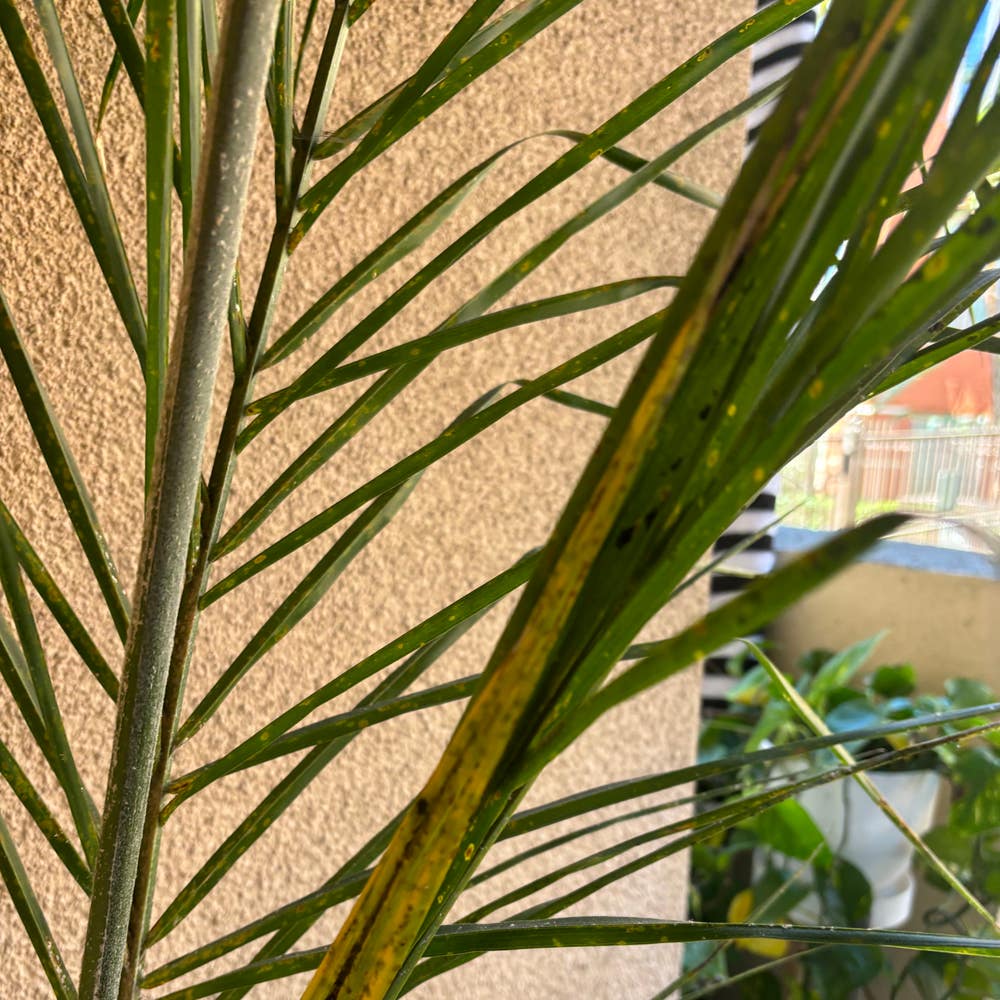
🌴 How to Fix Leaves Falling Over on Your Dwarf Queen Palm
Syagrus romanzoffiana 'Dwarf'
By the Greg Editorial Team
Oct 20, 2024•6 min read
This article was created with the help of AI so we can cover more plants for you. May contain errors. See one? Report it here.
- 💧 Overwatering and underwatering cause drooping leaves; adjust watering practices accordingly.
- ☀️ Insufficient light leads to pale leaves; ensure 6-8 hours of indirect sunlight daily.
- 🐛 Pest infestations stress palms; inspect regularly and use insecticidal soap for treatment.
Causes of Leaves Falling Over
💧 Overwatering and Its Effects
Overwatering is a common issue for dwarf queen palms. Symptoms include yellowing leaves, mushy roots, and leaf drop.
This condition leads to root rot, severely impacting the plant's ability to absorb nutrients. To prevent this, always check the soil moisture before watering.
🌵 Underwatering and Its Effects
Underwatering can also cause leaves to fall over. Look for brown, crispy leaf tips and drooping fronds as signs of distress.
This stress weakens the plant's structure, potentially leading to leaf loss. Regularly assess soil dryness and adjust your watering frequency accordingly.
☀️ Insufficient Light Conditions
Insufficient light can significantly affect your palm's health. Symptoms include pale leaves, elongated fronds, and drooping.
When a plant doesn’t receive enough light, it struggles to photosynthesize effectively. Ensure your dwarf queen palm gets at least 6-8 hours of indirect sunlight daily.
🐜 Pest Infestations and Their Impact
Pests can wreak havoc on your dwarf queen palm. Common culprits include spider mites, mealybugs, and scale insects.
Signs of infestation include sticky residue, webbing, and visible insects on the leaves. These pests deplete nutrients and stress the plant, leading to drooping. Regularly inspect your plant and treat any infestations promptly.
🌱 Nutrient Deficiencies
Nutrient deficiencies can also cause leaves to fall over. Common deficiencies include nitrogen, potassium, and magnesium.
Symptoms often manifest as yellowing leaves, stunted growth, and leaf drop. To combat this, use a balanced fertilizer to replenish essential nutrients and improve overall plant health.
Understanding these causes is crucial for maintaining a healthy dwarf queen palm. By addressing these issues, you can ensure your palm thrives and remains vibrant. Next, let’s explore how to diagnose the specific problems affecting your plant.
Diagnosing the Problem
🚰 Signs of Overwatering vs. Underwatering
Overwatering can lead to yellow leaves, root rot, and soggy soil. In contrast, underwatering results in brown tips, dry soil, and drooping leaves.
💡 Identifying Light-Related Issues
Insufficient light manifests as elongated fronds, pale color, and drooping. Conversely, too much direct sunlight can scorch leaves and cause browning edges.
🐛 Recognizing Pest Damage
To identify pest damage, conduct a visual inspection for pests on the undersides of leaves. Look for sticky residue or webbing, which are telltale signs of pest presence.
🌱 Assessing Soil Health and Nutrient Levels
Perform a soil test to check pH and nutrient levels using a soil testing kit. Signs of poor soil include compacted soil, poor drainage, and a lack of organic matter.
Understanding these diagnostic signs is crucial for maintaining the health of your Dwarf Queen Palm. By accurately identifying the issues, you can take effective steps toward recovery and prevention.
Solutions and Treatments
🌊 Adjusting Watering Practices
To keep your Dwarf Queen Palm thriving, start by checking the soil moisture. Use your finger to test the top 2 inches; if it feels dry, it's time to water.
Next, establish a consistent watering frequency. Aim to water when the top inch of soil feels dry to the touch, ensuring your plant gets just the right amount of hydration.
Lastly, drainage is crucial. Always ensure your pots have drainage holes to prevent waterlogging, which can lead to root rot.
💡 Improving Light Exposure
Light is vital for your palm's health. If you notice drooping leaves, consider relocating the plant to a brighter spot with filtered light.
If natural light is insufficient, don't hesitate to use grow lights. They can effectively supplement the sunlight your palm needs to flourish.
🐞 Pest Control Methods
Pests can wreak havoc on your Dwarf Queen Palm. Start with manual removal; simply wipe the leaves with a damp cloth to eliminate any visible pests.
If the infestation persists, consider using insecticidal soap. Apply it as directed to effectively tackle any lingering issues.
🌱 Fertilization Techniques
Fertilization plays a key role in your plant's vitality. Opt for a balanced, slow-release fertilizer to provide essential nutrients.
Make it a habit to fertilize every 4-6 weeks during the growing season. This will help maintain your palm's health and encourage robust growth.
🧪 Soil Amendments for Better Drainage
The right soil mix can make all the difference. Use a well-draining potting mix that includes perlite or sand to enhance drainage.
Additionally, consider adding organic matter to improve soil structure. This will help your Dwarf Queen Palm thrive in a healthy environment.
By implementing these solutions and treatments, you can effectively address the issues causing your Dwarf Queen Palm's leaves to fall over. Next, let's explore preventive measures to ensure your palm remains healthy and vibrant for years to come.
Preventive Measures
🌊 Best Practices for Watering
Watering your Dwarf Queen Palm effectively is crucial for its health. Aim to water deeply but infrequently, which encourages robust root growth.
Consider using the Greg plant care app for AI-powered reminders. This tool can help you stay on top of your watering schedule, ensuring your palm gets just the right amount of moisture.
☀️ Ideal Light Conditions
Positioning your palm in the right light is essential. Place it in a location that receives bright, indirect sunlight for optimal growth.
Don’t forget to rotate the plant occasionally. This ensures even light exposure on all sides, promoting balanced growth and preventing lopsided fronds.
🐜 Regular Pest Inspections
Pest management is key to keeping your palm healthy. Inspect the leaves bi-weekly for early signs of pests like spider mites or mealybugs.
If you spot any infestations, act quickly. Early intervention can save your plant from significant damage.
🍂 Seasonal Care Adjustments
Adjusting care based on the season can make a big difference. In winter, reduce watering frequency as the plant enters dormancy.
During summer, increase humidity and monitor for heat stress. This proactive approach helps your palm thrive throughout the year.
🌱 Soil Maintenance Tips
Soil health is vital for your palm's overall well-being. Consider repotting every 1-2 years to refresh the soil and maintain nutrient levels.
Also, regularly check drainage. Ensure pots are free of debris to promote proper drainage, preventing waterlogging and root rot.
By following these preventive measures, you can create a nurturing environment for your Dwarf Queen Palm. This foundation will set the stage for effective recovery techniques should any issues arise.
Recovery Techniques
Steps to Revive a Drooping Palm 🌴
Reviving a drooping Dwarf Queen Palm starts with assessing the cause. Determine if the issue stems from overwatering, underwatering, or other factors affecting its health.
Next, adjust your care routine based on your diagnosis. Implement the appropriate solutions, whether it's modifying your watering schedule or improving light conditions.
Finally, monitor your palm closely. Observe for signs of recovery over the next few weeks, such as new growth or improved leaf firmness.
Monitoring Recovery Progress 👀
Look for signs of improvement as your palm begins to recover. New growth, firm leaves, and vibrant color are all positive indicators.
Continue to follow best practices for watering and light exposure. Consistency in care will help your palm regain its strength.
When to Seek Professional Help 🆘
If issues persist despite your care adjustments, it may be time to seek professional help. Persistent problems can indicate deeper issues that require expert assessment.
Consult a local plant expert or extension service for tailored advice. Getting a second opinion can provide valuable insights and solutions for your palm's recovery.
⚠️ Safety First
This content is for general information and may contain errors, omissions, or outdated details. It is not medical, veterinary advice, or an endorsement of therapeutic claims.
Always consult a qualified healthcare professional before using any plant as food, medicine, or supplement.
Never eat any plant (or feed one to pets) without confirming its identity with at least two trusted sources.
If you suspect poisoning, call Poison Control (800) 222-1222, the Pet Poison Helpline (800) 213-6680, or your local emergency service immediately.
Spotted an error? Please report it here.
Keep your dwarf queen palm thriving 🌴 with Greg's personalized watering reminders and pest management tips, ensuring it gets the perfect care to prevent leaf drop!