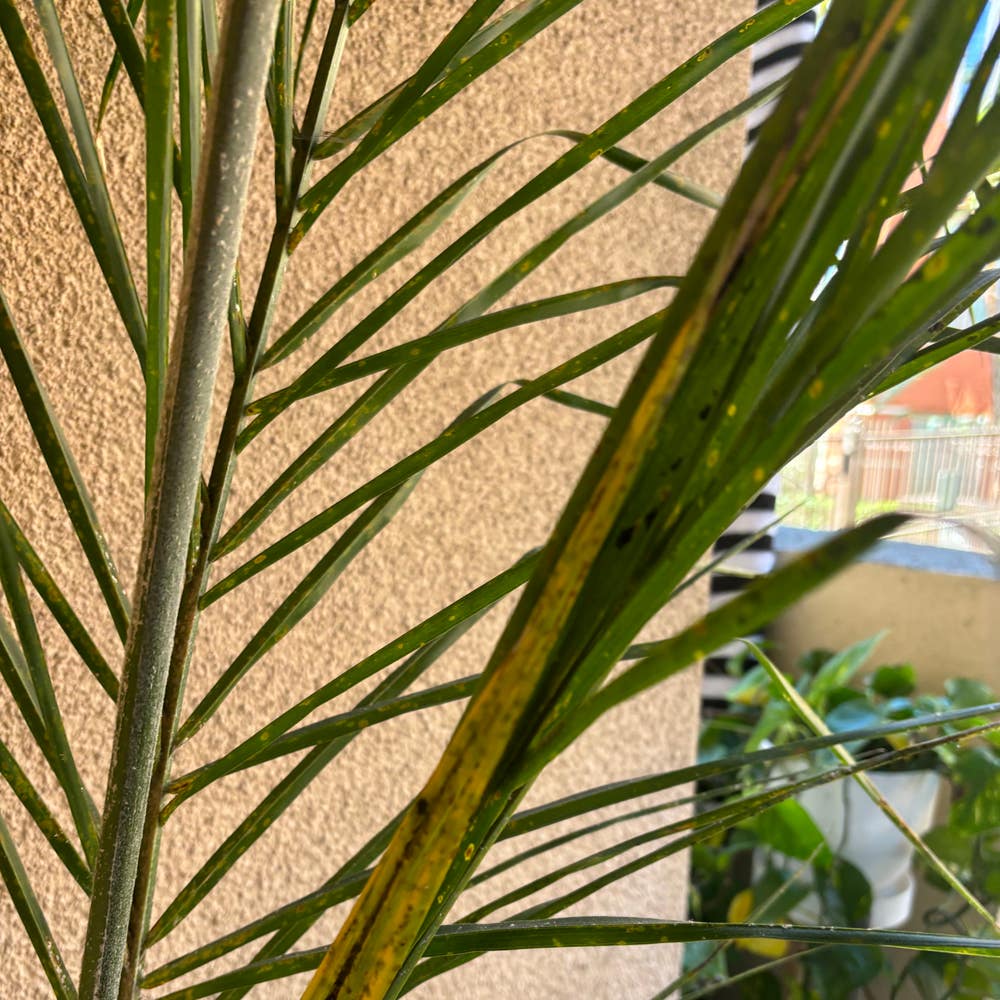
👑 Dwarf Queen Palm Wilting: Causes and Solutions
Syagrus romanzoffiana 'Dwarf'
By the Greg Editorial Team
Oct 20, 2024•6 min read
This article was created with the help of AI so we can cover more plants for you. May contain errors. See one? Report it here.
- 🌊 Wilting in Dwarf Queen Palms often results from water stress, heat, or disease.
- 🌡️ Heat stress causes browning tips; adjust light and humidity for healthier growth.
- 🧪 Check for pests and diseases; remove affected leaves and consider fungicides if needed.
Common Causes of Wilting Leaves
💧 Water Stress
Wilting leaves can often be traced back to water stress. Symptoms include drooping leaves, dry soil, and yellowing fronds.
Underwatering occurs when the palm isn't watered frequently enough, leading to dry soil. Conversely, overwatering can create waterlogged conditions, resulting in root rot.
☀️ Heat Stress
Heat stress is another common culprit behind wilting. Look for symptoms like browning leaf tips, curling leaves, and overall wilting.
This condition typically arises from excessive exposure to direct sunlight or high temperatures. Additionally, inadequate humidity levels in indoor environments can exacerbate the issue.
🦠 Disease-Related Wilting
Disease-related wilting is less common but still important to consider. Symptoms often include wilting accompanied by discoloration or spots on leaves.
Fungal infections or root rot can lead to these issues, though they are not as frequent. Pathogenic wilt is unlikely but should be monitored closely to prevent further damage.
Understanding these causes is essential for effective diagnosis and treatment. Next, we’ll explore how to diagnose wilting in your Dwarf Queen Palm.
Diagnosing Wilting
Step-by-Step Guide 🌱
Assess Soil Moisture
Start by checking the top 2 inches of soil. If it feels dry, your palm may need water; if it's soggy, you might be overwatering.Evaluate Environmental Conditions
Measure the temperature and humidity levels around your palm. Also, observe how much light it receives and make adjustments if necessary.Inspect Leaves
Look closely at the leaves for any discoloration, spots, or signs of pests. These indicators can reveal underlying issues affecting your palm's health.Identify Watering Habits
Review your watering schedule and methods. Consistency is key; irregular watering can lead to stress.Consider Recent Changes
Reflect on any recent relocations or environmental changes. Even small adjustments can impact your palm's well-being.
By following these steps, you can pinpoint the cause of wilting and take appropriate action. Understanding your palm's needs is essential for its recovery and future health.
Next, let’s explore effective solutions for addressing the wilting leaves.
Solutions for Wilting Leaves
🌊 Addressing Water Stress
Wilting leaves often signal water stress, which can stem from either underwatering or overwatering.
Underwatering Solutions
To combat underwatering, water your Dwarf Queen Palm thoroughly until excess drains out of the pot. Establishing a consistent watering schedule will help maintain soil moisture levels.
Overwatering Solutions
If overwatering is the issue, allow the soil to dry out before rewatering. It's also crucial to ensure proper drainage in the pot to prevent waterlogging.
☀️ Addressing Heat Stress
Heat stress can lead to wilting, especially in high temperatures or direct sunlight.
Solutions
Consider relocating your palm to a shadier spot or using sheer curtains to diffuse harsh sunlight. Increasing humidity levels with a humidifier or pebble trays can also provide relief.
🦠 Addressing Disease-Related Wilting
Disease-related wilting requires a more targeted approach.
Solutions
Start by removing any affected leaves to prevent further spread. If necessary, treat the plant with appropriate fungicides. Ensuring proper air circulation around the plant can also help mitigate disease risks.
By addressing these common causes of wilting, you can help your Dwarf Queen Palm thrive. Next, let’s explore preventive measures to minimize future wilting episodes.
Preventive Measures
Tips to Minimize Future Wilting Episodes 🌱
Regularly checking soil moisture is crucial. Adjust your watering schedule based on the plant's needs to prevent stress.
Monitor environmental conditions closely. Small changes can make a big difference, so be ready to adjust light and temperature as needed.
Rotating the plant periodically helps ensure even light exposure. This simple step can promote balanced growth and reduce the risk of wilting.
Environmental Adjustments 🌬️
Maintaining humidity levels between 40-60% is essential for a healthy Dwarf Queen Palm. Consider using a humidifier or placing a pebble tray filled with water nearby.
Keep your palm away from drafts and sudden temperature changes. A stable environment will help your plant thrive and minimize wilting episodes.
By implementing these preventive measures, you can create a nurturing environment for your Dwarf Queen Palm. This proactive approach will set the stage for a healthier, more resilient plant, ready to face any challenges ahead.
Next, let’s explore effective techniques for reviving a wilted palm.
Reviving a Wilted Palm
🌊 Techniques for Bottom Watering
Bottom watering is a simple yet effective method to revive your wilted palm.
- Place the pot in a basin of water for 30 minutes. This allows the soil to soak up moisture from the bottom.
- Allow the soil to absorb moisture from the bottom. This ensures even hydration without over-saturating the top layer.
- Remove and let excess water drain. This prevents waterlogging, which can lead to root rot.
🌍 Temporary Relocation Strategies
Sometimes, a change of scenery can work wonders for your palm.
- Move the palm to a more suitable environment with better light and humidity. A spot with indirect sunlight can help rejuvenate its health.
- Avoid drastic changes; acclimate gradually. Sudden shifts can stress the plant further, so take it slow.
✂️ Pruning Techniques for Damaged Leaves
Pruning is essential for promoting new growth in a wilted palm.
- Use clean, sharp pruning shears. This minimizes the risk of infection and ensures a clean cut.
- Trim away dead or severely damaged fronds to promote new growth. This not only improves appearance but also directs the plant's energy to healthier parts.
Reviving a wilted palm requires a mix of proper watering, environmental adjustments, and careful pruning. With these techniques, your palm can bounce back and thrive once again. Next, let’s explore when it’s time to seek professional help for your plant.
When to Seek Help
🚨 Signs Indicating the Need for Professional Assistance
If your Dwarf Queen Palm continues to wilt despite your best care efforts, it may be time to seek help. Persistent wilting can indicate deeper issues that require expert intervention.
Look out for signs of severe disease or pest infestation. Yellowing leaves, unusual spots, or webbing can signal that your palm is in distress and needs immediate attention.
🌱 Resources for Local Nurseries and Online Communities
Don’t hesitate to reach out to local nurseries for expert advice. They can provide tailored solutions based on your specific situation.
Additionally, engaging with online communities like Greg can be invaluable. These platforms offer support, shared experiences, and resources to help you navigate your palm care challenges effectively.
By staying informed and connected, you can ensure your Dwarf Queen Palm thrives. Now, let’s explore some preventive measures to minimize future wilting episodes.
⚠️ Safety First
This content is for general information and may contain errors, omissions, or outdated details. It is not medical, veterinary advice, or an endorsement of therapeutic claims.
Always consult a qualified healthcare professional before using any plant as food, medicine, or supplement.
Never eat any plant (or feed one to pets) without confirming its identity with at least two trusted sources.
If you suspect poisoning, call Poison Control (800) 222-1222, the Pet Poison Helpline (800) 213-6680, or your local emergency service immediately.
Spotted an error? Please report it here.
Keep your Dwarf Queen Palm thriving 🌱 by using Greg's tailored watering reminders and community insights to tackle wilting issues head-on!