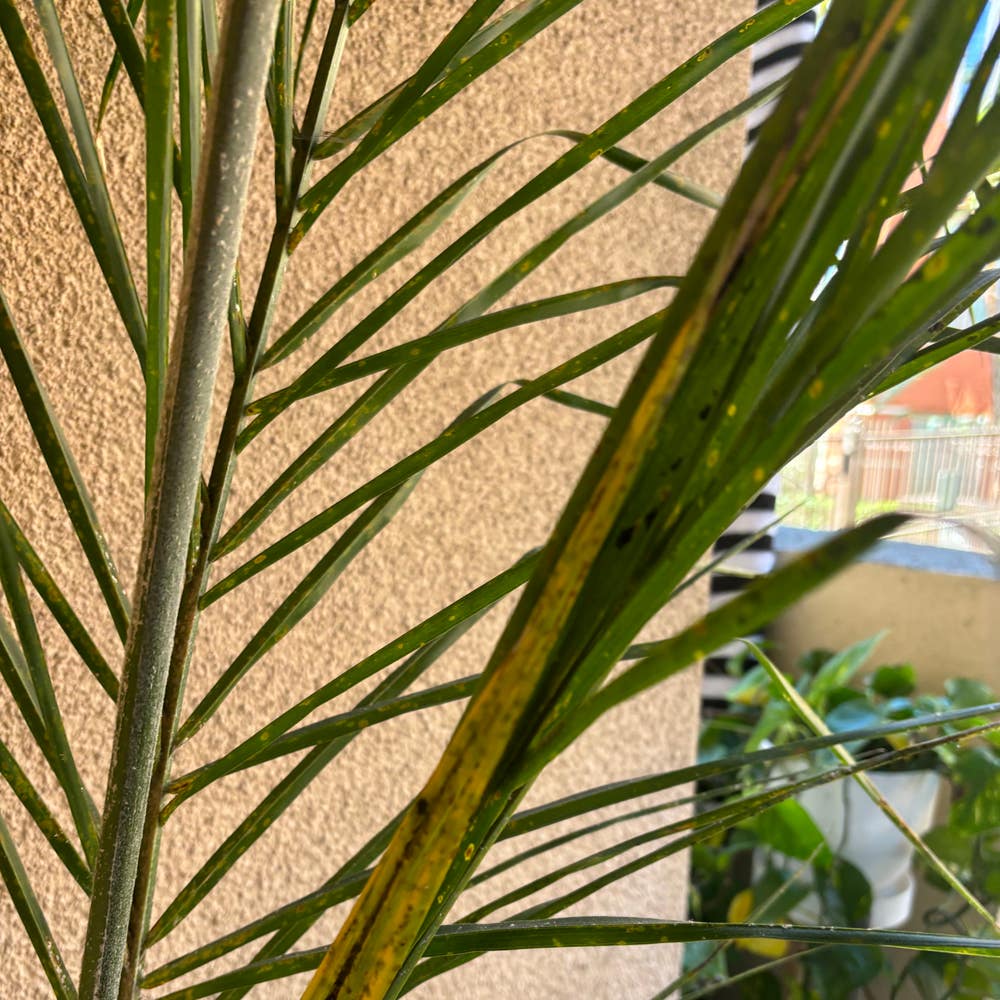
What to Do About Brown Spots on Your Dwarf Queen Palm 🌴
Syagrus romanzoffiana 'Dwarf'
By the Greg Editorial Team
Oct 20, 2024•6 min read
This article was created with the help of AI so we can cover more plants for you. May contain errors. See one? Report it here.
- 🌧️ Brown spots arise from overwatering, underwatering, or nutrient deficiencies.
- 🦠 Fungal infections and pests like spider mites cause brown spots; treat promptly.
- 🌱 Regular inspections and proper care prevent brown spots on your Dwarf Queen Palm.
Causes of Brown Spots
💧 Overwatering and Root Rot
Overwatering can lead to yellowing leaves, mushy roots, and those pesky brown spots. When excess water saturates the soil, it causes root rot, preventing your palm from absorbing essential nutrients.
To prevent this, ensure your soil drains well and allow the top inch of soil to dry out before watering again. This simple practice can save your plant from serious damage.
🌵 Underwatering and Drought Stress
On the flip side, underwatering can also cause brown tips and spots on leaves, giving them a crispy texture. Insufficient water puts your palm under stress, leading to visible leaf damage.
Regularly check the soil moisture and maintain a consistent watering schedule to keep your plant healthy and thriving.
🥦 Nutrient Deficiencies
Nitrogen Deficiency
If you notice yellowing leaves accompanied by brown spots, your palm might be suffering from nitrogen deficiency. Nitrogen is essential for leaf growth, and a lack of it can lead to poor overall health.
To remedy this, use a balanced fertilizer that contains adequate nitrogen. This will help restore your palm's vitality.
Potassium Deficiency
Marginal browning on older leaves is a sign of potassium deficiency. Potassium is vital for overall plant health, and without it, your palm may exhibit weak growth.
Applying a potassium-rich fertilizer can help address this deficiency and promote stronger growth.
Magnesium Deficiency
Interveinal chlorosis, characterized by brown spots, often indicates magnesium deficiency. Magnesium plays a crucial role in chlorophyll production, and its absence can hinder your palm's health.
Using Epsom salt or magnesium-based fertilizers can effectively replenish this essential nutrient.
🍄 Fungal Infections
Leaf Spot Diseases
Dark brown or black spots on leaves may signal a fungal infection. Fungal pathogens thrive in humid conditions, making your palm susceptible to these diseases.
To treat leaf spot diseases, apply fungicides specifically designed for palm leaf spot issues. Regular treatment can help keep your palm healthy.
🐜 Pest Infestations
Spider Mites
Fine webbing and stippling on leaves are classic symptoms of spider mite infestations. These pests suck sap from your palm, leading to discoloration and stress.
Using insecticidal soap or neem oil can help control these pests effectively. Regular inspections will keep your palm safe from infestations.
Scale Insects
If you notice sticky residue and brown spots on leaves, scale insects may be the culprit. These pests attach to leaves and weaken the plant over time.
Manual removal combined with horticultural oil application can help manage scale infestations. Staying vigilant will protect your palm from further damage.
Understanding these causes of brown spots is crucial for maintaining a healthy Dwarf Queen Palm. With proper care and attention, you can prevent these issues and ensure your palm thrives. Next, let’s explore how to diagnose brown spots effectively.
Diagnosing Brown Spots
Identifying Symptoms and Patterns 🌿
To effectively diagnose brown spots on your Dwarf Queen Palm, start by examining the leaf color and texture. Pay close attention to where the spots are located; are they mainly on older leaves or newer growth?
Differentiating Between Causes 🔍
Next, differentiate the potential causes of the brown spots. For water-related issues, check the soil moisture levels to see if they’re too high or too low. If you suspect nutrient deficiencies, take a look at your fertilization history to identify any gaps. Lastly, inspect for pest damage by looking for visible pests or webbing on the leaves.
Importance of Leaf Inspection 👁️
Regular leaf inspections are crucial for catching problems early. Make it a habit to document any changes you observe, as this can help you identify patterns over time and take action before issues escalate.
By being proactive in diagnosing brown spots, you can ensure your Dwarf Queen Palm remains healthy and vibrant. Next, let’s explore effective treatment options to address these issues.
Treatment Options
Adjusting Watering Practices 🌊
To keep your Dwarf Queen Palm healthy, start by checking soil moisture. Use a moisture meter or your finger to gauge when it’s time to water.
Only water when the top inch of soil is dry. This prevents overwatering, which can lead to root rot. Ensure your pots have drainage holes to avoid waterlogging.
Fertilization Strategies 🌱
Fertilization is key for vibrant growth. Use a balanced fertilizer every 4-6 weeks during the growing season to provide essential nutrients.
Consider slow-release fertilizers for a consistent nutrient supply. Adjust your fertilization routine based on any observed deficiencies in your palm.
Fungicide Application 🦠
If you suspect a fungal issue, identifying the specific problem is crucial. Apply a suitable fungicide according to the label instructions for effective treatment.
Repeat the application as necessary, typically every 7-14 days, to ensure the fungus is fully eradicated.
Pest Control Methods 🐞
Regular inspections are vital for pest management. Check your palm weekly, especially during warmer months, to catch any infestations early.
Apply insecticidal soap or neem oil as a preventive measure. You can also introduce beneficial insects like ladybugs to help control pests naturally.
With these treatment options in hand, you can effectively address brown spots on your Dwarf Queen Palm. Next, let’s explore preventive measures to keep your palm thriving.
Preventive Measures
Proper Watering Techniques 🌊
Watering your Dwarf Queen Palm correctly is crucial for its health. Water deeply but infrequently to encourage deep root growth, allowing the roots to reach for moisture.
Using well-draining soil is essential to prevent water retention. This helps avoid issues like root rot, which can lead to brown spots on your palm.
Soil Selection and Drainage 🏺
Choosing the right potting mix can make a significant difference. Opt for a mix specifically designed for palms or tropical plants to ensure optimal growth.
Additionally, ensure your pots have adequate drainage holes. This prevents water from accumulating at the bottom, which can suffocate roots.
Regular Inspection and Maintenance 🔍
Regular inspections are key to catching problems early. Schedule monthly checks for pests and diseases to keep your palm healthy.
Don't forget to remove dead or damaged fronds. This promotes airflow and reduces the risk of fungal infections.
Environmental Conditions 🌱
Creating the right environment is vital for your palm's well-being. Maintain humidity levels above 50% to support healthy growth.
Position your palm in bright, indirect light. This helps prevent sunburn and keeps the leaves vibrant and healthy.
By implementing these preventive measures, you can significantly reduce the risk of brown spots on your Dwarf Queen Palm. Next, let’s explore how to diagnose brown spots effectively.
⚠️ Safety First
This content is for general information and may contain errors, omissions, or outdated details. It is not medical, veterinary advice, or an endorsement of therapeutic claims.
Always consult a qualified healthcare professional before using any plant as food, medicine, or supplement.
Never eat any plant (or feed one to pets) without confirming its identity with at least two trusted sources.
If you suspect poisoning, call Poison Control (800) 222-1222, the Pet Poison Helpline (800) 213-6680, or your local emergency service immediately.
Spotted an error? Please report it here.
Keep your Dwarf Queen Palm spot-free 🌿 by using Greg's tailored watering reminders and nutrient tracking to give it the care it craves!