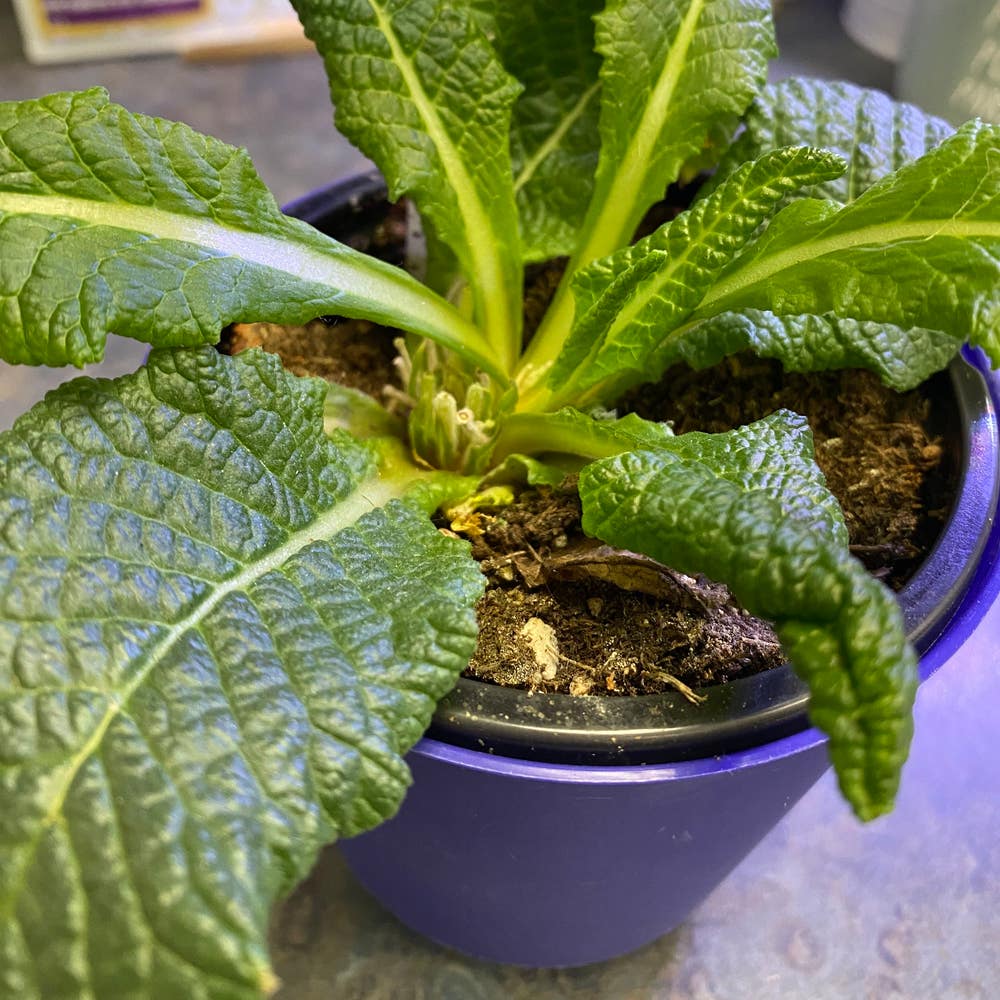
Why Are My Common Primrose Leaves Curling?
Primula vulgaris
By the Greg Editorial Team
Jun 18, 2024•5 min read
This article was created with the help of AI so we can cover more plants for you. May contain errors. See one? Report it here.
- 🌞🌱 Balance sunlight and protect from temperature extremes to prevent leaf curl.
- 💧 Monitor watering and soil drainage to avoid over/underwatering issues.
- 🐛 Check for pests and diseases, use neem oil and fungicides as needed.
When the Sun is Too Much or Too Little
🌞 Balancing Sunlight Exposure: Finding the Sweet Spot for Your Primrose
Primroses are like Goldilocks when it comes to sunlight—they want it just right. Too much direct sun, and you'll see your plant's leaves curling up tighter than a yoga instructor in a pretzel pose. Scorched leaves with crispy edges or bleach spots are your cue to dial it back. They're not auditioning for a role in a desert scene; they're just trying to survive.
On the flip side, too little sun and your Primrose might as well be living in a cave. It'll sulk with less vigor than a teenager asked to do chores. If your plant is playing hide and seek with the sun, it's time to adjust its spot to one that's bright but not directly under the solar spotlight.
🛡️ Shielding from Stress: Protecting Leaves from Temperature Extremes
Temperature extremes are like unexpected plot twists for your Primrose—neither appreciated nor wanted. Morning sun is the gentlest, so let your plant catch those early rays. As the day heats up, though, think of sheer curtains as sunglasses for your Primrose, softening the harsh midday light.
Remember, as the seasons change, so does your plant's tolerance for sunbathing. In winter, cozy it up closer to the light source. Come summer, pull back to avoid the heat as if it were a bad dance partner. It's all about keeping those leaves from throwing a fit—no one likes a dramatic plant.

Water Woes: Too Much or Too Little
💧 The Perils of Overwatering: Recognizing and fixing soggy situations
Overwatering is the silent killer of the Common Primrose, akin to plant suffocation. Look out for yellowing leaves, a pot heavier than your last dumbbell, and a soil that's wetter than a rain-soaked sweater. If your plant's leaves drop with a dramatic flair, you've likely overdone it with the aqua.
🚱 Correcting Watering Faux Pas
Before you water, poke the soil. If it clings like a stage-5 clinger, skip the watering can. A pot that feels like you're lifting weights is a no-go. Post-watering, if your plant still looks as droopy as a teenager on Monday morning, it's time to reassess your watering strategy. Make sure your pot isn't a water jail; drainage holes are your friends.
🏜️ The Thirsty Primrose: Signs of underwatering and how to quench it
Underwatering turns your Primrose into a desert wanderer. Wilting leaves with the crispiness of overdone toast and growth slower than a snail's pace are your red flags. If your plant perks up after watering like it's just had an espresso shot, you've been stingy with the H2O.
💦 Quenching the Thirst
When the soil feels drier than a comedian's wit, it's time to water. Don't wait for your plant to look as parched as a dried-up riverbed. Water thoroughly, allowing the excess to drain, but don't make it a daily ritual. Let the soil dry out a bit between drinks. Remember, your Primrose isn't a fish; it doesn't need to swim.

Soil Secrets: Drainage and Nutrients
🌱 Fixing the Flow: Improving Soil Drainage for Happy Primrose Roots
Well-draining soil is the foundation of a thriving Common Primrose. If your soil is holding water like a sponge, it's time to take action. Mix in materials like perlite, peat moss, or vermiculite to increase aeration and prevent waterlogging. Ensure your pot has adequate drainage holes—think Swiss cheese rather than a solid bowl.
🌿 Feeding Your Primrose: Tackling Nutrient Deficiencies to Prevent Curling Leaves
Nutrient balance is key. Before you start tossing fertilizer around, get a soil test to pinpoint what's missing. Your Primrose might be craving nitrogen for leaf growth, phosphorus for root development, or potassium for overall vigor. Once you know, feed your plant a balanced, water-soluble fertilizer, but don't go overboard—too much love can be just as bad as neglect. Keep an eye on the watering, as it can wash away those precious nutrients, leaving your Primrose hungry.

Battling Pests and Diseases
🐛 Unwanted Guests: Identifying pests that make Primrose leaves curl
Pests are the bane of the Primrose's existence, turning lush leaves into their personal buffets. Aphids and cyclamen mites are the usual suspects, with aphids leaving behind a sticky mess and mites causing leaves to brown and distort. To catch these critters red-handed, look for yellow speckles or webbing on the leaves.
Once you've spotted the enemy, it's time for action. A spritz of neem oil mixed with a dash of dish soap can send them packing. Remember, repeat applications may be necessary, and isolation of the affected plant is a must to prevent a full-blown pest party.
🤒 Sickly Symptoms: Spotting diseases and saving your Primrose
Diseases can be stealthy, but they leave clues. Watch for brown spots or leaves that look like they've been through the wringer. These are SOS signals from your Primrose, often indicating too much moisture or a fungal foe.
If you spot these symptoms, don't wait for an engraved invitation to act. Pruning the affected foliage can halt the spread of disease, and for those stubborn fungal issues, a targeted fungicide might be your best friend. Keep in mind, though, that prevention beats cure every time—ensure good airflow and avoid wetting the leaves to keep your Primrose in the clear.
⚠️ Safety First
This content is for general information and may contain errors, omissions, or outdated details. It is not medical, veterinary advice, or an endorsement of therapeutic claims.
Always consult a qualified healthcare professional before using any plant as food, medicine, or supplement.
Never eat any plant (or feed one to pets) without confirming its identity with at least two trusted sources.
If you suspect poisoning, call Poison Control (800) 222-1222, the Pet Poison Helpline (800) 213-6680, or your local emergency service immediately.
Spotted an error? Please report it here.
Keep your primrose leaves unfurled and fabulous 🌀 with Greg's custom care plan ensuring just the right amount of water and sunlight!