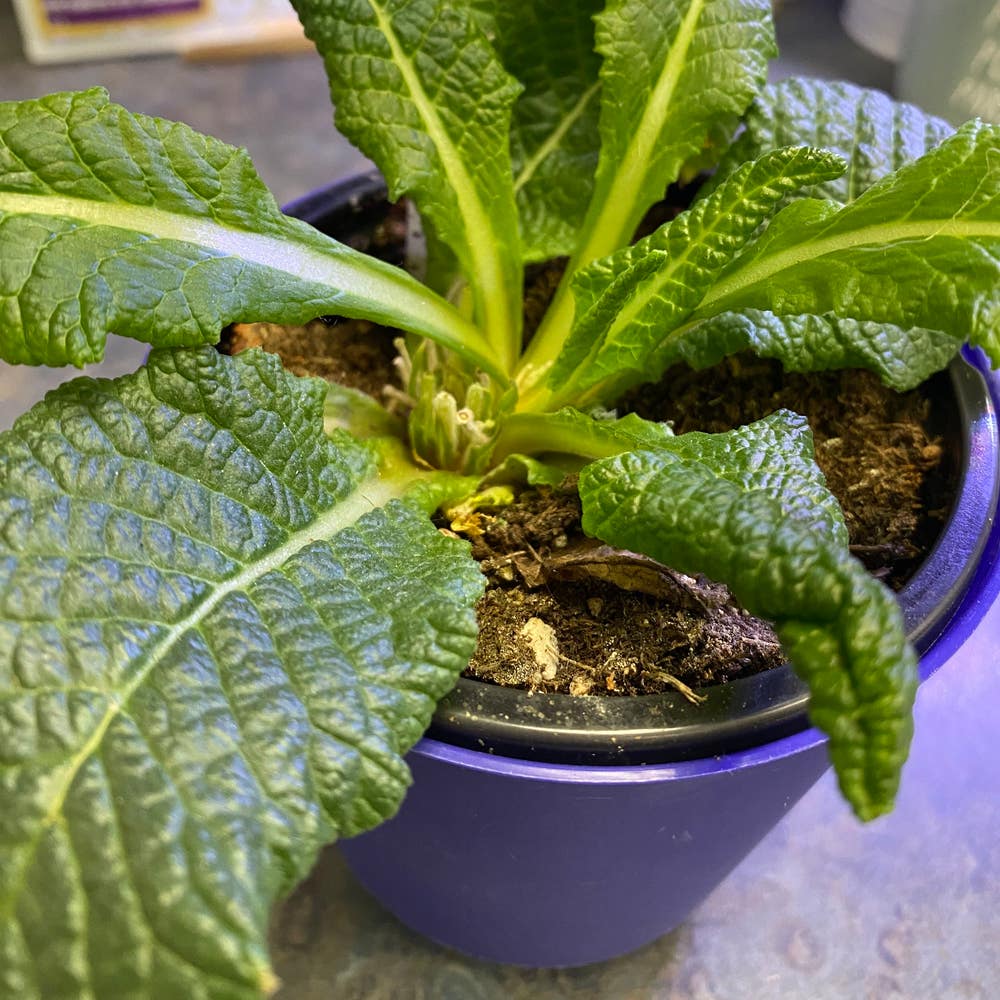
🌞 Is My Common Primrose Getting Too Much Direct Sunlight?
Primula vulgaris
By the Greg Editorial Team
Jun 18, 2024•5 min read
This article was created with the help of AI so we can cover more plants for you. May contain errors. See one? Report it here.
- Sunburn signs: Bleached, brown, or crispy leaves on your Primrose.
- 🌞🌱 Bright, indirect sunlight is ideal; east-facing windows are best.
- Rotate and sheer curtain to prevent future sunburn and ensure consistent light.
Spotting the Signs: Is Your Primrose Sunburned?
Identifying symptoms of too much direct sunlight on Common Primrose is like playing plant detective.
🌞 Recognizing Sunburn on Leaves
Bleached areas or white patches on your Primrose's leaves? That's the plant equivalent of a nasty sunburn. If you're seeing brown or crispy edges, it's a clear SOS signal.
🏜️ The Difference Between Tan and Sun Stress
Healthy sun exposure gives your Primrose a vibrant look. Sun stress, on the other hand, shows up as blotchy burns or a washed-out appearance. It's the difference between a golden glow and peeling after a beach day.
🚫 When Variegation Isn't a Good Thing
Notice unusual variegation on the leaves? It's not a new feature; it's likely sun damage. The plant's cry for less light.
🌡️ Heat Stress: More Than Just Sunburn
If your Primrose is wilting or showing brown spots, it's not just sunburned; it's also suffering from heat stress. Immediate action is needed to prevent further damage.
🍂 Checking for Crispy Texture
Feel the leaves. Are they crispy or scaly? That's overexposure talking. Your plant is more fried than a beachgoer without sunscreen.
🟨 Discoloration and Deformities
Yellowing leaves, stunted growth, or deformities? These are distress signals. Your Primrose is telling you it's had enough of the sunbathing.
🌅 The Sun Moves, So Should Your Plant
Remember, the sun's position changes throughout the year. A spot that's perfect in spring could be a death trap by summer. Keep an eye out and adjust as needed.
🚨 Immediate Steps
Spotted any of these signs? Time to move your Primrose to a shadier spot, stat. It's like applying sunscreen to your plant, but with shade instead of lotion.

The Primrose Sunlight Balancing Act
🌞 Finding the Sweet Spot for Sunlight
Bright, indirect sunlight is the gold standard for Common Primrose. Achieving this means placing your plant near a window where it can bask in the morning light but avoid the harsh afternoon rays. Think east-facing windows; they're like a cozy nook for your Primrose, offering the warmth of the sun without the burn.
🌅 When the Sun Plays Too Rough
Too much direct sunlight turns the Primrose's leaves from a vibrant green to a crispy brown. Sunburned leaves are the plant's cry for help, signaling it's time to dial back on the sunbathing. If the foliage looks bleached or the flowers are wilting prematurely, your Primrose is likely throwing shade at your current lighting setup.
🌻 Making Adjustments
If your Primrose is getting too much sun, don't despair—relocate it to a less intense spot. A sheer curtain can act as a sunscreen, diffusing the light and protecting your plant from the sun's harsher effects. Remember, it's not just about moving away from the light; it's about finding a place where the light is just right. Rotate your plant regularly to ensure all sides receive equal love from the sun.

Windows and Hemispheres: Navigating Your Home's Sunlight
🌞 The Window Compass
Navigating the sunlight for your Common Primrose is like setting up a sundial; precision matters. South-facing windows are the solar panels of the house, basking in full sun glory. They're great in the winter but can be a scorcher during summer months. East-facing windows are the gentle morning wake-up call, offering a soft light that won't overwhelm your delicate Primrose. On the flip side, west-facing windows are the afternoon power hour, which might be a bit too intense for your green buddy. And then there's the north-facing windows, the zen masters, providing consistent but gentle light, perfect for those not seeking the limelight.
🌍 North or South: Hemisphere Considerations
Your hemisphere is the backstage pass to how the sun's rays hit the stage. If you're chilling in the Northern Hemisphere, south-facing windows are your go-to for maximum light. But if you're hanging out down under in the Southern Hemisphere, it's the north-facing windows that take the cake. Seasons also play a part; your Primrose might crave more light during the short days of winter, but come summer, you might need to slide into the role of light bouncer, filtering those rays to prevent a botanical burnout.

Rescue and Recovery: Helping an Overexposed Primrose
🌞 Immediate Relief for Your Sunstruck Primrose
If your Common Primrose has had a bit too much fun in the sun, immediate action is crucial. Move it to a shadier spot, stat. This isn't a time for sunbathing; it's an emergency room dash away from those harmful rays. Check for white or yellow patches on the leaves, a tell-tale sign of sunburn, and snip them off gently. No drastic makeovers, just remove the damaged bits to prevent decay spreading.
🏥 Long-term Care Post-Sun Trauma
Once out of the danger zone, it's all about the long game. Keep a care log; it's like a diary for your leafy pal, tracking its recovery and helping you fine-tune your plant-parenting skills. Gradually reintroduce your primrose to sunlight, avoiding any dramatic changes that could cause a relapse. Think of it as a plant rehab, easing back into the light, but with a watchful eye on moisture levels to avoid dehydration or, heaven forbid, root rot.
🛡️ Prevention: The Best Medicine
In the future, let's avoid the sunburn saga. Rotate your primrose regularly for even exposure and consider a sheer curtain as a sunscreen for your plant. It's about finding that Goldilocks zone of lighting – not too much, not too little, just right. And remember, consistency is key. Your primrose doesn't need a tan; it needs stability to thrive in the spotlight of your affection.
⚠️ Safety First
This content is for general information and may contain errors, omissions, or outdated details. It is not medical, veterinary advice, or an endorsement of therapeutic claims.
Always consult a qualified healthcare professional before using any plant as food, medicine, or supplement.
Never eat any plant (or feed one to pets) without confirming its identity with at least two trusted sources.
If you suspect poisoning, call Poison Control (800) 222-1222, the Pet Poison Helpline (800) 213-6680, or your local emergency service immediately.
Spotted an error? Please report it here.
Keep your Common Primrose perfectly pampered with Greg's location-optimizing 🌞 features, ensuring it gets the ideal amount of sunlight year-round without the sunburn.