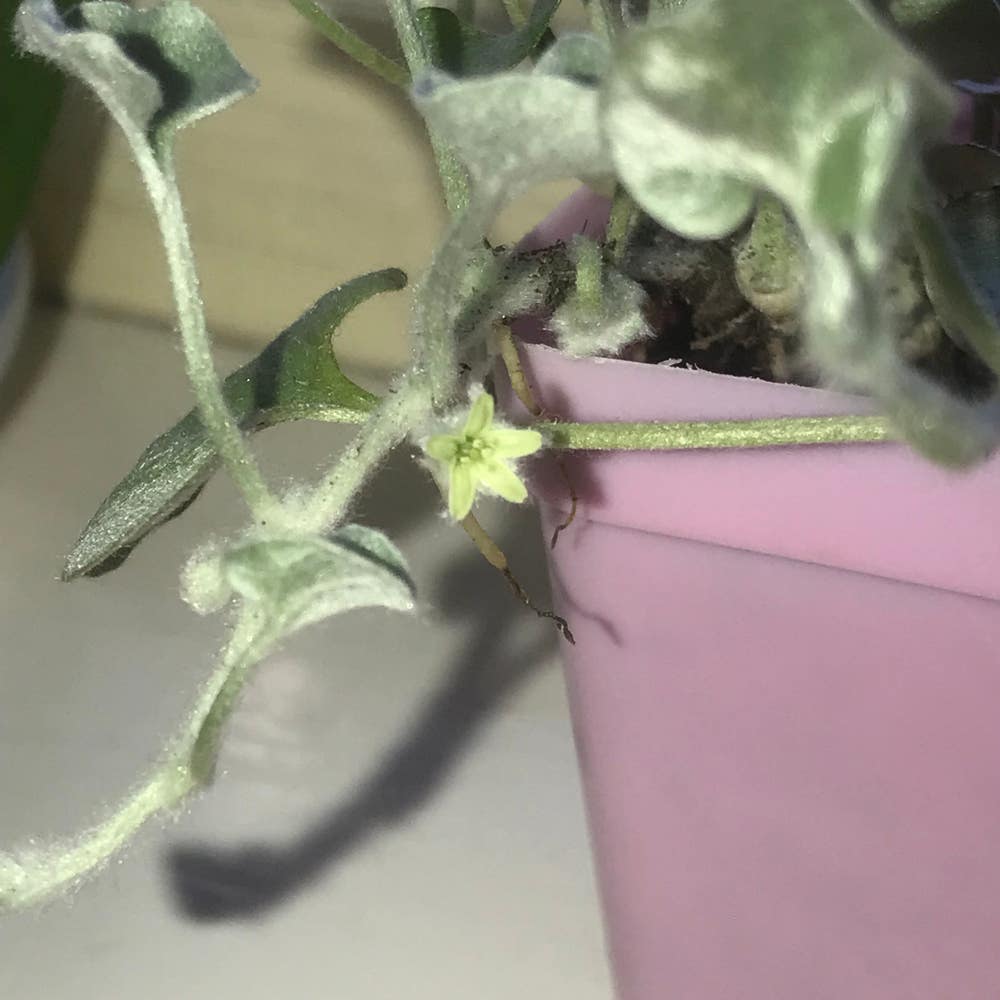
Why Are There Brown Spots on My Emerald Falls Dichondra?
Dichondra argentea 'Emerald Falls'
By the Greg Editorial Team
Mar 01, 2024•4 min read
This article was created with the help of AI so we can cover more plants for you. May contain errors. See one? Report it here.
- 🍂 Distinct edges or yellow halos suggest serious issues, not just aging.
- 🌱 Fungal infections, watering, nutrients: main causes of brown spots.
- 🛡️ Prevent spots with proper watering, balanced fertilization, and good airflow.
Spotting the Trouble: Recognizing Brown Spots on Your Plant
🕵️ Visual Guide to Brown Spots
Brown spots on Emerald Falls Dichondra can alarm any plant enthusiast. They vary in size, from tiny specks to larger patches, and can appear anywhere on the leaf. A brown spot's shape, edge, and color can be clues to underlying issues. Spots with distinct edges or a yellowish halo are particularly concerning, suggesting more than just natural aging or benign blemishes.
🚨 When to Worry
When brown spots on your Dichondra are spreading or changing, it's time to act. Consistency in spotting patterns can help differentiate between a quirky leaf pattern and a distress signal. If the spots feel squishy, overwatering could be the issue; if they're dry and crispy, consider environmental stress factors. Always prune affected leaves with sterilized tools to prevent spreading any potential pathogens.
Rooting Out the Causes: What's Behind the Spots?
🍄 The Fungal Culprit
Fungal infections are the prime suspects in the case of brown spots on Emerald Falls Dichondra. These spots often come with a side of yellow halos or concentric rings, signaling it's time to reach for the fungicide. High humidity and poor airflow roll out the welcome mat for these uninvited guests.
💧 Water Woes
Overwatering is a no-no. It turns the soil into a swampy mess, leading to root rot and those telltale brown spots. If the soil's more wetland than well-drained, it's time to cut back on the H2O.
🌿 Nutrient Know-How
Nutrient deficiencies can leave your Dichondra looking like it's been in a brawl, with rusty patches as evidence. These spots suggest your plant's diet is lacking, and it's craving more than just water and sunlight.
🚨 Stress Signals
Environmental stress is like a bad office job for plants, resulting in brown spots as signs of discontent. Too much sun, extreme temperatures, or a drafty window can cause your Dichondra to throw up the brown spot distress signal. It's all about creating that stress-free zone for your green buddy.
Healing the Spots: Effective Treatment Strategies
🍄 Fungus Among Us: Battling Fungal Infections
Fungicides are your first line of defense against the fungal forces causing brown spots. Choose a product that's both effective and gentle on your Emerald Falls Dichondra. Follow the label religiously—this isn't a suggestion, it's a commandment for plant health. Rotate your fungicides to prevent the fungi from developing resistance, and always apply with precision. Removing affected leaves is like hitting the refresh button—it gives your plant a chance to breathe and recover.
💧 Watering Wisdom
Overwatering is a sin in the plant world, and under-watering is its neglected sibling. To repent, adjust your watering schedule so the soil's top layer dries out before the next baptism. Use a watering can with a long spout to deliver water to the soil, not the leaves—wet foliage is a fungus's playground. This isn't just a tip; it's the gospel of plant care.
🌿 Feeding Your Foliage
Nutrient deficiencies can leave your Dichondra looking more spotted than a Dalmatian. Get back to basics with a balanced fertilizer—think of it as a multivitamin for your plant. Apply it with the precision of a chef following a recipe. Overfeeding is as bad as starving, so stick to the recommended dose. Your plant will show its gratitude with vibrant, spotless leaves.
Keeping Spots at Bay: Prevention Practices
🍄 Fungal Prevention
Air circulation is your Dichondra's best friend. Make sure it's not crammed in a corner where air stagnates. Sunlight is also key; it's like a natural disinfectant for plants. Regularly remove any fallen leaves to prevent fungal squatters. Mulching isn't just for looks; it keeps those spores from splashing back up.
💧 Watering Well
Water your Dichondra like it's a delicate tea ceremony—thoughtfully and consistently. Let the soil dry out a bit between waterings. When you do water, aim at the base, not the leaves. This isn't a shower; it's a strategic hydration.
🌱 Nutrient Balance
Test your soil like you're checking your bank balance—regularly and meticulously. If it's lacking, don't just throw fertilizer at it. Be precise. Your Dichondra doesn't need a feast; it needs a balanced diet.
😌 Stress-Free Surroundings
Keep your plant's environment as stable as a seasoned yogi. Rotate the pot for even growth and adjust your care with the seasons. Remember, a stressed plant is a spotty plant. Keep things chill, and your Dichondra will stay as spotless as your plant-care reputation.
⚠️ Safety First
This content is for general information and may contain errors, omissions, or outdated details. It is not medical, veterinary advice, or an endorsement of therapeutic claims.
Always consult a qualified healthcare professional before using any plant as food, medicine, or supplement.
Never eat any plant (or feed one to pets) without confirming its identity with at least two trusted sources.
If you suspect poisoning, call Poison Control (800) 222-1222, the Pet Poison Helpline (800) 213-6680, or your local emergency service immediately.
Spotted an error? Please report it here.
Eradicate brown spots and cultivate a thriving Dichondra 🍃 with Greg's custom watering schedule and community insights.