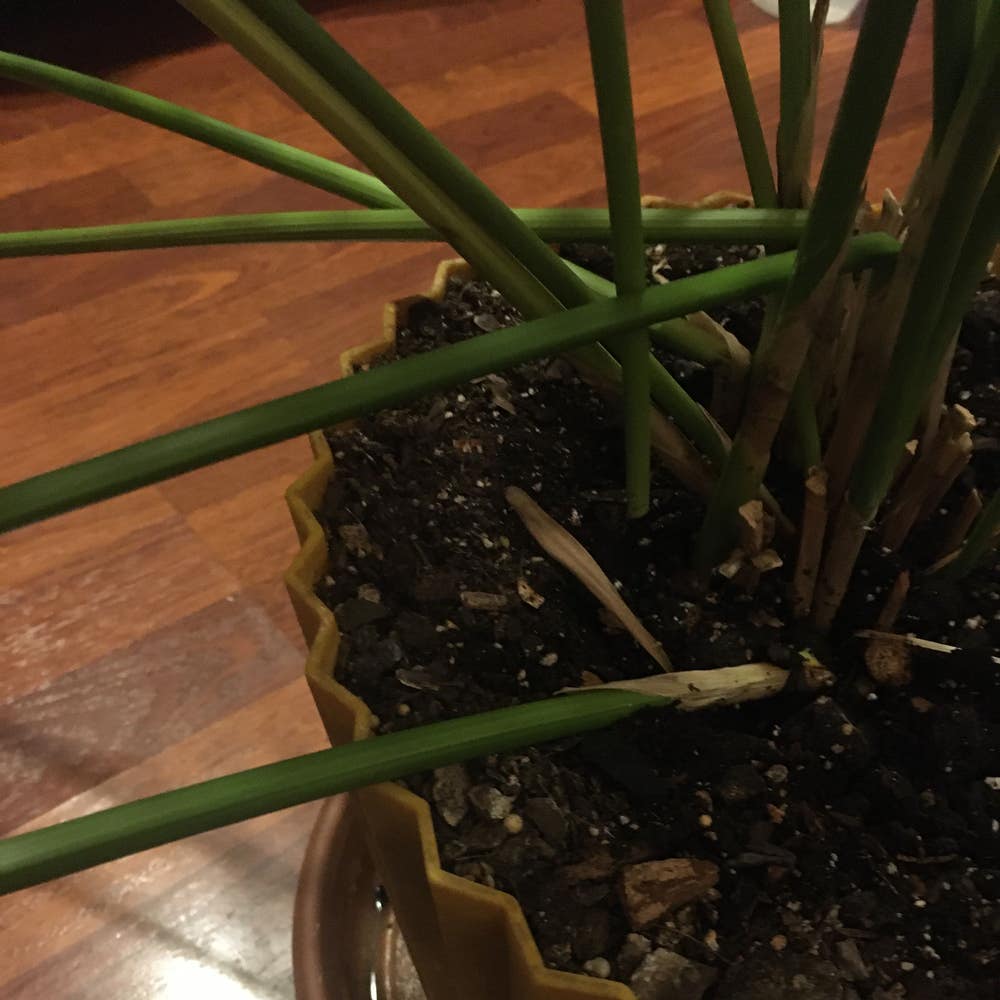
What Should I Do When Umbrella Papyrus Leaves Turn Yellow? 💛
Cyperus alternifolius
By the Greg Editorial Team
Jun 18, 2024•6 min read
This article was created with the help of AI so we can cover more plants for you. May contain errors. See one? Report it here.
Solve the mystery of your Umbrella Papyrus's yellow leaves and reclaim its green glory! 🌿🔍
- 🚦 Yellow leaves signal distress, like nutrient deficiencies or overwatering.
- 🌞💧 Balance sunlight and water to prevent yellowing from environmental stress.
- 🌡️🌱 Stable temperature and nutrients are crucial for vibrant green leaves.
Spotting the Signs: When Yellow Means Caution
🍋 Identifying Yellow Leaves: What to Look for Beyond the Color
Yellow leaves on your Umbrella Papyrus aren't just a fashion statement; they're a distress signal. Don't just note the color change; inspect for brown spots, texture changes, or edges that look like they've seen better days. These could point to nutrient deficiencies or even fungal infections. Leaves curling up? That's your plant's way of raising a white flag to heat stress or inconsistent watering.
🕵️ Patterns of Yellowing: Understanding the Clues They Provide
Patterns in yellowing can be as telling as a detective's clues. If it's the older leaves turning yellow, you might be looking at a nitrogen shortage. When it's the newer leaves or yellowing between the veins, iron could be the missing piece of the puzzle. Uniform yellowing could be a cry for water, while a mix of yellow and brown spots might be your plant begging for a nutrient boost. Remember, rapid yellowing, especially in new growth, is your plant's equivalent of a blaring alarm siren.

The Root of the Problem: Pinpointing Causes of Yellowing
💦 Too Much Love: The Perils of Overwatering
Overwatering is like throwing a pool party for your plant's roots – and not in a good way. Soggy soil suffocates the roots, leading to a mushy mess and yellowing leaves. Root rot is the silent killer here. If the leaves feel like a limp handshake, it's time to dial back on the H2O and ensure your pot's drainage is up to snuff.
🏜️ Thirsty Roots: The Signs of Underwatering
Conversely, underwatering turns your plant into a parched desert dweller. Leaves that are as dry as yesterday's toast and droop like they've given up on life are a cry for water. The fix? Water deeply but not too often, letting the soil's top inch play hard to get before the next watering rendezvous.
🍽️ Feeding Frenzy: Recognizing Nutrient Deficiencies
Yellow leaves can also be your plant's way of saying, "I'm starving!" A lack of nitrogen might leave your plant looking as lackluster as a washed-out pair of jeans. Potassium deficiency? Expect growth as uninspired as a bored teenager's homework efforts. And without phosphorus, your plant's growth will be as disappointing as a cancelled vacation.
🌞 Light and Shadow: Finding the Sweet Spot for Sunlight Exposure
Too much sun can bleach your plant's leaves faster than a bottle of peroxide, while too little leaves them yellow and sapped of life. The goal is to find that Goldilocks zone of indirect sunlight where your plant can bask without getting a sunburn or living in eternal twilight.
🔥 Feeling the Heat: How Temperature Swings Can Stress Your Plant
Lastly, don't overlook temperature. Your plant isn't a fan of surprise weather any more than you are. Sudden temperature changes can stress it out, leading to yellow leaves. Aim for a stable environment – think of it as setting the perfect room temperature for a guest that never leaves.

Turning Over a New Leaf: Effective Remedies
💧 Watering Wisdom: Balancing Hydration for Plant Health
Consistency is key when watering your Umbrella Papyrus. Use a moisture meter or the finger test to ensure the soil is slightly dry before watering again. Overwatering leads to root rot, while underwatering causes drought stress. Adjust your routine with the seasons, as indoor heating and cooling can affect soil moisture.
🍽️ Nutrient Know-How: Correcting Deficiencies with the Right Supplements
Yellow leaves can signal a nutrient deficiency. A balanced, water-soluble fertilizer with an even NPK ratio is a safe bet. Perform a soil test to tailor your fertilization plan, avoiding the pitfalls of over-fertilization which can harm your plant more than help it.
🌞 Light It Right: Adjusting Light Levels to Suit Umbrella Papyrus Needs
Umbrella Papyrus thrives in bright, indirect light. Too much sun can scorch leaves, while too little can weaken the plant. If natural light is lacking, consider using grow lights. Remember, east or west-facing windows usually provide the ideal light conditions without the risk of direct sun damage.
🌡️ Temperature and Humidity Harmony: Stabilizing Environmental Factors
Strive for a stable environment with temperatures around 70°F (21°C) and moderate humidity. Use humidifiers or dehumidifiers to maintain the ideal climate. Avoid placing your plant near drafty windows or vents, as sudden temperature changes can stress the plant, leading to yellow leaves.

Keeping Green: Prevention Strategies
💧 Consistent Care: Watering and Feeding
Consistency is the backbone of Umbrella Papyrus care. Establish a routine for watering and feeding that aligns with the plant's growth cycle. Overwatering and underwatering are like two sides of a bad coin—neither will buy you a healthy plant. Aim for soil that's moist but not waterlogged, and use a gentle, organic fertilizer during the growing season.
👀 Monitoring Mastery: Environmental Vigilance
Keep a watchful eye on your green charge. Environmental changes are like silent alarms for your plant; respond to them before they turn into a yellow-leaf code red. Monitor for signs of distress and adjust care practices accordingly. It's less about being a helicopter plant parent and more about being a savvy plant detective.
🏡 Plant Placement: Location, Location, Location
Location can make or break your Umbrella Papyrus's mood. These plants don't appreciate the "one spot fits all" approach. Find a place where light is just right—not too much sun to scorch the leaves, nor too little to stunt growth. Think of it as real estate for your plant; the right neighborhood matters.
✂️ Proactive Pruning: Snip for Success
Pruning is like a strategic game for plant health. Regularly remove yellow, damaged, or dead leaves to keep diseases at bay and to encourage vibrant growth. It's not just about keeping appearances; it's about giving your plant a clear path to thrive.
🌡️ Humidity and Temperature: Climate Control
Your Umbrella Papyrus craves a stable climate. Use a pebble tray or mist the leaves to maintain that tropical vibe. Avoid placing your plant near heaters or air conditioners, as these can create a mini climate crisis for your leafy friend.
💨 Airflow and Space: Give It Room to Breathe
Good air circulation is crucial. Don't cram your Umbrella Papyrus next to other plants like it's a packed elevator. Indoor plants need their personal space, and outdoor plants should have enough room for air to circulate freely. It's about respecting your plant's personal bubble.
🌦 Monitoring for Bliss: Seasonal Adjustments
Seasons change, and so should your care strategy. Water less in winter, provide more shade in summer. It's like adjusting your layers for the weather—your plant will thank you for not making it wear a winter coat in July.
⚠️ Safety First
This content is for general information and may contain errors, omissions, or outdated details. It is not medical, veterinary advice, or an endorsement of therapeutic claims.
Always consult a qualified healthcare professional before using any plant as food, medicine, or supplement.
Never eat any plant (or feed one to pets) without confirming its identity with at least two trusted sources.
If you suspect poisoning, call Poison Control (800) 222-1222, the Pet Poison Helpline (800) 213-6680, or your local emergency service immediately.
Spotted an error? Please report it here.
Banish yellow leaves and ensure your Umbrella Papyrus stays radiant 🌟 with Greg's personalized care reminders and environmental monitoring for perfect plant health.