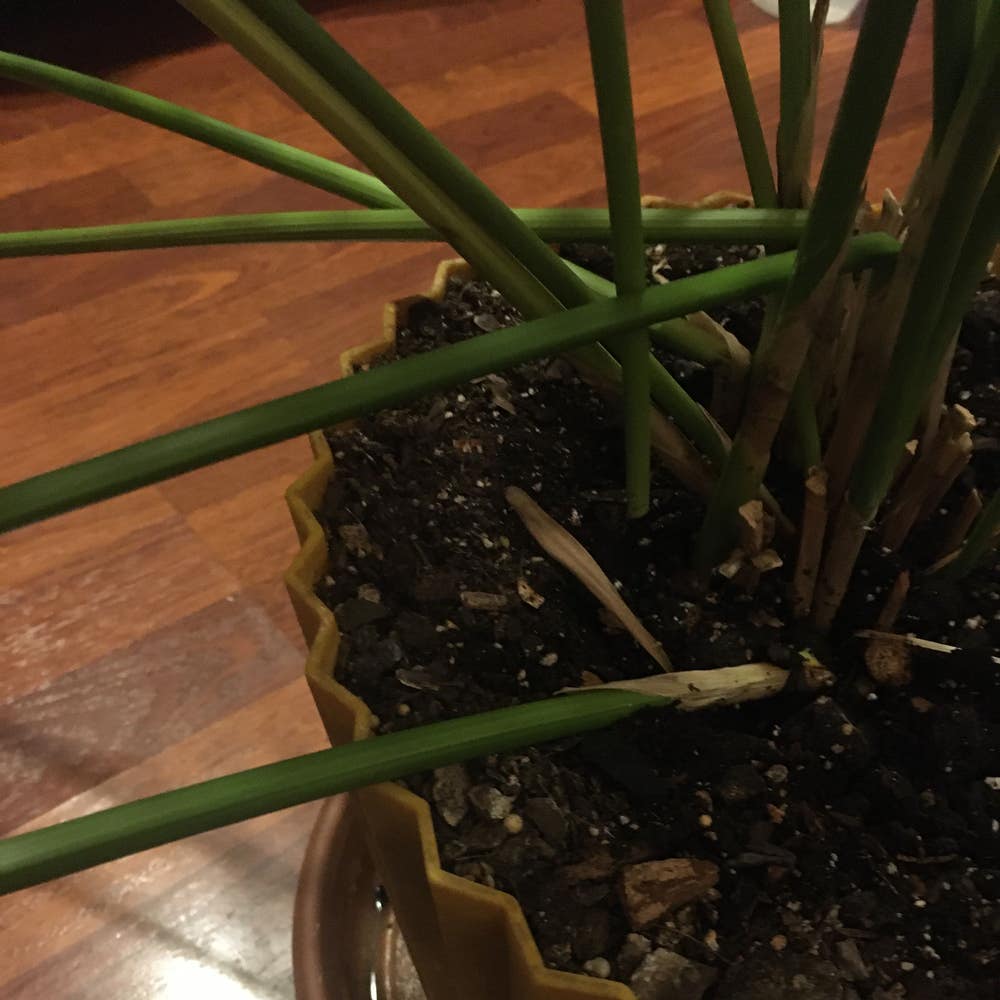
☂️ Why Umbrella Palm Leaves Turn Yellow
Cyperus alternifolius
By the Greg Editorial Team
Nov 25, 2024•7 min read
This article was created with the help of AI so we can cover more plants for you. May contain errors. See one? Report it here.
Restore your Umbrella Palm's vibrancy 🌴 by learning to diagnose and treat yellow leaves effectively!
- 💧 Overwatering and underwatering are primary causes of yellow leaves in Umbrella Palms.
- 🌱 Nutrient deficiencies like nitrogen and potassium lead to yellowing and stunted growth.
- 🌬️ Humidity and temperature must be maintained for healthy Umbrella Palm foliage.
Causes of Yellow Leaves
💧 Overwatering and Its Effects
Overwatering is a common culprit behind yellowing leaves in Umbrella Palms. Symptoms include yellowing leaves, wilting, and even root rot, which can be detrimental to your plant's health.
Maintaining the right soil moisture is crucial. While Umbrella Palms thrive in consistently moist soil, they cannot tolerate waterlogged conditions.
Look for signs of overwatering such as soggy soil, a foul odor emanating from the pot, and mushy roots. These indicators signal that your plant may be drowning.
🚰 Underwatering and Its Symptoms
On the flip side, underwatering can also lead to yellow leaves. Symptoms include dry, crispy leaf tips and overall yellowing, indicating your plant is stressed.
Consistent watering is key to preventing this issue. If you notice soil pulling away from the pot edges, dry topsoil, and wilting leaves, it’s time to give your Umbrella Palm a drink.
🌱 Nutrient Deficiencies
Nitrogen Deficiency
A lack of nitrogen can manifest as general yellowing of older leaves and stunted growth. Nitrogen is essential for leaf growth and overall plant health.
Without adequate nitrogen, your Umbrella Palm may struggle to thrive. Regular fertilization can help prevent this deficiency.
Potassium Deficiency
Potassium deficiency typically shows up as yellowing leaf edges and browning tips. This nutrient is vital for water regulation and disease resistance.
Ensuring your plant receives enough potassium can enhance its resilience and overall vitality.
🌡️ Environmental Stress
Temperature
Umbrella Palms prefer a temperature range of 65°F to 85°F (18°C to 29°C). When temperatures stray outside this range, symptoms like yellowing leaves and leaf drop can occur.
Maintaining a stable environment is essential for your plant's health.
Humidity
These palms thrive in humidity levels of 50% or higher. Low humidity can lead to brown leaf tips and yellowing, signaling that your plant is not in its ideal environment.
Consider using a humidifier or pebble trays to boost humidity levels around your plant.
🐜 Pest Infestations
Spider Mites
Spider mites can wreak havoc on your Umbrella Palm, leaving fine webbing on leaves and yellow speckling. Increasing humidity and using insecticidal soap can help control these pests.
Regular inspections can catch infestations early, preventing further damage.
Scale Insects
Scale insects leave a sticky residue on leaves, leading to yellowing. Manual removal and the application of horticultural oil can effectively manage these pests.
Keeping your plant clean and free of pests is crucial for its health.
🦠 Fungal Infections and Diseases
Fungal issues like root rot and leaf spot diseases can also cause yellowing leaves. Symptoms include dark spots, wilting, and overall decline in plant health.
To combat these problems, improve drainage and use fungicides as needed. Regular monitoring can help catch these issues before they escalate.
Understanding the causes of yellow leaves is the first step in restoring your Umbrella Palm's health. Next, we’ll explore how to diagnose yellowing leaves effectively.
Diagnosing Yellow Leaves
🌼 Identifying the Type of Yellowing
Whole Leaf Yellowing
Whole leaf yellowing typically signals systemic issues. This could stem from nutrient deficiencies or overwatering, both of which can stress your umbrella palm.
Tip Yellowing
Tip yellowing is often a cry for help from your plant. It usually indicates underwatering or nutrient deficiencies, which need immediate attention.
💧 Assessing Soil Moisture Levels
Checking soil moisture is crucial for your plant's health. You can use simple techniques like the finger test or a moisture meter to gauge the moisture level.
The ideal moisture level for an umbrella palm is consistently moist but never soggy. This balance helps prevent root rot and other issues.
🐛 Checking for Pests and Diseases
A visual inspection of your plant is essential. Look closely at the undersides of leaves for pests and any signs of disease.
Early detection is key to preventing further damage. Catching issues before they escalate can save your plant from serious decline.
☀️ Evaluating Light Conditions
Your umbrella palm thrives in indirect sunlight for about 6-8 hours daily. Ensuring it gets the right light is vital for its overall health.
If your plant is not receiving adequate light, you may notice yellowing leaves and leggy growth. Adjusting its position can make a significant difference.
By diagnosing these factors, you can take proactive steps to restore your umbrella palm's vibrant health. Next, we’ll explore effective solutions for yellow leaves.
Solutions for Yellow Leaves
🌊 Adjusting Watering Practices
To keep your Umbrella Palm thriving, it's crucial to adjust your watering practices. Water your plant when the top inch of soil feels dry to the touch, ensuring it receives adequate moisture without becoming waterlogged.
Using pots with drainage holes is essential. This simple technique prevents excess water from accumulating, which can lead to root rot and yellowing leaves.
🌱 Fertilizing Appropriately
Fertilization plays a key role in maintaining healthy foliage. A balanced NPK fertilizer every 4-6 weeks during the growing season can provide the necessary nutrients your plant craves.
Always follow the instructions on the fertilizer package. Over-fertilization can harm your plant more than help it, leading to further yellowing.
🌬️ Improving Environmental Conditions
Humidity
Humidity is a vital factor for your Umbrella Palm's health. To increase humidity levels, consider using pebble trays filled with water, misting the leaves regularly, or investing in a humidifier.
These methods create a more favorable environment, reducing the chances of yellowing due to dry air.
Temperature
Maintaining an optimal temperature is equally important. Aim to keep your plant in a space where temperatures range from 65°F to 85°F (18°C to 29°C).
Avoid placing your Umbrella Palm near drafts or in areas with sudden temperature changes. This stability helps prevent stress that can lead to yellow leaves.
🦠 Treating Pests and Diseases
If pests or diseases are the culprits behind yellowing leaves, prompt action is necessary. Neem oil is an effective treatment for pest infestations, while fungicides can address fungal infections.
Regular monitoring is crucial to ensure the effectiveness of these treatments. Stick to a treatment schedule to keep your plant healthy and vibrant.
✂️ Pruning Affected Leaves
Pruning is a straightforward way to improve your plant's appearance and overall health. Use clean, sharp scissors to remove any yellowing leaves, allowing the plant to focus its energy on new growth.
Prune as needed, especially during the growing season, to maintain a lush and attractive Umbrella Palm.
By implementing these solutions, you can help your Umbrella Palm regain its vibrant green color and thrive in your home. Next, let’s explore how to prevent yellow leaves from becoming a recurring issue.
Preventing Yellow Leaves
🌱 Best Practices for Care
To keep your umbrella palm thriving, establish a regular watering schedule. Aim for consistent moisture without overwatering, as this is crucial for healthy growth.
Fertilization is equally important. A monthly routine during the growing season with a balanced fertilizer will provide essential nutrients and support vibrant foliage.
🔍 Regular Monitoring and Maintenance
Routine checks are vital for maintaining plant health. Regularly inspect for pests, moisture levels, and the overall condition of the leaves.
Aim for weekly checks to catch any issues early. This proactive approach can save you from larger problems down the line.
🌦️ Seasonal Care Adjustments
Adjusting your care based on the seasons is key. In winter, increase humidity to combat dry indoor air, and reduce watering as the plant's growth slows.
Adapting to environmental changes helps prevent stress on your umbrella palm. This flexibility ensures your plant remains healthy year-round.
🪴 Soil and Potting Recommendations
Choosing the right soil is essential for your umbrella palm's success. Opt for a well-draining potting mix enriched with organic matter to promote healthy root growth.
Additionally, potting considerations matter. Always use pots with drainage holes to prevent water accumulation, which can lead to root rot and yellowing leaves.
By following these preventive measures, you can keep your umbrella palm looking lush and vibrant. Next, let’s explore how to diagnose yellow leaves effectively.
⚠️ Safety First
This content is for general information and may contain errors, omissions, or outdated details. It is not medical, veterinary advice, or an endorsement of therapeutic claims.
Always consult a qualified healthcare professional before using any plant as food, medicine, or supplement.
Never eat any plant (or feed one to pets) without confirming its identity with at least two trusted sources.
If you suspect poisoning, call Poison Control (800) 222-1222, the Pet Poison Helpline (800) 213-6680, or your local emergency service immediately.
Spotted an error? Please report it here.
Revitalize your Umbrella Palm and keep those leaves lush and green 🌱 with Greg's tailored care reminders and moisture monitoring to ensure your plant thrives!