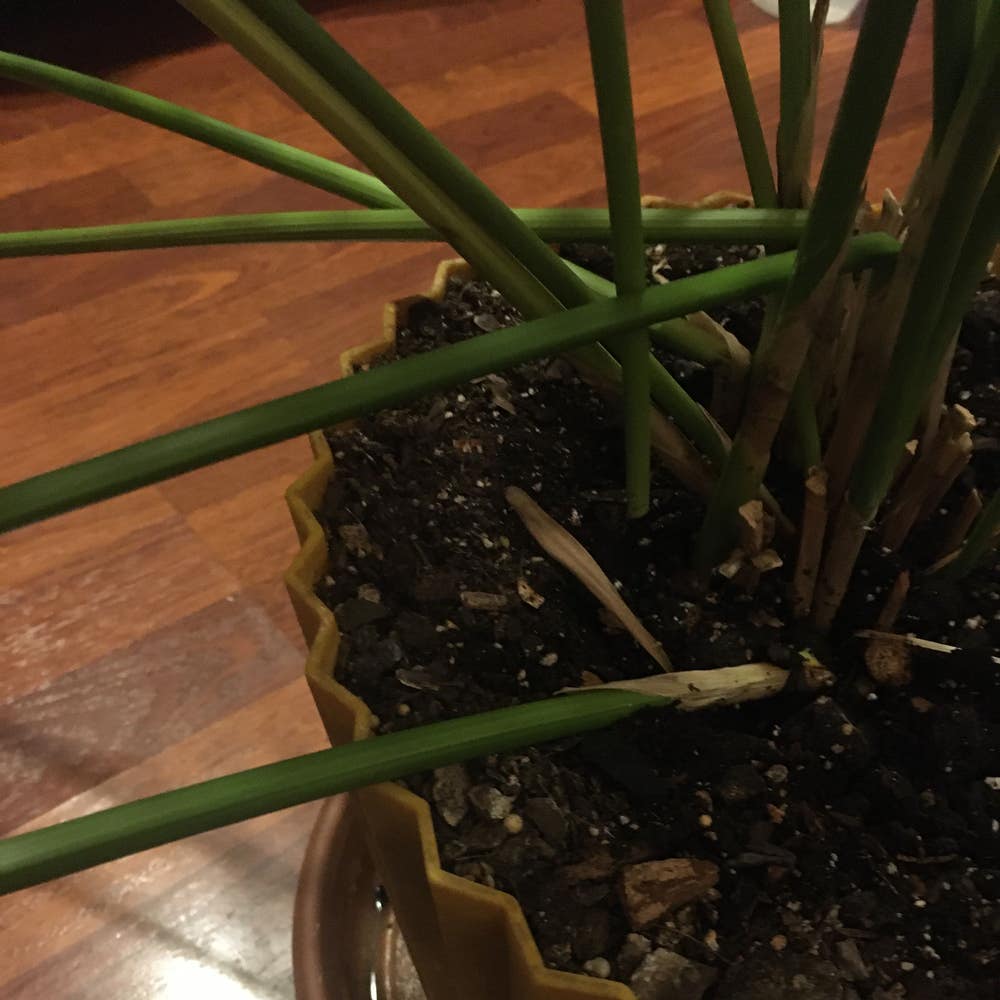
🌂 Why Are My Umbrella Papyrus Leaves Mushy?
Cyperus alternifolius
By the Greg Editorial Team
Jun 18, 2024•3 min read
This article was created with the help of AI so we can cover more plants for you. May contain errors. See one? Report it here.
Prevent mushy Papyrus leaves 🌿 with these savvy plant care secrets for a thriving green companion!
- Overwatering is the culprit, leading to mushy, discolored leaves.
- Well-draining soil and pots are essential to prevent waterlogging.
- Monitor moisture and environment to keep leaves firm and healthy.
Spotting the Trouble: Signs of Mushy Leaves
🚨 Visual Symptoms
Mushy leaves on your Umbrella Papyrus aren't just an eyesore; they're a cry for help. Discoloration is your first clue. Look for leaves that have lost their vibrant green for a sickly yellow or brown. When they start resembling overcooked vegetables, that's your cue—something's wrong.
🖐️ Tactile Clues
The touch test is telling. Healthy leaves bounce back; mushy ones feel like defeat. They should offer resistance, not squish under your fingers like a sponge. If they're collapsing without a fight, it's time to spring into action. Remember, a firm leaf is a happy leaf.

The Usual Suspects: Identifying Causes of Mushiness
💦 Overwatering Overload
Overzealous watering turns your Umbrella Papyrus into a swamp dweller it never signed up to be. Too much water is a fast track to mushy leaves, as it drowns the roots and compromises their health.
🌊 Soil That Can't Breathe
When your plant's soil is more waterlogged than the Everglades, you've got a problem. Waterlogged soil means roots can't breathe, leading to a cascade of health issues, mushy leaves being one of them.
🚱 Drainage Drama
Without proper drainage, your potted paradise quickly becomes a soggy nightmare. Inadequate drainage is like forcing your plant to sit in a bath it never wanted, leading to those unappealing mushy leaves.

Turning the Tide: Fixing Mushy Leaves
💧 Watering Wisdom
Check the top inch of soil before watering—dry? Go ahead. Wait if it's damp. Overwatering is the fast track to mushy-leaf city. Adjust your routine with the seasons; plants drink differently summer to winter.
🌱 Soil and Pot Makeover
Choose a well-draining soil mix—think cactus mix with added perlite or pumice. It should drain like a champ. Repot with fresh soil and consider trimming any rotten roots to give your plant a fresh start.
🏺 Selecting the Right Pot
Ensure your pot has drainage holes—non-negotiable. They should be as obvious as a fire exit. For extra credit, add a layer of gravel at the bottom to act like a mini drainage system. Terracotta pots? They're the unsung heroes, wicking away extra moisture with ease.

Keeping It Dry: Long-Term Prevention Strategies
💧 Monitoring Moisture Levels
Tools are your allies in the fight against mushy leaves. A soil moisture meter can be your eyes beneath the surface, ensuring you're not overdoing the hydration. Alternatively, the finger test—if it's dry an inch down, it's time to water. No more soggy surprises.
🌡️ The Right Environment
Temperature and humidity need to be just right. Think of your plant's environment as a backstage area—it should be comfortable, not a sauna. Use a hygrometer to keep tabs on humidity levels. Ensure airflow is good; a gentle fan can work wonders in preventing stagnant air, the enemy of healthy leaves. Keep your plant away from drafty windows and intense heat sources to maintain a stable environment.
Remember, consistency is your plant's best friend. Regularly check the conditions and make adjustments as needed. It's like being a plant's personal bodyguard, ensuring its environment is always on point.
⚠️ Safety First
This content is for general information and may contain errors, omissions, or outdated details. It is not medical, veterinary advice, or an endorsement of therapeutic claims.
Always consult a qualified healthcare professional before using any plant as food, medicine, or supplement.
Never eat any plant (or feed one to pets) without confirming its identity with at least two trusted sources.
If you suspect poisoning, call Poison Control (800) 222-1222, the Pet Poison Helpline (800) 213-6680, or your local emergency service immediately.
Spotted an error? Please report it here.
Avoid the mushy-leaf mishap in your Umbrella Papyrus by using Greg to monitor moisture 🌱 and ensure just-right watering for healthy, resilient leaves.