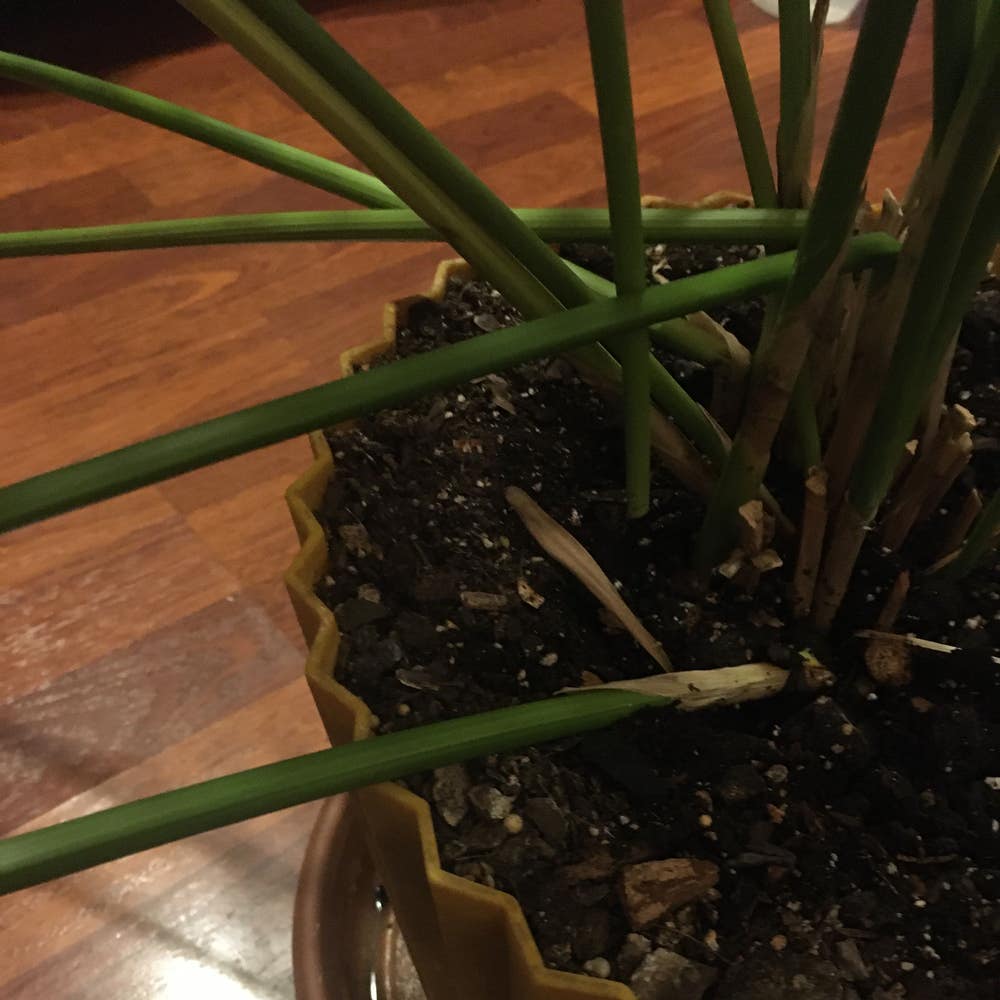
☂️ How to Cure Leaves Falling Over on Your Umbrella Palm
Cyperus alternifolius
By the Greg Editorial Team
Nov 25, 2024•5 min read
This article was created with the help of AI so we can cover more plants for you. May contain errors. See one? Report it here.
Transform your drooping Umbrella Palm 🌴 into a thriving beauty with these essential care tips for vibrant growth!
- 💧 Overwatering and underwatering cause leaf issues; maintain consistent moisture for health.
- 🌞 Insufficient light leads to weak growth; provide bright, indirect light for vitality.
- 🌿 Humidity levels of 50-70% are ideal; monitor and adjust for optimal growth.
Causes of Leaves Falling Over
💧 Overwatering and Its Effects
Overwatering is a common issue for Umbrella Palms, leading to yellowing leaves, mushy stems, and a foul odor from the soil. This excess moisture can cause root rot, which significantly declines the plant's health.
🚰 Underwatering and Drought Stress
On the flip side, underwatering can also cause problems. Symptoms include crispy leaf edges, wilting, and drooping leaves, highlighting the importance of consistent moisture for optimal growth.
💡 Insufficient Light Conditions
Umbrella Palms thrive in bright, indirect light but can tolerate lower light levels. However, insufficient light can lead to stretched stems, pale leaves, and overall weak growth, making it crucial to monitor their light exposure.
🌡️ High Temperatures and Humidity Levels
These plants flourish in high humidity levels (50-70%) and temperatures between 65°F to 85°F (18°C to 29°C). Low humidity can result in drooping leaves and browning tips, indicating environmental stress.
🐛 Pest Infestations
Pests can also contribute to drooping leaves.
Common Pests
- Spider mites: Look for webbing and stippled leaves as signs of infestation.
- Aphids: These pests leave behind sticky residue and can cause distorted growth.
Understanding these causes is essential for maintaining the health of your Umbrella Palm. By addressing these issues early, you can prevent further damage and ensure your plant thrives. Next, we will explore how to diagnose the specific problems affecting your plant.
Diagnosing the Problem
🚰 Signs of Overwatering vs. Underwatering
Identifying whether your Umbrella Palm is overwatered or underwatered is crucial for its health. Overwatering typically manifests as yellow leaves, mushy roots, and a sour smell from the soil.
In contrast, underwatering presents itself through dry, crispy leaves and wilting. Understanding these signs can help you take timely action to restore your plant's vitality.
💡 Identifying Light Deficiency
Light is essential for your Umbrella Palm's growth. Symptoms of light deficiency include weak, leggy growth and pale leaves, indicating that your plant is stretching for more light.
To remedy this, assess its current light exposure and consider relocating it to a brighter spot with indirect sunlight. This simple adjustment can significantly improve its overall health.
🐛 Recognizing Pest Damage
Pests can wreak havoc on your Umbrella Palm if not addressed promptly. Look for visible pests, webbing, or sticky residue on the leaves as signs of an infestation.
Early detection is key to effective treatment, so keep a close eye on your plant and act quickly if you notice any troubling signs.
🌬️ Assessing Environmental Conditions
Environmental factors play a significant role in your plant's well-being. Start by monitoring humidity levels, as the ideal range for an Umbrella Palm is between 50-70%.
Additionally, check the temperature to ensure it remains within the preferred range of 65°F to 85°F (18°C to 29°C). Maintaining these conditions will help your plant thrive and prevent drooping leaves.
With a clear understanding of these diagnostic signs, you can now move on to implementing effective solutions for your Umbrella Palm's drooping leaves.
Solutions for Drooping Leaves
🌊 Adjusting Watering Practices
Establishing a consistent watering schedule is crucial for your Umbrella Palm. Water the plant when the top inch of soil feels dry to the touch.
Using well-draining soil can prevent waterlogging, which is detrimental to root health. Additionally, monitor pot drainage to ensure excess water can escape freely.
☀️ Improving Light Exposure
Relocating your plant to a brighter location with indirect sunlight can significantly enhance its health. If natural light is insufficient, consider using grow lights to supplement the light in low-light environments.
💧 Increasing Humidity Levels
To boost humidity around your Umbrella Palm, you can create humidity trays. Simply place pebbles in a tray filled with water beneath the pot to maintain moisture.
Regular misting of the leaves can also help increase humidity levels, creating a more favorable environment for growth.
🐛 Treating Pests and Diseases
For pest infestations, effective control methods include using insecticidal soap or neem oil. These treatments can help manage common pests without harming your plant.
If you notice signs of fungal issues, applying fungicides can address root rot and other related problems. Early intervention is key to preventing further damage.
🌱 Soil Amendments and Repotting Techniques
Knowing when to repot your Umbrella Palm is essential for its growth. Choose the right soil mix that promotes drainage and aeration.
Incorporating soil amendments like perlite or sand can enhance drainage, ensuring your plant thrives in a healthy environment.
With these solutions in place, your Umbrella Palm will be on its way to recovery. Next, let’s explore preventative measures to keep your plant healthy and vibrant.
Preventative Measures
Best Practices for Care 🌱
To keep your Umbrella Palm thriving, establish a consistent watering routine. This means checking the soil regularly and watering when the top inch feels dry.
Ensure your plant receives ideal light conditions by placing it in bright, indirect sunlight. While it can tolerate lower light, this may lead to drooping leaves over time.
Seasonal Care Tips 🌦️
Adjust your care practices during winter by reducing watering frequency. It's also essential to monitor humidity levels, as indoor air can become quite dry.
In the summer, increase both watering and humidity levels to support your plant's growth. This is when your Umbrella Palm will be most active and in need of extra care.
Regular Monitoring and Maintenance Routines 🔍
Conduct weekly inspections of your plant to check for pests, leaf health, and soil moisture. This proactive approach helps catch any issues before they escalate.
Maintaining a care log can be incredibly beneficial. Documenting your watering schedule and environmental conditions allows you to track patterns and make informed adjustments.
By following these preventative measures, you can ensure your Umbrella Palm remains healthy and vibrant. Next, let’s explore solutions for drooping leaves to help revive your plant if it starts to show signs of distress.
⚠️ Safety First
This content is for general information and may contain errors, omissions, or outdated details. It is not medical, veterinary advice, or an endorsement of therapeutic claims.
Always consult a qualified healthcare professional before using any plant as food, medicine, or supplement.
Never eat any plant (or feed one to pets) without confirming its identity with at least two trusted sources.
If you suspect poisoning, call Poison Control (800) 222-1222, the Pet Poison Helpline (800) 213-6680, or your local emergency service immediately.
Spotted an error? Please report it here.
Transform your Umbrella Palm's drooping leaves into vibrant foliage 🌱 by using Greg's tailored care reminders and expert tips to create the perfect environment for your plant's success!