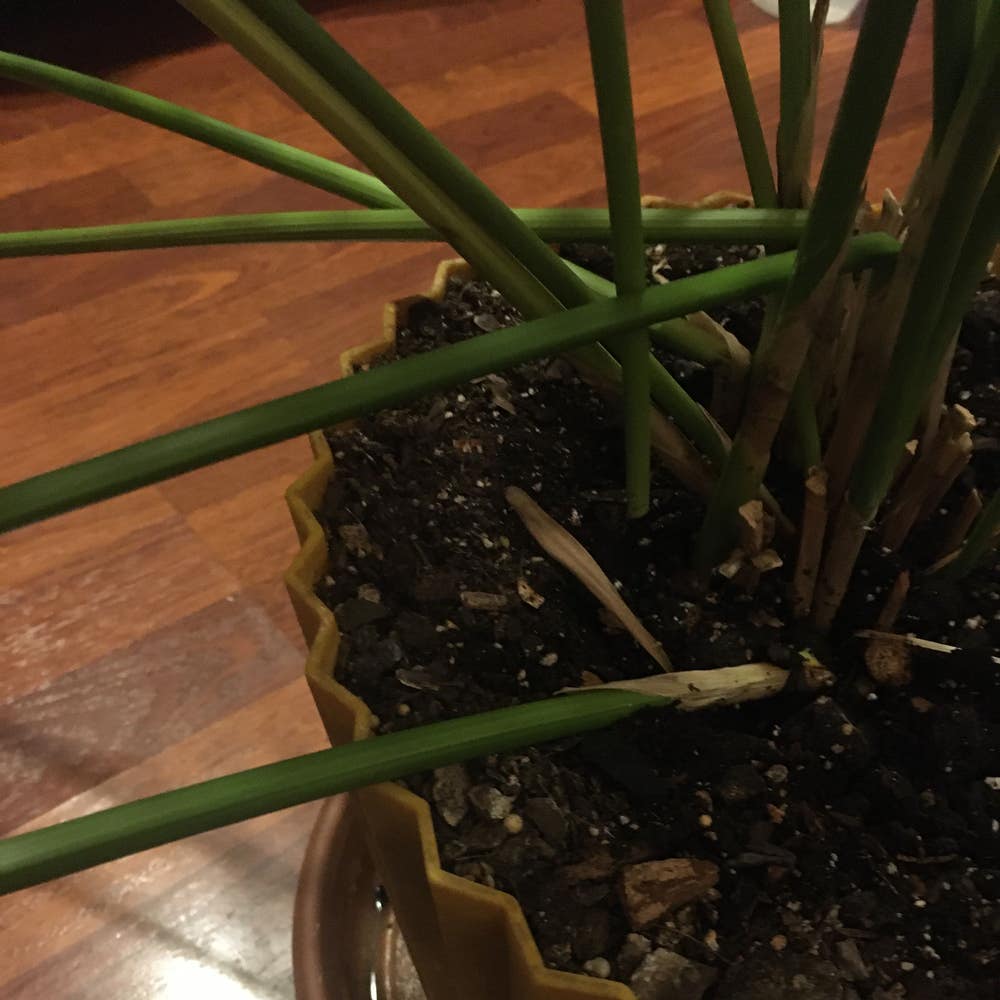
Best Soil for Umbrella Papyrus
Cyperus alternifolius
By the Greg Editorial Team
Jun 18, 2024•5 min read
This article was created with the help of AI so we can cover more plants for you. May contain errors. See one? Report it here.
Nurture a lush Umbrella Papyrus 🌿 with the perfect soil mix—your green thumb's secret weapon!
- Mold and compaction signal poor Umbrella Papyrus soil health.
- Perfect mix: 2 parts peat moss, 1 part perlite, 1 part sand.
- Pre-mixed soils need moisture retention, aeration, and pH balance.
Spotting Trouble: When Your Umbrella Papyrus Soil Goes Bad
🚩 Signs of Distress in Soil
Mold in your Umbrella Papyrus soil is not a quirky feature—it's a red flag. A musty odor or fuzzy patches are telltale signs of excess moisture. Compacted soil is another no-go, making it tough for roots to spread their wings. And if your plant's leaves are turning yellow, it's practically waving a white flag, begging for better drainage.
Quick Fixes for Unhealthy Soil
Got mold? Remove the contaminated soil and let air flow do its thing. If the soil is more packed than a rush-hour subway, it's time to loosen up—mix in some perlite or sand. When roots are swimming rather than sipping water, reassess your watering habits and make sure your pot's not holding water hostage. If you've got a soggy situation, it's time to get your hands dirty and give your plant a fresh start in a well-draining mix.

Crafting the Perfect Soil Mix
🌱 Key Ingredients for Umbrella Papyrus Bliss
To kickstart your Umbrella Papyrus's growth, you'll need a trifecta of soil components: peat moss, perlite, and sand. Peat moss is your moisture maven, locking in hydration without waterlogging the roots. Perlite is the unsung hero, ensuring your soil stays aerated and fluffy. And sand? It's the backbone, offering just enough grit to promote drainage.
Peat moss should dominate your mix, with perlite and sand playing supporting roles. Aim for a 2:1:1 ratio—two parts peat moss to one part each of perlite and sand. This isn't just throwing things together; it's about creating a harmonious living space for your plant.
🏗️ DIY Soil Mix Step-by-Step
Ready to get your hands dirty? Here's how to whip up a batch of Umbrella Papyrus-approved soil:
- Gather your ingredients: peat moss, perlite, and sand.
- Measure out two parts of peat moss into a large container. This is your base, the comfy bed for your plant's roots.
- Add one part perlite into the mix. Think of it as the pillow—essential for a good night's sleep, or in this case, root respiration.
- Mix in one part sand. It's the firm mattress underneath, providing just enough support and drainage.
- Blend everything together. Get in there with your hands or a tool, ensuring an even distribution. No clumps allowed—this isn't a lumpy mattress.
- Test the texture. Squeeze a handful; it should hold together but crumble easily when poked. Too dense? Add more perlite. Too loose? More peat moss.
- Celebrate your creation. You've just tailored a bespoke suit for your Umbrella Papyrus's roots, and that's no small feat.

Shopping Smart: Pre-Mixed Soil Solutions
🕵️ What to Look for in Store-Bought Mixes
When you're in the market for pre-mixed soil for your Umbrella Papyrus, think of yourself as a detective. Labels are your first clue. Moisture retention is non-negotiable; this plant loves a good drink. But don't let that fool you into waterlogged misery—aeration is just as critical.
Check for a mix that boasts a peat-based composition. It's like a hydration pack for your plant, keeping the soil moist without going overboard. Nutrient content is your next lead. You want a mix that's got the goods—compost or worm castings are like a slow-release superfood for your green buddy.
🌱 Top Picks: Recommended Pre-Mixed Soils for Umbrella Papyrus
Now, let's talk shop. You're looking for a soil mix that's got the right stuff without the fluff. A mix that's too dense will suffocate your plant's roots faster than a thriller's plot twist. Perlite or sand should be listed; they're the escape artists that prevent root rot.
Organic matter is the secret sauce. Look for compost or peat moss; they're the unsung heroes keeping pH levels balanced and moisture consistent. And if you see a mix with limestone, that's a bonus—it's like a pH bouncer, keeping things in check.
Remember, you're not just buying soil; you're setting the stage for your plant's performance. So, skip the one-size-feeds-all mix with fertilizer additives. Your Umbrella Papyrus doesn't need a buffet; it needs a tailored diet. Go for quality, and your plant will thank you with growth that's off the charts.

Long-Term Soil Health for Umbrella Papyrus
🌱 Maintaining the Balance
To keep your Umbrella Papyrus soil in top shape, regular care is non-negotiable. Like a well-oiled machine, your plant's environment needs periodic attention.
- Inspect monthly for signs of compaction or mold. If your soil is tighter than a drum or smells like last week's leftovers, it's time to act.
- Mulching with organic materials such as compost or bark chips can be a game-changer, locking in moisture and adding nutrients as they decompose.
🔄 When to Refresh
Knowing when to give your Umbrella Papyrus a soil refresh is crucial for preventing a full-blown root crisis.
- If you spot roots peeking from drainage holes or growth has hit a plateau, consider repotting.
- Soil pH is the gatekeeper to nutrient uptake. If leaves start to yellow, it might be time to check if the pH has swung out of the ideal range.
- Amend nutrient-poor soil with organic matter before it becomes a problem. Remember, prevention is better than cure.
- Finally, rotate your plant periodically to ensure even growth and prevent overexposure to light from one direction.
⚠️ Safety First
This content is for general information and may contain errors, omissions, or outdated details. It is not medical, veterinary advice, or an endorsement of therapeutic claims.
Always consult a qualified healthcare professional before using any plant as food, medicine, or supplement.
Never eat any plant (or feed one to pets) without confirming its identity with at least two trusted sources.
If you suspect poisoning, call Poison Control (800) 222-1222, the Pet Poison Helpline (800) 213-6680, or your local emergency service immediately.
Spotted an error? Please report it here.
Ensure your Umbrella Papyrus flourishes with optimal soil 🌿 by leveraging Greg's tailored watering reminders and care tips, banishing yellow leaves and mold for good.