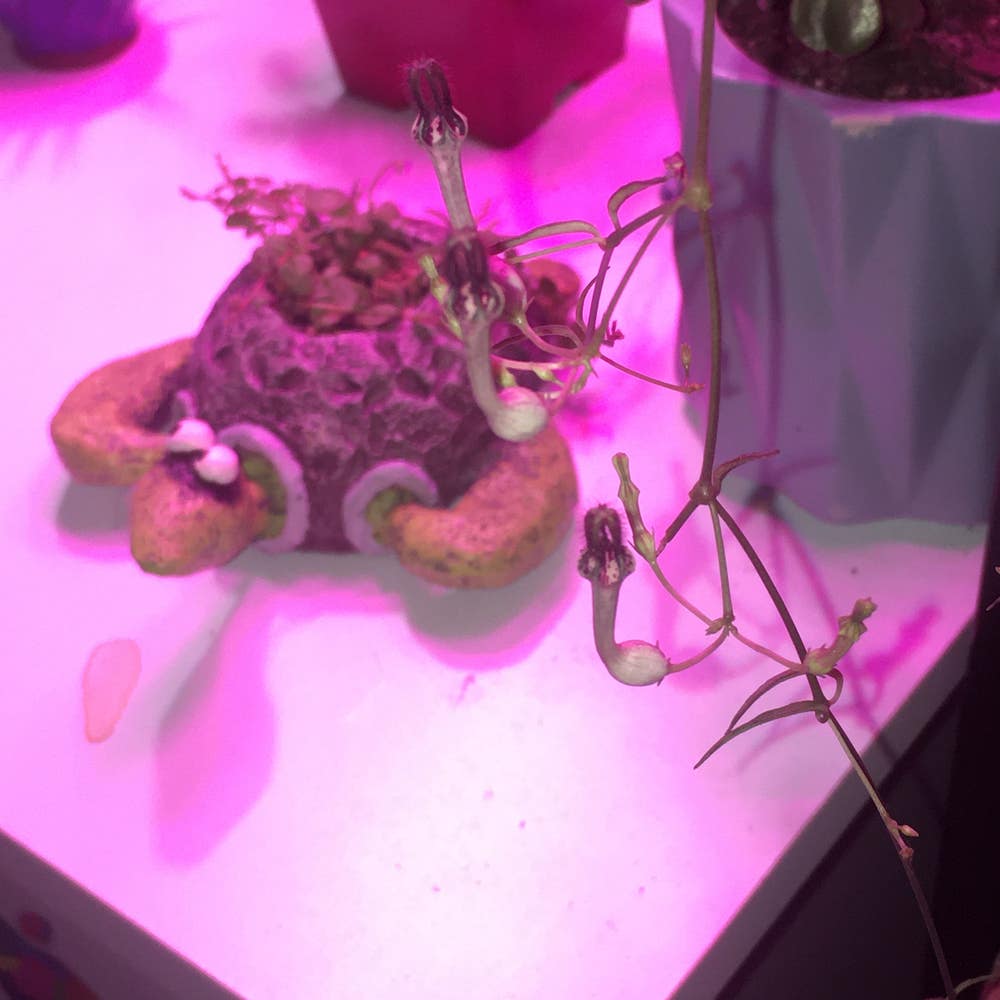
Why Is My String Of Needles Not Doing Well?
Ceropegia linearis
By the Greg Editorial Team
Jun 18, 2024•6 min read
This article was created with the help of AI so we can cover more plants for you. May contain errors. See one? Report it here.
Nurse your String of Needles back to lush health 🌿 by tackling its troubles head-on with our targeted care guide.
- Wilting or drooping? Check for over/underwatering or root rot.
- Yellow/brown leaves? Could be too much sun, pests, or nutrient issues.
- Stunted growth/leaf loss? Address light, watering, and environmental stress.
Identifying Common Issues with String of Needles
🥀 Wilting or Drooping
Wilting or drooping leaves on your String of Needles can be a red flag. Overwatering, underwatering, and root rot are the usual suspects. Check the soil: if it's soggy, you might be loving your plant to death with water. If it's bone dry, your plant is probably parched. Root health is crucial, so gently inspect for any signs of decay.
🟡 Yellowing or Browning Leaves
When leaves start to look like they've had a bad fake tan job, it's time to investigate. Excessive sunlight can give your String of Needles a sunburn, while nutrient deficiencies make it look under the weather. Pests? They're like unwanted roommates, causing chaos. Inspect your plant's environment and leaves for clues.
🌱 Stunted Growth or Leaf Loss
If your String of Needles is losing its lush look, it might be crying out for help. Environmental stress, not enough light, or watering woes can all lead to a less-than-thriving plant. Look at your plant's growth patterns and its surroundings to get to the root of the problem.
🦠 Root Rot
Root rot is the plant equivalent of a horror movie. Symptoms include a rotten base and a plant that looks like it's giving up on life. If you suspect root rot, suit up and do some surgery. Inspect the roots for any mushiness or discoloration and act fast to save your green buddy.
🐜 Pest Infestations
Common pests like spider mites and aphids can turn your String of Needles into a bug buffet. Keep an eye out for these tiny terrors and take action. Natural or chemical, choose your weapons wisely to defend your plant without going overboard.

Resolving Common Issues with String of Needles
💧 Overwatering and Underwatering
Adjusting Watering Habits
Overwatering can drown your String of Needles in excess moisture, while underwatering leaves it gasping for a drink. Strike a balance by allowing the soil to dry out between waterings. Use your finger to test soil moisture; if it's dry a couple of inches down, it's time to water.
🚰 Ensuring Proper Drainage
Proper drainage is non-negotiable. Ensure your pot has drainage holes and consider adding a layer of gravel at the bottom. This helps prevent water from pooling around the roots, warding off the dreaded root rot.
🍽️ Nutrient Deficiencies
Spotting the Signs
Nutrient deficiencies manifest as discolored or lackluster leaves. If your String of Needles looks a bit under the weather, it might be craving some nutritional TLC.
Fertilizing Fundamentals
During the growing season, a monthly dose of balanced fertilizer keeps your plant thriving. Look for a 10-10-10 NPK ratio to keep things simple and effective.
🌞 Sunlight Exposure
Finding the Sweet Spot
Too much sun can scorch, too little can stunt. Aim for that bright, indirect light where your String of Needles can bask without baking.
Acclimating to Light Changes
When adjusting light exposure, do it gradually. Sudden changes can stress your plant out more than a last-minute tax audit.
🏜️ Environmental Stress
Temperature and Humidity Harmony
Keep your String of Needles in a comfort zone between 50° - 86°F, and don't sweat the humidity too much; it's a tough cookie that can handle the dry.
Crafting the Ideal Environment
Think of your plant's environment as a mini ecosystem. Consistent conditions are key, so avoid placing it near drafty windows or heat sources.
🐜 Pest Management
Identifying Invaders
Keep an eye out for uninvited guests like spider mites and aphids. These tiny terrors can wreak havoc if left unchecked.
Eliminating Pests
Natural remedies like neem oil can send pests packing. For severe infestations, insecticidal soap might be your new best friend. Remember, prevention is better than cure, so keep your plant clean and check regularly for freeloaders.

General Care Tips for String of Needles
✂️ Regular Maintenance Practices
Pruning is not just a haircut for your plant; it's a vital check-up. Snip off yellow or dying leaves to prevent decay and encourage new growth. Use clean, sharp scissors and cut at the stem. Cleaning your String of Needles is as simple as a gentle misting to keep dust at bay and pests in check.
🌵 Potting Mix and Container Selection
The right potting mix for your String of Needles should drain faster than a sinkhole in a thunderstorm. A cactus and succulent mix will do the trick. When it comes to containers, think 'snug but not tight'. Choose a pot that's a couple of inches larger in diameter than the current one, ensuring it has drainage holes to avoid soggy soil syndrome.
🌱 Repotting
Repotting should happen every 12-18 months, or when your plant has doubled in size. It's like moving to a bigger apartment; your String of Needles needs space to grow. When repotting, be gentle with the roots and give them a new home with fresh soil to explore.
Key Takeaways
Remember, your String of Needles is more than just a pretty face; it's a living entity that thrives with the right care. Keep it in bright, indirect light, let the soil dry out between waterings, and don't let it chill below 50°F. With these tips, your String of Needles will be more than just surviving; it'll be thriving.

Propagation of String of Needles
Propagation is a straightforward way to multiply your String of Needles collection. Let's dive into the methods that work best for this plant.
🌱 Stem Cuttings
Stem cuttings are the most efficient way to propagate String of Needles. Here's how to do it:
- Select a Healthy Stem: Look for a robust, mature stem with several nodes.
- Make the Cut: Using clean, sharp scissors, snip the stem just above a node.
- Prepare for Planting: Remove leaves near the cut end to expose a few nodes.
- Rooting Medium: Plant the cutting in a well-draining cactus or succulent mix, ensuring nodes are buried.
- Watering: Water sparingly until roots establish to prevent rot.
➗ Division
Another method is division, ideal for mature plants that have become overcrowded.
- Remove the Plant: Gently take the plant out of its pot, being mindful of the delicate stems.
- Identify Sections: Look for natural separations between the stems.
- Divide: Carefully pull apart the sections, ensuring each has roots attached.
- Repot: Plant each section in its own container with suitable potting mix.
Post-Propagation Care
After propagation, place your new String of Needles in bright, indirect light. Avoid direct sun to prevent scorching. Water when the top inch of soil feels dry, and be patient as your new plants take root and grow.
Remember, String of Needles is mildly toxic. Keep cuttings out of reach of pets and children during the propagation process.
⚠️ Safety First
This content is for general information and may contain errors, omissions, or outdated details. It is not medical, veterinary advice, or an endorsement of therapeutic claims.
Always consult a qualified healthcare professional before using any plant as food, medicine, or supplement.
Never eat any plant (or feed one to pets) without confirming its identity with at least two trusted sources.
If you suspect poisoning, call Poison Control (800) 222-1222, the Pet Poison Helpline (800) 213-6680, or your local emergency service immediately.
Spotted an error? Please report it here.
Revive your String of Needles and prevent future woes by letting Greg's tailored care plans and community insights 🌱 guide you to plant success!