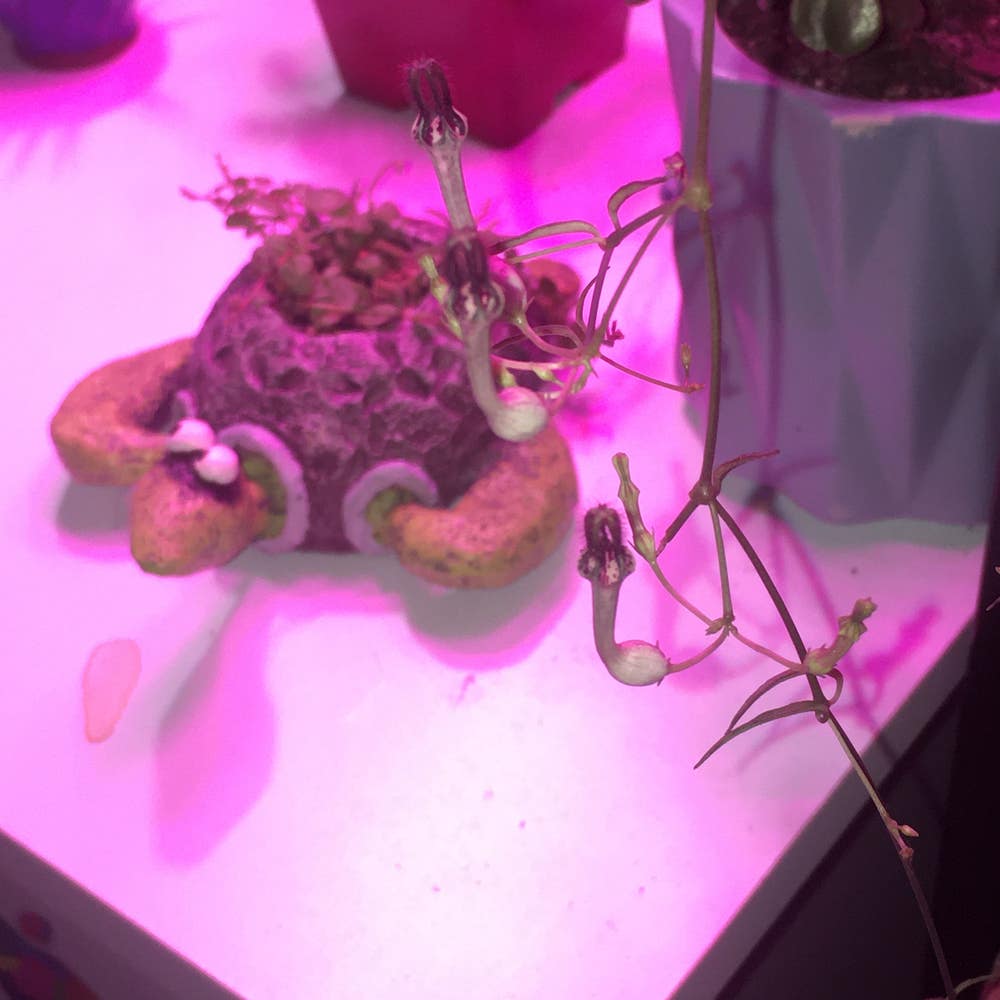
Why Are There Brown Spots On My String Of Needles Leaves?
Ceropegia linearis
By the Greg Editorial Team
Jun 18, 2024•4 min read
This article was created with the help of AI so we can cover more plants for you. May contain errors. See one? Report it here.
Eradicate pesky brown spots 🍂 on your String of Needles with these essential plant care secrets.
- Brown spots from overwatering, sunburn, or fungi—know the cause.
- Bright, indirect light and dry soil are key to String of Needles health.
- Prevent issues with light management, air circulation, and clean pruning.
Causes of Brown Spots on String of Needles Leaves
💦 Overwatering
Root rot is the usual suspect when you spot brown patches on your String of Needles. Overwatering your plant is like giving it a bath with a fire hose – too much of a good thing. The roots drown, they rot, and the leaves wave the brown flag of surrender. Look for leaves that are more than just spotted; they're likely soft and limp, like a well-used sponge.
To tell if you're over-loving with water, check if the soil feels like a wet towel even days after watering. That's a no-go. Your plant's roots need to breathe, not swim.
☀️ Sunburn
Think of leaves like delicate skin; too much sun and they'll burn. If your String of Needles is basking in the sun like it's on a beach in Cancun, those brown spots might just be a sunburn. The top leaves usually take the hit, looking like they've had a rough day at the beach without sunscreen.
Prevent the crispy critter effect by moving your plant to a spot with bright, indirect light. No tanning beds for these guys, please.
🍄 Fungal Infections
Fungi are the party crashers of the plant world. They show up uninvited and turn your plant's leaves into a spotty mess. Leaf spot diseases are the gossipmongers, spreading from leaf to leaf, leaving a trail of brown spots in their wake.
If your plant's leaves look like they've been in a paintball war, it's time to play detective. Check for spots that are irregular and isolated, like a bad case of plant acne. Fungicide might become your new best friend, but use it wisely.

Proper Care and Maintenance for String of Needles
🌞 Ideal Growing Conditions
The String of Needles plant thrives in a Goldilocks zone of care, where too much or too little of anything can lead to trouble. Bright, indirect light is the sweet spot for this plant, mimicking the dappled sunlight it would receive in its natural habitat. It's comfortable in warm temperatures ranging from 10° to 30°C (50° - 86°F), but don't let it chill below 10°C. Humidity isn't a deal-breaker; it can handle levels below 24%, so no need to mist obsessively.
🍽️ Soil and Potting Mix
When it comes to soil, think 'desert chic'. A well-draining mix is non-negotiable to avoid soggy roots. Opt for a cactus or succulent potting mix, or get crafty and mix in some perlite or sand to regular potting soil. This will ensure your String of Needles doesn't drown in its own home.
🚰 Watering and Fertilization
Overwatering is the fast track to a plant funeral, so let the soil dry out completely between waterings. Stick your finger in the soil; if it's dry a couple of inches down, it's time for a drink. Fertilize monthly with a balanced 10-10-10 fertilizer during the growing season, but let it rest in winter. Remember, your String of Needles is more camel than duck—it stores water and doesn't need constant feeding.

Alleviating and Preventing Brown Spots
💡 Light Management
Bright, indirect light is the sweet spot for your String of Needles. It's like finding the perfect pair of jeans; it just fits. To prevent the dreaded sunburn, keep your plant in a spot where the sun's rays are gentle yet generous. Think of a spot near a window with a sheer curtain, offering a buffer against the harsh midday sun. If you notice the leaves throwing shade with brown spots, it's time to relocate your green buddy.
🛡️ Fungal Infection Prevention
Good air circulation is like a breath of fresh air for your plant. It's essential. Avoid high humidity around your String of Needles to keep fungal infections at bay. If you're getting a vibe of the tropics in your plant's corner, it's time to dial it down. A preventive fungicide can be your plant's best friend, but remember, natural remedies are also in the mix. They're like the home-cooked meal in a world of fast food—worth considering.
🌿 Pruning and Maintenance
When brown spots crash the party, it's time to prune. Snip off those affected leaves with sterilized scissors—think of it as giving your plant a haircut to bring out its best features. Keep the area around your plant cleaner than your kitchen counter to prevent any fungal gate crashers. Remember, cleanliness is next to plant godliness.

⚠️ Safety First
This content is for general information and may contain errors, omissions, or outdated details. It is not medical, veterinary advice, or an endorsement of therapeutic claims.
Always consult a qualified healthcare professional before using any plant as food, medicine, or supplement.
Never eat any plant (or feed one to pets) without confirming its identity with at least two trusted sources.
If you suspect poisoning, call Poison Control (800) 222-1222, the Pet Poison Helpline (800) 213-6680, or your local emergency service immediately.
Spotted an error? Please report it here.
Banish brown spots 🍂 on your String of Needles by letting Greg tailor a watering and care schedule to keep your plant healthy and spot-free!